
LETTERS ON THE GALLANTRIES OF BERLIN: XV
Briefe über die Galanterien von Berlin, auf einer Reise gesammlet von einem österreichischen Offizier (Letters on the Gallantries of Berlin, Collected on a Journey by an Austrian Officer) was published in Gotha in 1782. The author and publisher were not named, but bibliographical research has established that they were respectively the Austrian journalist, actor and soldier Johann Friedel (1755-1789) and Carl Wilhelm Ettinger.
The letters were twenty-nine, written to an unnamed and perhaps fictitious correspondent. They describe social, especially sexual, customs observed by Friedel in Berlin. Four of them, the fifteenth to eighteenth, were revealing about the social scene involving what he variously called the warm society, paederasts, lovers of boys and sodomites. Some parts of them describe what was clearly androphile behaviour rather than Greek love, but an assumption runs through them all that love of boys of a broad age range was central to the tastes of the men described, reflecting the general confusion that prevailed in the great cities of eighteenth century northern Europe, where androphiles challenging traditional gender roles had begun to displace pederasts in the popular imagination of sodomy.
Presented here is the whole of the fifteenth letter, the first relevant one, translated into English for the first time for this website.
|
Fifteenth Letter. My most lovable friend! |
Fünfzehnter Brief. Liebenswürdigster Freund! |
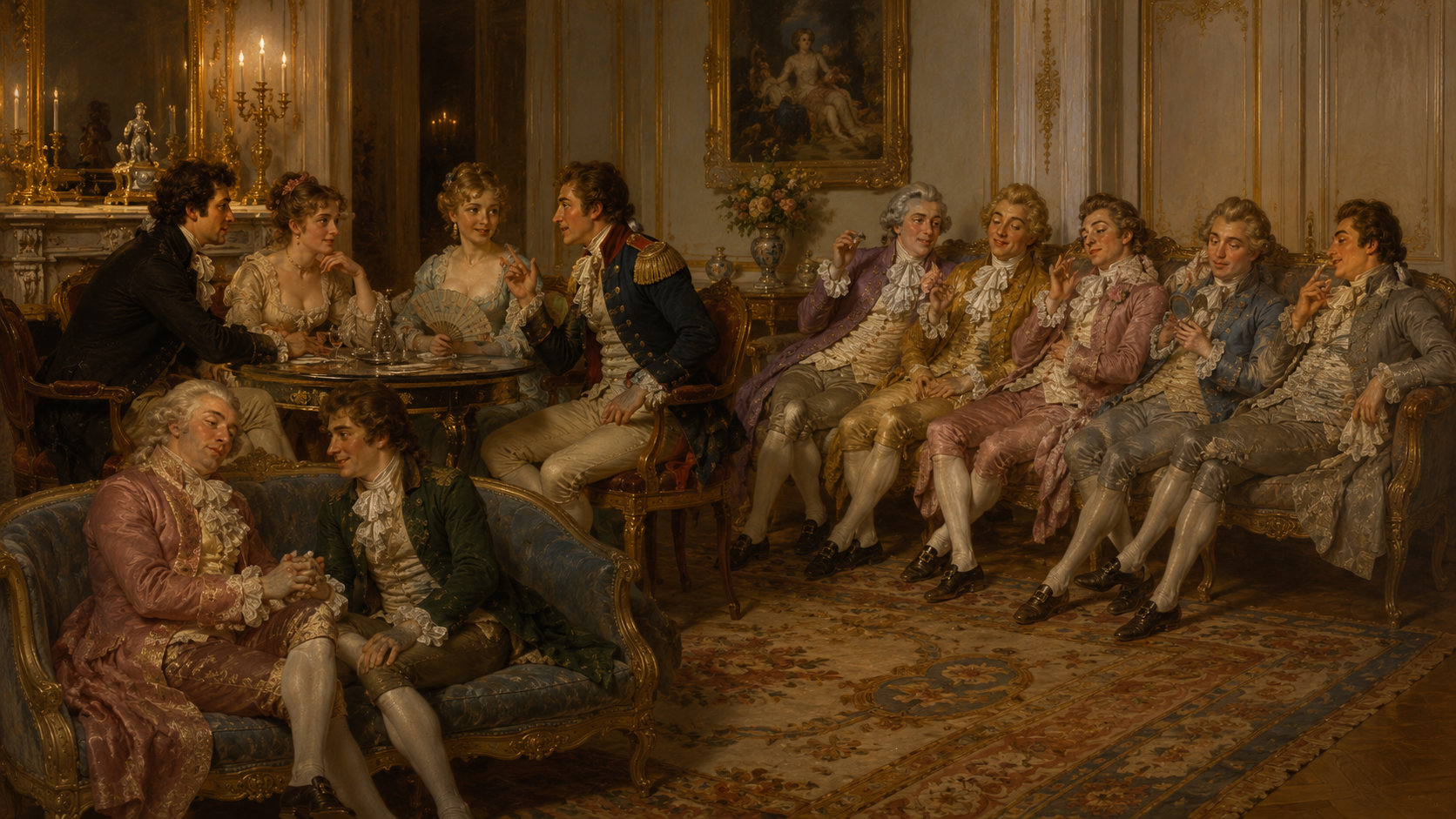
| But how astonished I was when I discovered what lay behind these mysteries of friendship! I had already made a few remarks about the men behaving so prettily towards one another while treating the ladies as something entirely en bagatelle. I could not conceal my astonishment. I admitted it to Mr W——. “Oh, you must not be surprised by that. These seven gentlemen are warm ones.” Warm ones? What does that mean? “You know nothing of them, although you have already been in Berlin for four months? That surprises me! I shall have to give you a brief account of them. You have surely read something about Socratic love? Well, you see, these are all Socratic lovers.” That is surely very fine. “If only they stopped at the love of souls. But the whole of bodily love enters into it as well.” Impossible! “Indeed! But do not let them notice anything. You will soon witness it yourself.” And I did! Yes, friend! Nature recoils from acknowledging such incongruous desires. Everything of which the Persians, Moslems and Italians may ever be accused in respect of the love of boys is found complete in these debauchees. These gentlemen, then, who amuse themselves with paederasty, are called warm ones. Could you have imagined that people beneath a more than temperate sky could fall into such unnatural excesses? I was astonished when I became acquainted with the rather filthy and by no means sweet-smelling appetite of these Socratic companions. It is true that the Greeks and Romans provided these gentlemen with an example. If one examines the matter closely, this excess was first born in the Greek gymnasia. Ovid assures us that Orpheus already defiled himself with this vice; and by the time of Anacreon, all men were already wholly susceptible to unnatural love of boys. Plato and Socrates, together with their entire school, have incurred the same reproach. Alcibiades himself, so beloved by all women, did not blush to violate boys publicly.[1] The poets of Greece certainly sang as much of beautiful boys as of beautiful girls. Yet the defenders of this kind of love, however strongly they appeal to their Lycurgus, Solon, Socrates and Plato, must nevertheless admit that, when these men recommended it, they always placed virtue at its foundation. The emphatic apology that their Lucian offers for it confirms this still further. Only listen to him: |
Aber wie erstaunte ich nicht, da ich hinter diese freundschaftlichen Misterien kam! |
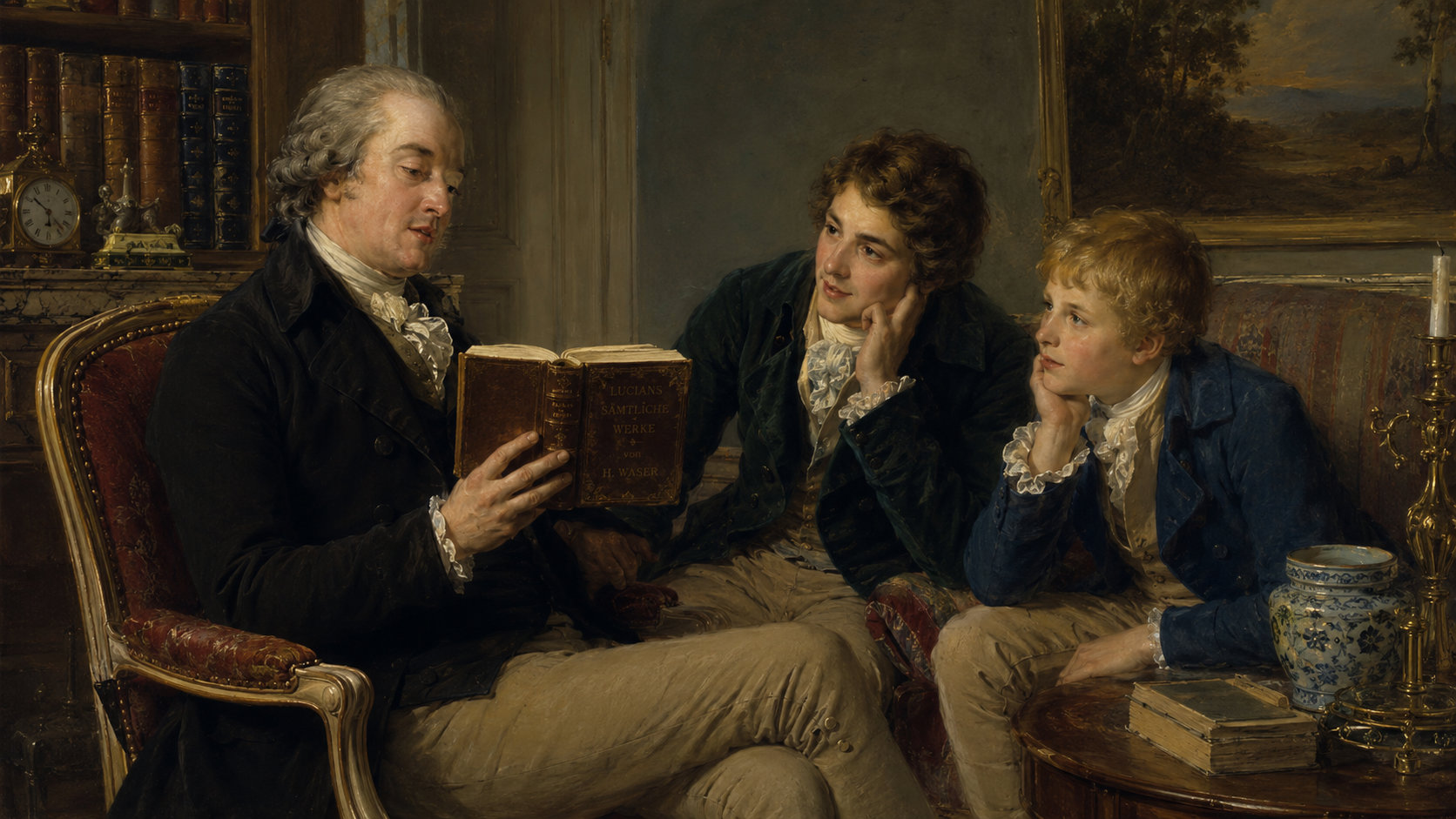
| “Male love alone is the pure, noble, virtuous, heavenly love of souls; entirely the gift of Venus Urania, upon whose altars a purer and holier sacrifice burns than in the less frequented temples of the common, earthly goddess of love. It can dwell in none but chaste and virtuous souls, initiated into the mysteries of heavenly Venus and resolved, as her consecrated priests, to lead an undefiled life. It is the fertile mother and nourisher of every virtue: it softens the heart of the cruel towards compassion and beneficence, and gives the coward an iron courage in danger; it cleanses human souls of all concealed vices and degrading dispositions. This love is the holiest bond between virtuous souls, by which they unite in the performance of the greatest deeds and mutually guarantee one another’s virtue so completely that they would sooner suffer a painful death than bring disgrace upon the beloved through any base action. The greatest heroes of antiquity, descendants of the gods, left this heavenly love to their later descendants as a sacred legacy to be preserved; the most venerable legislators placed it under their protection. Only tyrants and cowardly peoples have always hated it, just as they have always hated philosophy; and only among free and noble peoples can it hold its head high. It is a never-failing source of the purest and most exquisite pleasures that people can taste on this earth; it is a foretaste of the bliss awaiting us.”[2] But who cannot see from Lucian’s encomium that he is speaking solely of the blessed bond of true friendship? Who could ever imagine that he meant to make paederasty a foretaste of the bliss awaiting us? One would be greatly mistaken in believing that the laws of Greece approved of this excess. They approved the love of friends, but abhorred its unnatural abuse. Even in Rome, where in the age of luxury vices of every kind—and consequently this one too—were prevalent, the laws condemned this excess. The Lex Scantinia, which inveighs against paederasty, is well-known. Despite all the liberty with which people violated that law, it occurred to no one to repeal it. It is certain that the more rational portion of mankind has at all times abhorred the abuse of the love of boys. And yet people still wish to invoke the example of the Greeks and Romans in order to justify it? How far beneath every conception of human dignity does the weakling sink who indulges such impure and worthless desires! Where is the animal that mates with its own sex? The ass chooses the she-ass; the dog the bitch; the boar the sow; but the lustful man chooses another man. If any debauchees deserve to be excused, the sodomites certainly do not! What excites them? Nothing but a drive towards lust that has been heightened beyond all measure. They have already tasted sensual pleasure in every enjoyable form; now it must entertain a new sense—one that admittedly smells rather unpleasant. What is that but the most detestable insatiability? And, friend, these filthy practices are here considered gallantries, about which people joke in company just as they do about the love of girls; they are practised entirely without reserve, and people do not even blush at them! |
„Die männliche Liebe allein ist die reine, edle, tugendhafte, himmlische Seelenliebe; ganz das Geschenk der Venus Urania, auf deren Altären reineres, heiligeres Opfer brennet, als in den weniger besuchten Tempeln der gemeinen, irdischen Liebesgöttin. Sie kann in keinen andern, als keuschen und tugendhaften Seelen wohnen, die in den Geheimnissen der himmlischen Venus eingeweihet, und entschlossen sind, als ihre geheiligte Priester, ein unbeflecktes Leben zu führen. Sie ist die fruchtbare Mutter und Ernährerin aller Tugenden: sie erweicht das Herz des Grausamen zum Mitleiden und Wohlthun; und bringt dem Feigen einen eisernen Muth in den Gefahren bey; sie reiniget die Seelen der Menschen von allen verhüllten Lastern, und erniedrigenden Gesinnungen. Diese Liebe ist der heiligste Bund tugendhafter Seelen, wodurch sie sich zur Ausübung der größten Thaten vereinigen und sich gegenseitig ihre Tugend so sehr verbürgen, daß sie eher den schmerzhaften Tod, als die Beschimpfung des Liebhabers durch irgend eine niederträchtige Handlung ertragen würden. Die größten Helden der Vorzeit, die Abkömmlinge der Götter, haben diese himmlische Liebe als ein heilig zu bewahrendes Vermächtniß ihren Späterenkeln hinterlassen; die verehrungswürdigsten Gesetzgeber haben sie in ihren Schutz genommen. Nur Tyrannen und feige Völker haben sie, so wie die Philosophie, stets gehaßt: und nur unter freyen und edlen Völkern kann sie ihr Haupt empor heben. Sie ist eine nie versiegende Quelle der reinsten, köstlichsten Vergnügen, die Menschen auf dieser Erde nur schmecken können: sie ist ein Vorgenuß der Seligkeiten, die auf uns warten.“ |
|
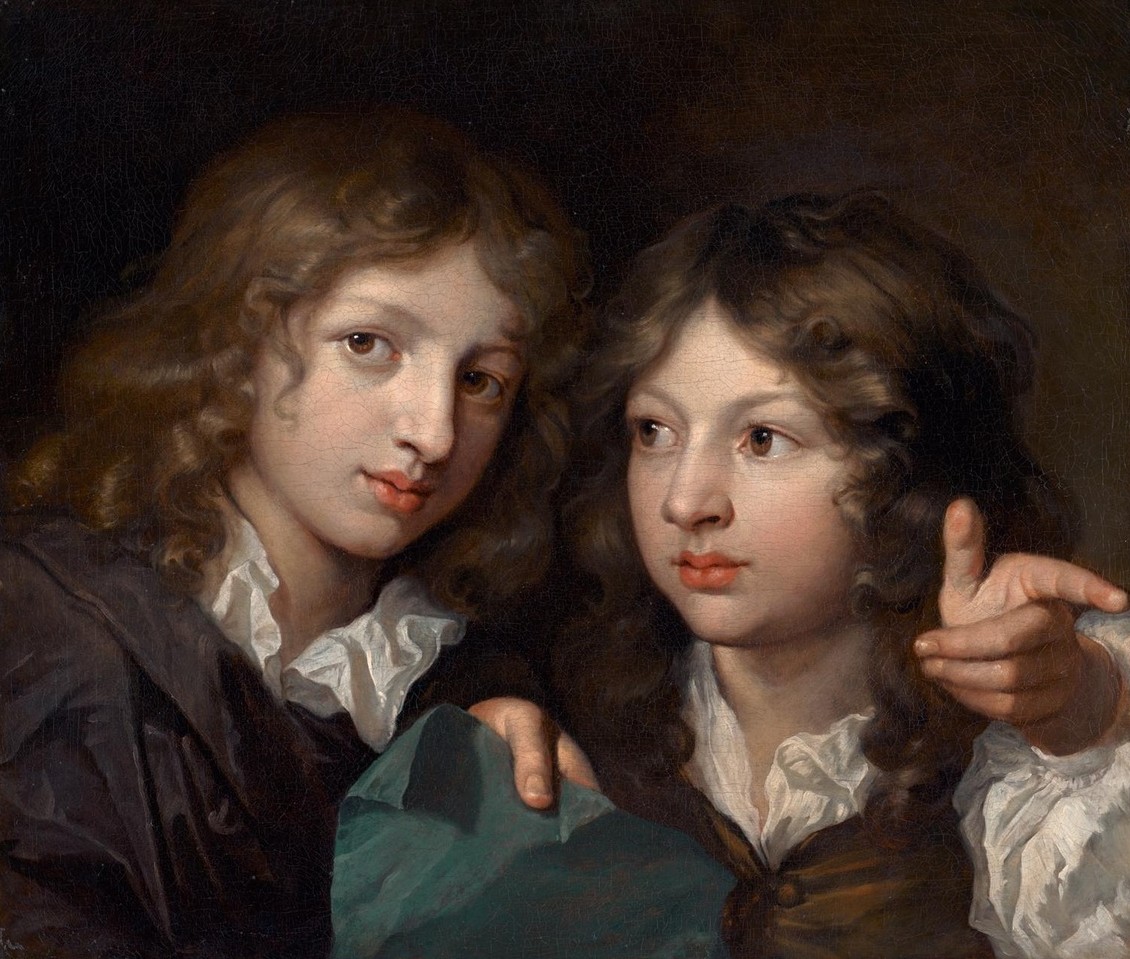
Hardly any young and well-formed boy is safe from these gentlemen. As soon as they scent him, they run after him like deer in rut. Fie upon the filthy goats! |
Fast kein junger, wohlgebildeter Knabe ist vor diesen Herren sicher. So bald sie ihn wittern, laufen sie wie Hirsche in der Brunst nach. Pfuy! über die unflätigen Böcke! |
Continue to the sixteenth letter.
[1] Orpheus, Anakreon, Plato and Sokrates did indeed love boys according to ancient sources, though whether or not the latter two consummated their loves was always contentious. Alkibiades was loved by men as a boy, but no ancient sources reports him either loving a boy himself or violating one. [Website note]
[2] Though Friedel presents this as a verbatim passage from Lucian, it is not, but rather a rhetorical synthesis chiefly derived from Pseudo-Lucian’s debate about whether loving boys or women was better, The Two Kinds of Love 31–32, 37, 44–49 (with additional material reflecting Plato, Symposium 180c–185c). Moreover, the argument made for loving boys was not presented as being Lucian’s own, but that of Kallikratidas, the advocate of so doing in the debate. [Website note]
Comments powered by CComment