
THE DIALOGUE ON LOVE I
BY PLUTARCH
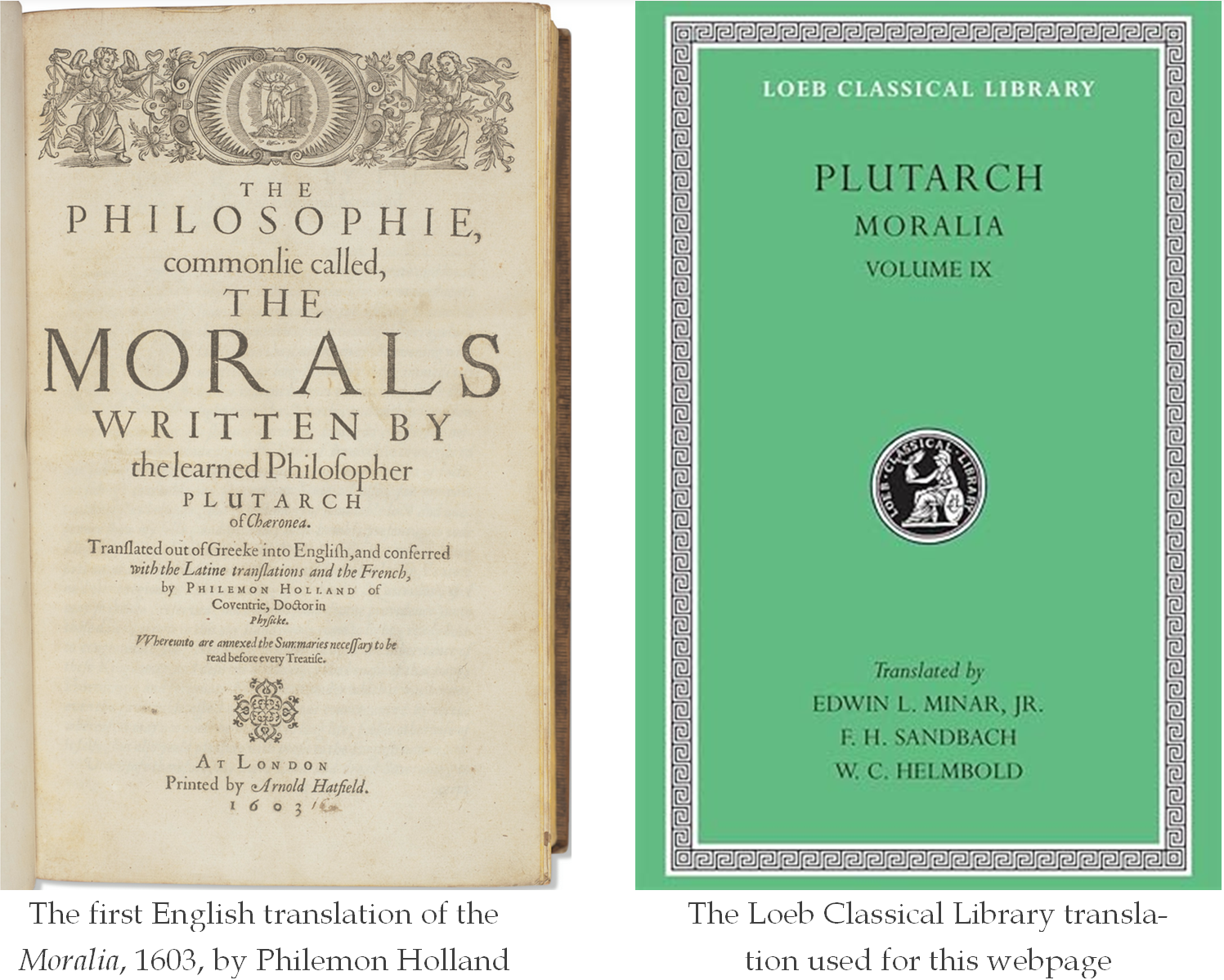
The Dialogue on Love Ἐρωτικός is a chapter (748e-771e) of the Greek biographer and essayist Plutarch’s Moralia. As one of the initial interlocutors of the dialogue is the author’s own son Aristoboulos, it must have been written in the first decades of the second century AD, while the setting of the ensuing debate before the author’s marriage must have been a generation earlier.
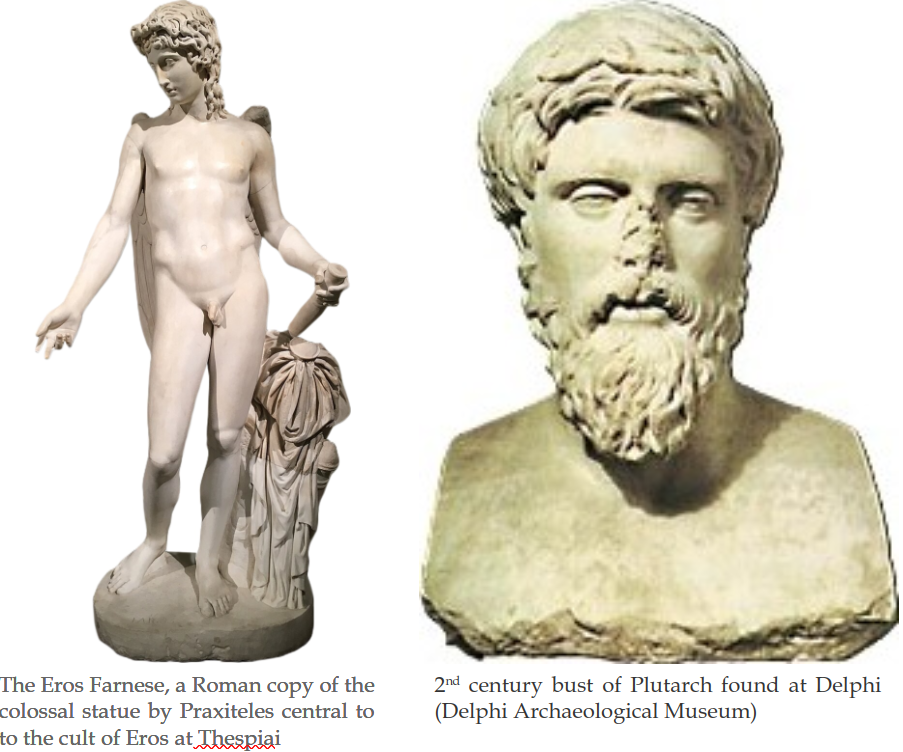
The translation is by Edwin L. Minar, F. H. Sandbach and W. C. Helmbold for Plutarch, Moralia, Volume IX, Loeb Classical Library volume 425 published by William Heinemann in London in 1961. Their romanisations of Greek names have been replaced by closer transliterations.
Note that the translators say that “in a part of the narrative now lost, conjugal love is attacked.” Hence why “the rest of the work provides a spirited and occasionally penetrating defence of the part that women play in the marriage bond.”(pp. 303-4).
First part: 748e-754e
|
FLAVIAN AUTOBOULOS |
[748e 1] ΦΛΑΟΥΙΑΝΟΣ ΑΥΤΟΒΟΥΛΟΣ |
|
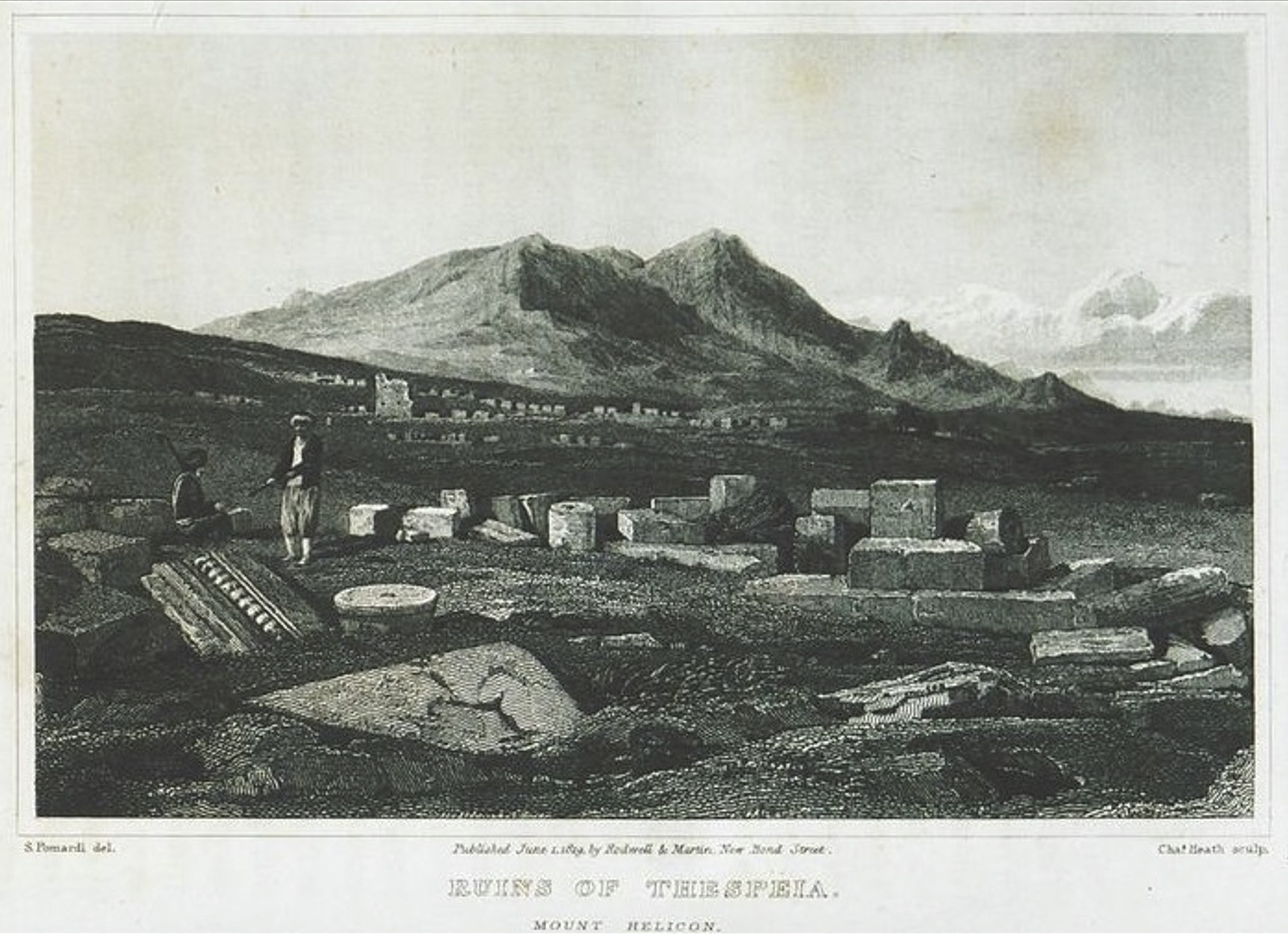
FLAVIAN AUTOBOULOS FLAVIAN AUTOBOULOS A long time ago, before I was born, when my father had only recently married my mother, he rescued her from a dispute that had broken out between their parents and was so hotly contested that my father came here to sacrifice to Eros and brought my mother to the festival; in fact she herself was to make the prayer and the sacrifice. His usual friends came with him from home and at Thespiai he found Daphnaios, son of Archidamos, the lover of Simon’s daughter, Lysandra, and the most favoured of all her suitors. Soklaros,[4] son of Aristion, had come from Tithora; and there were present also Protogenes of Tarsos and Zeuxippos of Lakedaimon, friends of his from abroad. My father said that most of his other Boiotian acquaintances were there. Now they passed, it seems, the first two or three days in the city, indulging mildly between spectacles in learned conversation in the athletic buildings. After that, routed by a stubborn feud among the harpists which was preceded by appeals for support and enlisting of partisans,[5] most of the visitors decamped from the hostile territory and bivouacked on Helicon as guests of the Muses. |
ΦΛΑΟΥΙΑΝΟΣ [749a] ΑΥΤΟΒΟΥΛΟΣ ΦΛΑΟΥΙΑΝΟΣ ΑΥΤΟΒΟΥΛΟΣ [2] Ὁ γὰρ πατήρ, ἐπεὶ πάλαι, πρὶν ἡμᾶς γενέσθαι, τὴν μητέρα νεωστὶ κεκομισμένος ἐκ τῆς γενόμένης τοῖς γονεῦσιν αὐτῶν διαφορᾶς καὶ στάσεως ἀφίκετο τῷ Ἔρωτι θύσων, ἐπὶ τὴν ἑορτὴν ἦγε τὴν μητέρα· καὶ γὰρ ἦν ἐκείνης ἡ εὐχὴ καὶ ἡ θυσία. τῶν δὲ φίλων οἴκοθεν μὲν αὐτῷ παρῆσαν οἱ συνήθεις, ἐν δὲ Θεσπιαῖς εὗρε Δαφναῖον τὸν Ἀρχιδάμου Λυσάνδρας ἐρῶντα τῆς Σίμωνος καὶ μάλιστα τῶν μνωμένων αὐτὴν εὐημεροῦντα, καὶ Σώκλαρον ἐκ Τιθόρας ἥκοντα τὸν Ἀριστίωνος· ἦν δὲ καὶ Πρωτογένης ὁ Ταρσεὺς καὶ Ζεύξιππος ὁ Λακεδαιμόνιος, [c] ξένοι· Βοιωτῶν δ᾿ ὁ πατὴρ ἔφη τῶν γνωρίμων τοὺς πλείστους παρεῖναι. Δύο μὲν οὖν ἢ τρεῖς ἡμέρας κατὰ πόλιν, ὡς ἔοικεν, ἡσυχῆ πως φιλοσοφοῦντες ἐν ταῖς παλαίστραις καὶ διὰ τῶν θεάτρων ἀλλήλοις συνῆσαν· ἔπειτα φεύγοντες ἀργαλέον ἀγῶνα κιθαρῳδῶν, ἐντεύξεσι καὶ σπουδαῖς προειλημμένον, ἀνέζευξαν οἱ πλείους ὥσπερ ἐκ πολεμίας εἰς τὸν Ἑλικῶνα καὶ κατηυλίσαντο παρὰ ταῖς Μούσαις. |
|
At dawn Anthemion and Peisias joined them, men of some standing and attached to Bakchon who was called The Handsome; and because of their common affection for the youth there was a kind of quarrel between them. You must know that there lived at Thespiai Ismenodora, a woman conspicuous for her wealth and breeding who led, heaven knows, over and above this a life of decorum. She had been a widow for some little time without a word of censure, even though she was still young and comely.[6] Now Bakchon was the son of an intimate friend of hers and Ismenodora, while promoting a marriage between him and a girl related to herself, had many meetings and conversations with the youth. The result was that she came to view him with different eyes; what with hearing, what with saying many kind things about him and observing the throng of noble lovers who courted him, she was carried so far as to fall in love with him herself. Her intentions were far from dishonourable: she desired to marry him and be his companion for life. The situation was startling enough in itself and the boy’s mother had misgivings that the dignity and splendour of Ismenodora’s household were too grand to suit her loved one. Some of the boy’s hunting companions, moreover, used the discrepancy in ages to deter him. Their making a joke of the marriage served to counter it more effectively than did the serious intervention of others. He was still an ephebe[7] and felt shy of marrying a widow. Nevertheless, he ignored the others and left the decision to Peisias and Anthemion. The latter was an older cousin of his, while Peisias was the most sober of his admirers. For this reason, he used his influence against the marriage and took Anthemion to task for surrendering the adolescent[8] to Ismenodora. Anthemion, in his turn, found fault with Peisias, saying that in everything else he was a model, but that as a lover he was imitating the baser sort in trying to deprive one dear to him of an estate and an alliance and a great career merely to keep him as long as possible untouched by these matters and astripping of his clothes in the palaestra. So to avoid exasperating each other and gradually falling into a rage they had chosen my father and his friends as arbiters and referees and had come to join them. And, just as though it had been arranged in advance, each of them found an advocate in this friendly circle, Anthemion Daphnaios, Peisias Protogenes. Protogenes, however, set no bounds to his abuse of Ismenodora, at which Daphnaios exclaimed, “Good heavens, what is one to expect next, if even Protogenes stands by to combat Love, to whom all his time, when he works and when he plays, is devoted, with Love at heart, Love in hand, Forgetful of learning, forgetful of fatherland?[9] For it’s not just five days’ journey, like Laios, that you are away from home. His love traipsed slow, a landlubber, while yours, Circling on swift wings, flits over the sea from Cilicia to Athens to look over the handsome lads and make the rounds with them.” No doubt it had been some such reason that originally caused Protogenes’ journey from home. This raised a laugh and Protogenes said, “So you think that I’m at war with Love now, do you, and not fighting on his side against lechery and insolence when they try to force the foulest acts and passions into the company of the most honourable and dignified of names?” “When you say foulest,” asked Daphnaios, “are you referring to marriage, the union of man and wife, than which there has not existed, now or ever, a fellowship more sacred?” “Why, of course,” said Protogenes, “since it’s necessary for producing children, there’s no harm in legislators talking it up and singing its praises to the masses. But genuine Love has no connexion whatsoever with the women’s quarters. I deny that it is love that you have felt for women and maidens[10]—any more than flies feel love for milk or bees for honey or than caterers and cooks have tender emotions for the calves and fowls they fatten in the dark. “In a normal state one’s desire for bread and meat is moderate, yet sufficient; but abnormal indulgence of this desire creates the vicious habit called gluttony and gormandizing. In just the same way there normally exists in men and women a need for the pleasure derived from each other; but when the impulse that drives us to this goal is so vigorous and powerful that it becomes torrential and almost out of control, it is a mistake to give the name Love to it. Love, in fact, it is that attaches himself to a young and talented soul and through friendship brings it to a state of virtue; but the appetite for women we are speaking of, however well it turns out, has for net gain only an accrual of pleasure in the enjoyment of a ripe physical beauty. To this Aristippos bore witness when he replied to the man who denounced Laïs to him for not loving him:[11] He didn’t imagine, he said, that wine or fish loved him either, yet he partook of both with pleasure. The object of desire is, in fact, pleasure and enjoyment; while Love, if he loses the hope of inspiring friendship, has no wish to remain cultivating a deficient plant which has come to its prime, if the plant cannot yield the proper fruit of character to produce friendship and virtue. “You know the husband in the tragedy who says to his wife: You hate me? I can lightly bear your hate Yet the man who, not for gain, but for lust and intercourse, endures an evil, unloving woman is no more in love than the husband in the play. Such was the orator Stratokles whom the comic poet Philippides ridiculed: She turns away: you barely get her braids to kiss. “If, however, such a passion must also be called Love, let it at least be qualified as an effeminate and bastard love that takes its exercise in the women’s quarters as bastards do in the Kynosarges.[12] Or rather, just as there is one eagle, called the true or mountain eagle, which Homer qualifies as ‘black’ and ‘the hunter,’ though there are other bastard varieties which catch fish and slow-flying birds in marshes; when they grow hungry, as they often do, they give a famished and plaintive scream—just so: there is only one genuine Love, the love of boys. It is not ‘flashing with desire,’ as Anakreon says of the love of maidens, or ‘drenched with unguents, shining bright.’ No, its aspect is simple and unspoiled. You will see it in the schools of philosophy, or perhaps in the gymnasia and palaestrae, searching for youths[13] whom it cheers on with a clear and noble cry[14] to the pursuit of virtue when they are found worthy of its attention. “But that other lax and housebound love, that spends its time in the bosoms and beds of women, ever pursuing a soft life, enervated amid pleasure devoid of manliness and friendship and inspiration—it should be proscribed, as in fact Solon did proscribe it. He forbade slaves to make love to boys or to have a rubdown, but he did not restrict their intercourse with women. For friendship is a beautiful and courteous relationship, but mere pleasure is base and unworthy of a free man. For this reason also it is not gentlemanly or urbane to make love to slave boys: such a love is mere copulation, like the love of women.” |
Ἕωθεν οὖν ἀφίκετο πρὸς αὐτοὺς Ἀνθεμίων καὶ Πεισίας ἄνδρες ἔνδοξοι, Βάκχωνι δὲ τῷ καλῷ λεγομένῳ προσήκοντες καὶ τρόπον τινὰ δι᾿ εὔνοιαν [d] ἀμφότεροι τὴν ἐκείνου διαφερόμενοι πρὸς ἀλλήλους. ἦν γὰρ ἐν Θεσπιαῖς Ἰσμηνοδώρα γυνὴ πλούτῳ καὶ γένει λαμπρὰ καὶ νὴ Δία τὸν ἄλλον εὔτακτος βίον· ἐχήρευσε γὰρ οὐκ ὀλίγον χρόνον ἄνευ ψόγου, καίπερ οὖσα νέα καὶ ἱκανὴ τὸ εἶδος. τῷ δὲ Βάκχωνι φίλης ὄντι καὶ συνήθους γυναικὸς υἱῷ πράττουσα γάμον κόρης κατὰ γένος προσηκούσης ἐκ τοῦ συμπαρεῖναι καὶ διαλέγεσθαι πολλάκις ἔπαθε πρὸς τὸ μειράκιον αὐτή· καὶ λόγους φιλανθρώπους ἀκούουσα καὶ λέγουσα περὶ αὐτοῦ καὶ πλῆθος ὁρῶσα γενναίων ἐραστῶν εἰς τὸ ἐρᾶν προήχθη καὶ διενοεῖτο [e] μηδὲν ποιεῖν ἀγεννές, ἀλλὰ γημαμένη φανερῶς συγκαταζῆν τῷ Βάκχωνι. παραδόξου δὲ τοῦ πράγματος αὐτοῦ φανέντος, ἥ τε μήτηρ ὑφεωρᾶτο τὸ βάρος τοῦ οἴκου καὶ τὸν ὄγκον ὡς οὐ κατὰ τὸν ἐραστόν, τινὲς δὲ καὶ συγκυνηγοὶ τῷ μὴ καθ᾿ ἡλικίαν τῆς Ἰσμηνοδώρας δεδιττόμενοι τὸν Βάκχωνα καὶ σκώπτοντες ἐργωδέστεροι τῶν ἀπὸ σπουδῆς ἐνισταμένων ἦσαν ἀνταγωνισταὶ πρὸς τὸν γάμον, ᾐδεῖτο γὰρ ἔφηβος ἔτ᾿ ὢν χήρᾳ συνοικεῖν. οὐ μὴν ἀλλὰ τοὺς ἄλλους ἐάσας παρεχώρησε τῷ Πεισίᾳ καὶ τῷ Ἀνθεμίωνι βουλεύσασθαι τὸ συμφέρον, ὧν ὁ μὲν ἀνεψιὸς αὐτοῦ ἦν πρεσβύτερος, ὁ δὲ Πεισίας αὐστηρότατος τῶν ἐραστῶν· διὰ καὶ πρὸς τὸν γάμον ἀντέπραττε καὶ καθήπτετο τοῦ Ἀνθεμίωνος ὡς [f] προϊεμένου τῇ Ἰσμηνοδώρᾳ τὸ μειράκιον· ὁ δ᾿ ἐκεῖνον οὐκ ὀρθῶς ἔλεγε ποιεῖν, ἀλλὰ τἄλλα χρηστὸν ὄντα μιμεῖσθαι τοὺς φαύλους ἐραστὰς οἴκου καὶ γάμου καὶ πραγμάτων μεγάλων ἀποστεροῦντα τὸν φίλον, ὅπως ἄθικτος αὐτῶν καὶ νεαρὸς ἀποδύοιτο [750a] πλεῖστον χρόνον ἐν ταῖς παλαίστραις. [3] Ἵν᾿ οὖν μὴ παροξύνοντες ἀλλήλους κατὰ μικρὸν εἰς ὀργὴν προαγάγοιεν, ὥσπερ διαιτητὰς ἑλόμενοι καὶ βραβευτὰς τὸν πατέρα καὶ τοὺς σὺν αὐτῷ παρεγένοντο· καὶ τῶν ἄλλων φίλων οἷον ἐκ παρασκευῆς τῷ μὲν ὁ Δαφναῖος παρῆν τῷ δ᾿ ὁ Πρωτογένης· ἀλλ᾿ οὗτος μὲν ἀνέδην ἔλεγε κακῶς τὴν Ἰσμηνοδώραν· ὁ δὲ Δαφναῖος, “ὦ Ἡράκλεις,” ἔφη, “τί οὐκ ἄν τις προσδοκήσειεν, εἰ καὶ Πρωτογένης Ἔρωτι πολεμήσων πάρεστιν ᾧ καὶ παιδιὰ πᾶσα καὶ σπουδὴ περὶ Ἔρωτα καὶ δι᾿ Ἔρωτος, λήθη δὲ λόγων λήθη δὲ πάτρας. [b] oὐχ ὡς τῷ Λαΐῳ πέντε μόνον ἡμερῶν ἀπέχοντι τῆς πατρίδος; βραδὺς γὰρ ὁ ἐκείνου καὶ χερσαῖος Ἔρως, ὁ δὲ σὸς ἐκ Κιλικίας Ἀθήναζε λαιψηρὰ κυκλώσας πτερὰ διαπόντιος πέτεται. τοὺς καλοὺς ἐφορῶν καὶ συμπλανώμενος.” ἀμέλει γὰρ ἐξ ἀρχῆς ἐγεγόνει τοιαύτη τις αἰτία τῷ Πρωτογένει τῆς ἀποδημίας. [4] Γενομένου δὲ γέλωτος, ὁ Πρωτογένης, “ἐγὼ δέ σοι δοκῶ,” εἶπεν, “Ἔρωτι νῦν πολεμεῖν, οὐχ ὑπὲρ Ἔρωτος διαμάχεσθαι πρὸς ἀκολασίαν καὶ ὕβριν αἰσχίστοις πράγμασι καὶ πάθεσιν εἰς τὰ κάλλιστα καὶ σεμνότατα τῶν ὀνομάτων εἰσβιαζομένην;” [c] Καὶ ὁ Δαφναῖος, “αἴσχιστα δὲ καλεῖς,” ἔφη, “γάμον καὶ σύνοδον ἀνδρὸς καὶ γυναικός, ἧς οὐ γέγονεν οὐδ᾿ ἔστιν ἱερωτέρα κατάζευξις;” “Ἀλλὰ ταῦτα μέν,” εἶπεν ὁ Πρωτογένης, “ἀναγκαῖα πρὸς γένεσιν ὄντα σεμνύνουσιν οὐ φαύλως οἱ νομοθέται καὶ κατευλογοῦσι πρὸς τοὺς πολλούς· ἀληθινοῦ δ᾿ Ἔρωτος οὐδ᾿ ὁτιοῦν τῇ γυναικωνίτιδι μέτεστιν, οὐδ᾿ ἐρᾶν ὑμᾶς ἔγωγέ φημι τοὺς γυναιξὶ προσπεπονθότας ἢ παρθένοις, ὥσπερ οὐδὲ μυῖαι γάλακτος οὐδὲ μέλιτται κηρίων ἐρῶσιν οὐδὲ σιτευταὶ καὶ μάγειροι φίλα φρονοῦσι πιαίνοντες ὑπὸ σκότῳ μόσχους καὶ ὄρνιθας. “Ἀλλ᾿ ὥσπερ ἐπὶ σιτίον ἄγει καὶ ὄψον ἡ φύσις μετρίως καὶ ἱκανῶς τὴν ὄρεξιν, ἡ δ᾿ ὑπερβολὴ [d] πάθος ἐνεργασαμένη λαιμαργία τις ἢ φιλοψία καλεῖται, οὕτως ἔνεστι τῇ φύσει τὸ δεῖσθαι τῆς ἀπ᾿ ἀλλήλων ἡδονῆς γυναῖκας καὶ ἄνδρας, τὴν δ᾿ ἐπὶ τοῦτο κινοῦσαν ὁρμὴν σφοδρότητι καὶ ῥώμῃ γενομένην πολλὴν καὶ δυσκάθεκτον οὐ προσηκόντως Ἔρωτα καλοῦσιν. Ἔρως γὰρ εὐφυοῦς καὶ νέας ψυχῆς ἁψάμενος εἰς ἀρετὴν διὰ φιλίας τελευτᾷ· ταῖς δὲ πρὸς γυναῖκας ἐπιθυμίαις ταύταις, ἂν ἄριστα πέσωσιν, ἡδονὴν περίεστι καρποῦσθαι καὶ ἀπόλαυσιν ὥρας καὶ σώματος, ὡς ἐμαρτύρησεν Ἀρίστιππος, τῷ κατηγοροῦντι Λαΐδος πρὸς αὐτὸν ὡς οὐ φιλούσης ἀποκρινάμενος ὅτι καὶ τὸν οἶνον οἴεται [e] καὶ τὸν ἰχθὺν μὴ φιλεῖν αὐτόν, ἀλλ᾿ ἡδέως ἑκατέρῳ χρῆται. τέλος γὰρ ἐπιθυμίας ἡδονὴ καὶ ἀπόλαυσις· Ἔρως δὲ προσδοκίαν φιλίας ἀποβαλὼν οὐκ ἐθέλει παραμένειν οὐδὲ θεραπεύειν ἐφ᾿ ὥρᾳ τὸ λυπρὸν καὶ ἀκμάζον, εἰ καρπὸν ἤθους οἰκεῖον εἰς φιλίαν καὶ ἀρετὴν οὐκ ἀποδίδωσιν. “Ἀκούεις δέ τινος τραγικοῦ γαμέτου λέγοντος πρὸς τὴν γυναῖκα, μισεῖς; ἐγὼ δὲ ῥᾳδίως μισήσομαι, τούτου γὰρ οὐδέν ἐστιν ἐρωτικώτερος ὁ μὴ διὰ κέρδος ἀλλ᾿ ἀφροδισίων ἕνεκα καὶ συνουσίας ὑπομένων [f] γυναῖκα μοχθηρὰν καὶ ἄστοργον· ὥσπερ Στρατοκλεῖ τῷ ῥήτορι Φιλιππίδης ὁ κωμικὸς ἐπεγγελῶν ἐποίησεν ἀποστρεφομένης τὴν κορυφὴν φιλεῖς μόλις. “Εἰ δ᾿ οὖν καὶ τοῦτο τὸ πάθος δεῖ καλεῖν Ἔρωτα, θῆλυν καὶ νόθον ὥσπερ εἰς Κυνόσαργες συντελοῦντα τὴν γυναικωνῖτιν· μᾶλλον δ᾿ ὥσπερ ἀετόν τινα λέγουσι γνήσιον καὶ ὀρεινόν, ὃν Ὅμηρος ‘μέλανα’ [751a] καὶ ‘θηρευτὴν’ προσεῖπεν, ἄλλα δὲ γένη νόθων ἐστὶν ἰχθῦς περὶ ἕλη καὶ ὄρνιθας ἀργοὺς λαμβανόντων, ἀπορούμενοι δὲ πολλάκις ἀναφθέγγονταί τι λιμῶδες καὶ ὀδυρτικόν· οὕτως εἷς Ἔρως γνήσιος ὁ παιδικός ἐστιν, οὐ ‘πόθῳ στίλβων,’ ὡς ἔφη τὸν παρθένιον Ἀνακρέων, οὐδὲ ‘μύρων ἀνάπλεως καὶ γεγανωμένος,’ ἀλλὰ λιτὸν αὐτὸν ὄψει καὶ ἄθρυπτον ἐν σχολαῖς φιλοσόφοις ἤ που περὶ γυμνάσια καὶ παλαίστρας περὶ θήραν νέων ὀξὺ μάλα καὶ γενναῖον ἐγκελευόμενον πρὸς ἀρετὴν τοῖς ἀξίοις ἐπιμελείας. “Τὸν δ᾿ ὑγρὸν τοῦτον καὶ οἰκουρὸν ἐν κόλποις διατρίβοντα καὶ κλινιδίοις γυναικῶν ἀεὶ διώκοντα [b] τὰ μαλθακὰ καὶ θρυπτόμενον ἡδοναῖς ἀνάνδροις καὶ ἀφίλοις καὶ ἀνενθουσιάστοις καταβάλλειν ἄξιον, ὡς καὶ Σόλων κατέβαλε· δούλοις μὲν γὰρ ἐρᾶν ἀρρένων παίδων ἀπεῖπε καὶ ξηραλοιφεῖν, χρῆσθαι δὲ συνουσίαις γυναικῶν οὐκ ἐκώλυσε· καλὸν γὰρ ἡ φιλία καὶ ἀστεῖον, ἡ δ᾿ ἡδονὴ κοινὸν καὶ ἀνελεύθερον. ὅθεν οὐδὲ δούλων ἐρᾶν παίδων ἐλευθέριόν ἐστιν οὐδ᾿ ἀστεῖον· συνουσία γὰρ οὗτος ὁ ἔρως, καθάπερ ὁ τῶν γυναικῶν.” |
|
Though Protogenes would cheerfully have added other arguments, Daphnaios cut him short. “Good heavens,” said he, “many thanks for citing Solon. Let us take him as the criterion of the lover, Till he loves a lad in the flower of youth, And to Solon you may add Aischylos,[15] who says: You had no reverence for the splendour Others, to be sure, have a good laugh at these gentry for urging lovers to fix their gaze on hams and haunches like priests bent on sacrifice or divination. But I count this as a great argument in favour of women: if union contrary to nature with males does not destroy or curtail a lover’s tenderness, it stands to reason that the love between men and women, being normal and natural, will be conducive to friendship developing in due course from favour. For, you see, Protogenes, a woman’s yielding to a man was called by the ancients ‘favour.’ So it was that Pindar declared that Hephaistos was born from Hera ‘without favour.’ And Sappho addressed a young girl not yet ripe for marriage: You seemed to me a small child without favour. And Herakles is asked by someone or other, Did you persuade the girl or take your favour by force? But to consort with males (whether without consent, in which case it involves violence and brigandage; or if with consent, there is still weakness and effeminacy on the part of those who, contrary to nature, allow themselves in Plato’s words’ to be covered and mounted like cattle’)—this is a completely ill-favoured favour, indecent, an unlovely affront to Aphroditê. “Whence I conclude that those verses I quoted were written by Solon when he was still quite young and ‘teeming,’ as Plato says, ‘with abundant seed.[16]’ Here, however, is what he wrote when he had reached an advanced age: Dear to me now are the works of the Cyprus-born, as though after the pelting storm of his love for boys he had brought his life into the peaceful sea of marriage and philosophy. “If, then, Protogenes, we have regard for the truth, excitement about boys and women is one and the same thing: Love. But if, for the sake of argument, you choose to make distinctions, you will see that this boy-love of yours is not playing fair: like a late-born son, an aged man’s bastard, a child of darkness, he tries to disinherit the Love that is his legitimate and elder brother. It was only yesterday, my friend, or the day before, in consequence of young men’s stripping their bodies naked, that he crept furtively into the gymnasia. At first he merely caressed and embraced; then gradually he grew wings in the palaestra and can no longer be restrained. He rails against and vilifies that great conjugal Love which co-operates to win immortality for the human race by kindling afresh through new generations our being, prone as it is to extinction. “Boy-love denies pleasure; that is because it is ashamed and afraid. It needs a fair pretext for approaching the young and beautiful, so it pretends friendship and virtue. It covers itself with the sand of the wrestling-floor, it takes cold baths, it plays the highbrow and publicly proclaims that it is a philosopher and disciplined on the outside—because of the law. But when night comes and all is quiet, Sweet is the harvest when the guard’s away. If, on the one hand, as Protogenes maintains, there is no sexual partnership in paederasty, how can there be any Eros without Aphrodite, whom it is his god-given function to serve and wait upon, as well as to receive such portion of honour and power as she bestows? But if, on the other, there is an Eros without Aphrodite, then it is like drunkenness without wine, brought on by a brew of figs and barley. No fruit, no fulfilment comes of the passion; it is cloying and quickly wearied.” During this speech it was obvious that Peisias was full of anger and indignation against Daphnaios; hardly had the latter ceased when Peisias exclaimed, “Good lord, what coarseness, what insolence! To think that human beings who acknowledge that they are locked like dogs by their sexual parts to the female should dare to transport the god from his home in the gymnasia and the parks with their wholesome fresh-air life in the sun and confine him in brothels with the vanity-cases and unguents and philtres of disorderly females! Decent women cannot, of course, without impropriety either receive or bestow a passionate love.” At this point, however, my father relates that he too attacked Protogenes and said, “This word now calls the Argive host to arms. I swear that it’s Peisias’ lack of moderation that makes me join forces with Daphnaios. So marriage is to be a loveless union, devoid of god-given friendship! Yet we observe that an alliance, once it is deserted by courtship and ‘favour,’ can scarcely be held together by such yokes and reins as shame and fear.” “As for me,” said Peisias, “I don’t take this statement very seriously. But Daphnaios, I perceive, is acting like copper. It is a fact that copper is not so much affected by fire as it is by molten copper; when this is poured over it, it softens bit by bit and becomes fluid. And it is not Lysandra’s beauty that troubles him. Rather by his proximity and contact with one who is all ablaze and burning he is now himself catching fire. It’s evident that if he doesn’t come running to us,[17] he too will go soft.... But I observe,” he added, “that the very thing that Anthemion would like best is happening: I myself am offending the judges, so no more.” Anthemion said, “Well and good, since you really ought to have spoken to the point in the first place.” “Well then,” said Peisias, “after fair warning to all women that as far as I am concerned, love doesn’t exist, I must say that the youth[18] must beware of the lady’s wealth. If we were to plunge him into such pomp and high estate, we might unwittingly make him disappear, as tin disappears when mixed with copper. It would be something to brag of if a boy of his age were to marry a simple, unassuming woman and yet keep his quality unchanged in the union, like wine mixed with water. But as for this woman, we can see her determination to command and to dominate. Otherwise, she would hardly have rejected so many eminent, noble, and wealthy suitors and be wooing a stripling who has not yet discarded his school uniform, who still needs a tutor.[19] So it comes about that men of sense throw away their wives’ excessive fortunes and clip their wings, as it were. For such wealth makes women frivolous, haughty, inconstant, and vain; often it elates them so much that they fly away. Even if they stay, it is better to be fettered’ with the golden chains of Ethiopia’ than by a wife’s wealth.” |
[5] Ἔτι δὲ πλείονα λέγειν προθυμουμένου τοῦ Πρωτογένους, ἀντικρούσας ὁ Δαφναῖος, “εὖ γε νὴ Δί᾿,” ἔφη, “τοῦ Σόλωνος ἐμνήσθης καὶ χρηστέον αὐτῷ γνώμονι τοῦ ἐρωτικοῦ ἀνδρός, [c] ἔσθ᾿ ἥβης ἐρατοῖσιν ἐπ᾿ ἄνθεσι παιδοφιλήσῃ πρόσλαβε δὲ τῷ Σόλωνι καὶ τὸν Αἰσχύλον λέγοντα, σέβας δὲ μηρῶν οὐκ ἐπῃδέσω, ἕτεροι μὲν γὰρ καταγελῶσιν αὐτῶν, εἰ καθάπερ θύτας καὶ μάντεις εἰς τὰ μηρία καὶ τὴν ὀσφὺν ἀποβλέπειν τοὺς ἐραστὰς κελεύουσιν· ἐγὼ δὲ παμμέγεθες τοῦτο ποιοῦμαι σημεῖον ὑπὲρ τῶν γυναικῶν· εἰ γὰρ ἡ παρὰ φύσιν ὁμιλία πρὸς ἄρρενας οὐκ ἀναιρεῖ τὴν ἐρωτικὴν εὔνοιαν οὐδὲ βλάπτει, πολὺ [d] μᾶλλον εἰκός ἐστι τὸν γυναικῶν καὶ ἀνδρῶν ἔρωτα τῇ φύσει χρώμενον εἰς φιλίαν διὰ χάριτος ἐξικνεῖσθαι. χάρις γὰρ οὖν, ὦ Πρωτόγενες, ἡ τοῦ θήλεος ὕπειξις τῷ ἄρρενι κέκληται πρὸς τῶν παλαιῶν· ὡς καὶ Πίνδαρος ἔφη τὸν Ἥφαιστον ‘ἄνευ χαρίτων’ ἐκ τῆς Ἥρας γενέσθαι· καὶ τὴν οὔπω γάμων ἔχουσαν ὥραν ἡ Σαπφὼ προσαγορεύουσα φησίν, ὅτι σμίκρα μοι πάις ἔμμεν ἐφαίνεο κἄχαρις. ὁ δ᾿ Ἡρακλῆς ὑπό τινος ἐρωτᾶται βίᾳ δ᾿ ἔπραξας χάριτας ἢ πείσας κόρην; ἡ δ᾿ ἀπὸ τῶν ἀρρένων ἀκόντων μὲν μετὰ βίας γινομένη καὶ λεηλασίας, ἂν δ᾿ ἑκουσίως, σὺν μαλακίᾳ καὶ θηλύτητι, ‘βαίνεσθαι’ κατὰ Πλάτωνα ‘νόμῳ Eτετράποδος καὶ παιδοσπορεῖσθαι’ παρὰ φύσιν ἐνδιδόντων, ἄχαρις χάρις παντάπασι καὶ ἀσχήμων καὶ ἀναφρόδιτος. “Ὅθεν, οἶμαι, καὶ ὁ Σόλων ἐκεῖνα μὲν ἔγραψε νέος ὢν ἔτι καὶ ‘σπέρματος πολλοῦ μεστός,’ ὡς ὁ Πλάτων φησί· ταυτὶ δὲ πρεσβύτης γενόμενος· ἔργα δὲ Κυπρογενοῦς νῦν μοι φίλα καὶ Διονύσου ὥσπερ ἐκ ζάλης καὶ χειμῶνος τῶν παιδικῶν ἐρώτων ἔν τινι γαλήνῃ τῇ περὶ γάμον καὶ φιλοσοφίαν θέμενος τὸν βίον. “Εἰ μὲν οὖν τἀληθὲς σκοποῦμεν, ὦ Πρωτόγενες, Fἓν καὶ ταὐτόν ἐστι πρὸς παῖδας καὶ γυναῖκας πάθος τὸ τῶν Ἐρώτων· εἰ δὲ βούλοιο φιλονεικῶν διαιρεῖν, οὐ μέτρι᾿ ἂν δόξειε ποιεῖν ὁ παιδικὸς οὗτος, ἀλλ᾿ ὥσπερ ὀψὲ γεγονὼς καὶ παρ᾿ ὥραν τῷ βίῳ νόθος καὶ σκότιος ἐξελαύνειν τὸν γνήσιον Ἔρωτα καὶ πρεσβύτερον. ἐχθὲς γάρ, ὦ ἑταῖρε, καὶ πρῴην μετὰ τὰς ἀποδύσεις καὶ ἀπογυμνώσεις τῶν νέων παραδὺς εἰς τὰ γυμνάσια καὶ προσανατριβόμενος ἡσυχῆ καὶ προσαγκαλιζόμενος, εἶτα κατὰ μικρὸν ἐν ταῖς παλαίστραις πτεροφυήσας οὐκέτι καθεκτός [752a] ἐστιν, ἀλλὰ λοιδορεῖ καὶ προπηλακίζει τὸν γαμήλιον ἐκεῖνον καὶ συνεργὸν ἀθανασίας τῷ θνητῷ γένει, σβεννυμένην ἡμῶν τὴν φύσιν αὖθις ἐξανάπτοντα διὰ τῶν γενέσεων. “Οὗτος δ᾿ ἀρνεῖται τὴν ἡδονήν· αἰσχύνεται γὰρ καὶ φοβεῖται. δεῖ δέ τινος εὐπρεπείας ἁπτομένῳ καλῶν καὶ ὡραίων· πρόφασις οὖν φιλία καὶ ἀρετή. κονίεται δὴ καὶ ψυχρολουτεῖ καὶ τὰς ὀφρῦς αἴρει καὶ φιλοσοφεῖν φησι καὶ σωφρονεῖν ἔξω διὰ τὸν νόμον· εἶτα νύκτωρ καὶ καθ᾿ ἡσυχίαν γλυκεῖ᾿ ὀπώρα φύλακος ἐκλελοιπότος. εἰ δ᾿, ὥς φησι Πρωτογένης, οὐκ ἔστιν ἀφροδισίων παιδικῶν κοινωνία, πῶς Ἔρως ἔστιν Ἀφροδίτης [b] μὴ παρούσης, ἣν εἴληχε θεραπεύειν ἐκ θεῶν καὶ περιέπειν, τιμῆς τε μετέχειν καὶ δυνάμεως ὅσον ἐκείνη δίδωσιν; εἰ δ᾿ ἔστι τις Ἔρως χωρὶς Ἀφροδίτης, ὥσπερ μέθη χωρὶς οἴνου πρὸς σύκινον πόμα καὶ κρίθινον, ἄκαρπον αὐτοῦ καὶ ἀτελὲς τὸ ταρακτικόν ἐστι καὶ πλήσμιον καὶ ἁψίκορον.” [6] Λεγομένων δὲ τούτων ὁ Πεισίας ἦν δῆλος ἀγανακτῶν καὶ παροξυνόμενος ἐπὶ τὸν Δαφναῖον· μικρὸν δ᾿ αὐτοῦ καταλιπόντος, “ὦ Ἡράκλεις,” ἔφη, “τῆς εὐχερείας καὶ θρασύτητος· ἀνθρώπους ὁμολογοῦντας ὥσπερ οἱ κύνες ἐκ τῶν μορίων συνηρτῆσθαι πρὸς τὸ θῆλυ μεθιστάναι καὶ μετοικίζειν [c] τὸν θεὸν ἐκ γυμνασίων καὶ περιπάτων καὶ τῆς ἐν ἡλίῳ καθαρᾶς καὶ ἀναπεπταμένης διατριβῆς εἰς ματρυλεῖα καὶ κοιτίδας καὶ φάρμακα καὶ μαγεύματα καθειργνύμενον ἀκολάστων γυναικῶν· ἐπεὶ ταῖς γε σώφροσιν οὔτ᾿ ἐρᾶν οὔτ᾿ ἐρᾶσθαι δήπου προσῆκόν ἐστιν.” Ἐνταῦθα μέντοι καὶ ὁ πατὴρ ἔφη τοῦ Πρωτογένους ἐπιλαβέσθαι καὶ εἰπεῖν, “τόδ᾿ ἐξοπλίζει τοὔπος Ἀργεῖον λεών, καὶ νὴ Δία Δαφναίῳ συνδίκους ἡμᾶς προστίθησιν οὐ μετριάζων ὁ Πεισίας, ἀλλὰ τοῖς γάμοις ἀνέραστον ἐπάγων καὶ ἄμοιρον ἐνθέου φιλίας κοινωνίαν, ἣν τῆς ἐρωτικῆς πειθοῦς καὶ χάριτος ἀπολιπούσης [d] μονονοὺ ζυγοῖς καὶ χαλινοῖς ὑπ᾿ αἰσχύνης καὶ φόβου μάλα μόλις συνεχομένην ὁρῶμεν.” Καὶ ὁ Πεισίας, “ἐμοὶ μέν,” εἶπεν, “ὀλίγον μέλει τοῦ λόγου· Δαφναῖον δ᾿ ὁρῶ ταὐτὸν πάσχοντα τῷ χαλκῷ· καὶ γὰρ ἐκεῖνος οὐχ οὕτως ὑπὸ τοῦ πυρός, ὡς ὑπὸ τοῦ πεπυρωμένου χαλκοῦ καὶ ῥέοντος, ἂν ἐπιχέῃ τις, ἀνατήκεται καὶ ῥεῖ συνεξυγραινόμενος· καὶ τοῦτον οὐκ ἐνοχλεῖ τὸ Λυσάνδρας κάλλος, ἀλλὰ συνδιακεκαυμένῳ καὶ γέμοντι πυρὸς ἤδη πολὺν χρόνον πλησιάζων καὶ ἁπτόμενος ἀναπίμπραται· καὶ δῆλός ἐστιν, εἰ μὴ ταχὺ φύγοι πρὸς ἡμᾶς, συντακησόμενος. ἀλλ᾿ ὁρῶ,” εἶπε, “γινόμενον ὅπερ ἂν μάλιστα σπουδάσειεν Ἀνθεμίων, προσκρούοντα τοῖς δικασταῖς καὶ ἐμαυτόν, [e] ὥστε παύομαι.” Καὶ ὁ Ἀνθεμίων, “ὤνησας,” εἶπεν, “ὡς ἔδει γ᾿ ἀπ᾿ ἀρχῆς λέγειν τι πρὸς τὴν ὑπόθεσιν.” [7] “Λέγω τοίνυν,” ὁ Πεισίας ἔφη, “προκηρύξας ἐμοῦ γ᾿ ἕνεκα πάσαις γυναιξὶν ἀνεραστίαν, ὅτι τῆς γυναικὸς ὁ πλοῦτός ἐστι φυλακτέος τῷ νεανίσκῳ, μὴ συμμίξαντες αὐτὸν ὄγκῳ καὶ βάρει τοσούτῳ λάθοιμεν ὥσπερ ἐν χαλκῷ κασσίτερον ἀφανίσαντες. μέγα γὰρ ἂν ἐλαφρᾷ καὶ λιτῇ γυναικὶ μειρακίου συνελθόντος εἰς ταὐτὸν ἡ κρᾶσις οἴνου δίκην ἐπικρατήσῃ· ταύτην δ᾿ ὁρῶμεν ἄρχειν καὶ κρατεῖν δοκοῦσαν· οὐ γὰρ ἂν ἀπορρίψασα [f] δόξας καὶ γένη τηλικαῦτα καὶ πλούτους ἐμνᾶτο μειράκιον ἐκ χλαμύδος, ἔτι παιδαγωγεῖσθαι δεόμενον. ὅθεν οἱ νοῦν ἔχοντες αὐτοὶ προΐενται καὶ περικόπτουσιν ὥσπερ ὠκύπτερα τῶν γυναικῶν τὰ περιττὰ χρήματα, τρυφὰς ἐμποιοῦντα καὶ χαυνότητας ἀβεβαίους καὶ κενάς, ὑφ᾿ ὧν ἐπαιρόμεναι πολλάκις ἀποπέτονται· κἂν μένωσι, ‘χρυσαῖς’ [753a] ὥσπερ ἐν Αἰθιοπίᾳ ‘πέδαις δεδέσθαι’ βέλτιον ἢ πλούτῳ γυναικός.” |
|
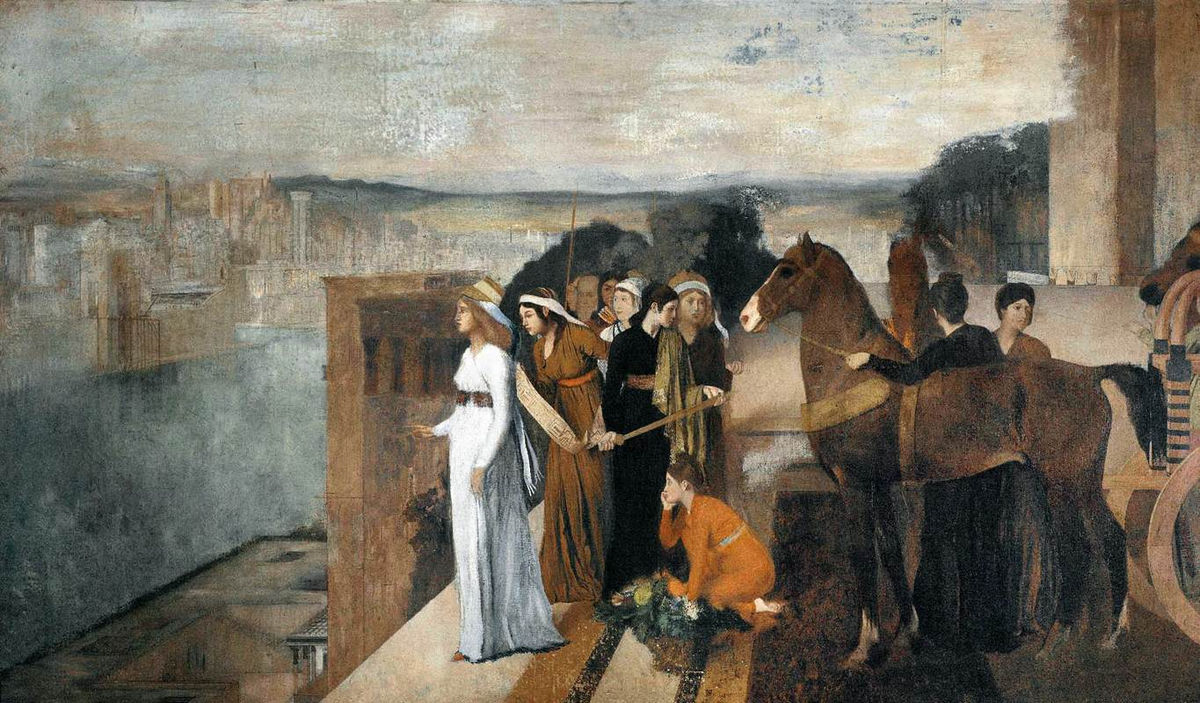
“And this you don’t mention,” said Protogenes, “that we risk being silly and ridiculous to reverse the words of Hesiod if, though he says, No marriage much before the age of thirty, Nor much after it: this time’s the ripe one; Let a wife be matured four years, married the fifth— if, I say, we are going to join a green, immature man to a woman as many years older than he as the bridegroom should be older than the bride[20]—and so follow the example of those who artificially pollinate dates and figs. “‘Yes,’ you say, ‘for she’s in love with him, she’s all on fire.’ Who, then, prevents her from making revel-rout to his house, from singing the Complaint Before the Closed Door, from putting nosegays on his portraits, from entering the ring with her rivals? These are the actions of true lovers. Let her lower her brow, renounce her easy life, and put on the dress of those who are in the service of passion. But if she is really modest and orderly, let her sit decently at home awaiting suitors, men with serious designs. For if a woman makes a declaration of love, a man could only take to his heels in utter disgust, let alone accepting and founding a marriage on such intemperance.” Protogenes stopped and my father said, “Do you observe, Anthemion, that they are again making a public issue of the matter, forcing a rebuttal from us who neither deny that we are devotees of conjugal love, nor seek to escape from our position?” “Good Lord, yes,” said Anthemion. “So now undertake against them a somewhat fuller defence of Love—and put in a word for Wealth, too, of which Peisias is making such use to frighten us.” “What charge,” asked my father, “will they not bring against a woman if we are to reject Ismenodora because of her love and her wealth? She does, in fact, live in grandeur and opulence. And what of that if she is beautiful and young? What of her proud and eminent birth? ...[21] Isn’t it true that decent women have a name for being disagreeable and intolerable because of their severity and eagle-beak noses? Aren’t they nicknamed Furies because they’re always angry with their husbands? So the best plan is to marry a Thracian Habrotonon[22] or a Milesian Bakchis from the market-place without benefit of ceremony and bring her home for a price and a shower of nuts.[23] “Yet we know a good many men who have been abject slaves of women like this. Samian flute-girls, ballet dancers, women like Aristonika and Oinanthê with her tambourine and Agathokleia[24] have trampled on the crowns of kings. The Semiramis[25] was the servant and concubine of a house-born slave of the king, Ninus the Great, who one day caught sight of her and fell in love. She grew to have such power and such contempt for him that she asked to be allowed to direct the affairs of state, crowned and seated on his throne, for one day. He granted this and issued orders for everyone to serve and obey her just as they would himself. At first her commands were moderate while she was making trial of the guards; then, when she saw that there was no opposition or hesitation on their part, she ordered Ninus to be seized, put in chains, and finally put to death. When all this was done, she ruled gloriously over Asia for many years. |
[8] “Ἐκεῖνο δ᾿ οὐ λέγεις,” ὁ Πρωτογένης εἶπεν, “ὅτι κινδυνεύομεν ἀναστρέφειν ἀτόπως καὶ γελοίως τὸν Ἡσίοδον, ἂν ἐκείνου λέγοντος, μήτε τριηκόντωνἐτέων μάλα πόλλ᾿ ἀπολείπων μήτ᾿ ἐπιθεὶς μάλα πολλά· γάμος δέ τοι ὥριος οὗτος· ἡ δὲ γυνὴ τέτορ᾿ ἡβώοι, πέμπτῳ δὲ γαμοῖτο· σχεδὸν ἡμεῖς ἔτεσι τοσούτοις γυναικὶ πρεσβυτέρᾳ, καθάπερ οἱ φοίνικας ἢ συκᾶς ἐρινάζοντες, ὄμφακα καὶ ἄωρον ἄνδρα περιάψωμεν. “Ἐρᾶται γὰρ αὐτοῦ νὴ Δία καὶ κάεται· τίς οὖν [b] ὁ κωλύων ἐστὶ κωμάζειν ἐπὶ θύρας, ᾄδειν τὸ παρακλαυσίθυρον, ἀναδεῖν τὰ εἰκόνια, παγκρατιάζειν πρὸς τοὺς ἀντεραστάς; ταῦτα γὰρ ἐρωτικά· καὶ καθείσθω τὰς ὀφρῦς καὶ παυσάσθω τρυφῶσα, σχῆμα λαβοῦσα τῶν τοῦ πάθους οἰκείων. εἰ δ᾿ αἰσχύνεται καὶ σωφρονεῖ, κοσμίως οἴκοι καθήσθω περιμένουσα τοὺς μνωμένους καὶ σπουδάζοντας. ἐρᾶν δὲ φάσκουσαν γυναῖκα φυγεῖν τις ἂν ἔχοι καὶ βδελυχθείη, μήτι γε λάβοι γάμου ποιησάμενος ἀρχὴν τὴν τοιαύτην ἀκρασίαν.” [9] Παυσαμένου δὲ τοῦ Πρωτογένους, “ὁρᾷς,” εἶπεν ὁ πατήρ, “ὦ Ἀνθεμίων, ὅτι πάλιν κοινὴν ποιοῦσι τὴν ὑπόθεσιν καὶ τὸν λόγον ἀναγκαῖον ἡμῖν [c] τοῖς οὐκ ἀρνουμένοις οὐδὲ φεύγουσι τοῦ περὶ γάμον Ἔρωτος εἶναι χορευταῖς;” “Ναὶ1 μὰ Δί᾿,” εἶπεν ὁ Ἀνθεμίων· “ἄμυν᾿ οὖν διὰ πλειόνων νῦν αὐτοὺς τῷ ἐρᾶν· ἔτι δὲ τῷ πλούτῳ βοήθησον, ᾧ μάλιστα δεδίττεται Πεισίας ἡμᾶς.” “Τί δ᾿,” εἶπεν ὁ πατήρ, “οὐκ ἂν ἔγκλημα γένοιτο γυναικός, εἰ δι᾿ ἔρωτα καὶ πλοῦτον ἀπορρίψομεν Ἰσμηνοδώραν; βαρεῖα γὰρ καὶ πλουσία· τί δ᾿ εἰ καλὴ καὶ νέα; τί δ᾿ εἰ γένει σοβαρὰ καὶ ἔνδοξος; αἱ δὲ σώφρονες οὐ διὰ τὸ αὐστηρὸν καὶ κατεγρυπωμένον ἐπαχθὲς ὄνομα καὶ δυσκαρτέρητον ἔχουσι, καὶ Ποινὰς καλοῦσιν αὐτὰς ἀεὶ τοῖς Dἀνδράσιν ὀργιζομένας; ἆρ᾿ οὐν κράτιστον ἐξ ἀγορᾶς γαμεῖν Ἁβρότονόν τινα Θρῇσσαν ἢ Βακχίδα Μιλησίαν ἀνέγγυον ἐπαγομένην δι᾿ ὠνῆς καὶ καταχυσμάτων; “Ἀλλὰ καὶ ταύταις ἴσμεν οὐκ ὀλίγους αἴσχιστα δουλεύσαντας. αὐλητρίδες δὲ Σάμιαι καὶ ὀρχηστρίδες, Ἀριστονίκα καὶ τύμπανον ἔχουσ᾿ Οἰνάνθη καὶ Ἀγαθόκλεια διαδήμασι βασιλέων ἐπέβησαν. ἡ δὲ Σύρα Σεμίραμις οἰκότριβος μὲν ἦν βασιλικοῦ θεράπαινα παλλακευομένη· Νίνου δὲ τοῦ μεγάλου βασιλέως ἐντυχόντος αὐτῇ καὶ στέρξαντος οὕτως ἐκράτησε καὶ κατεφρόνησεν ὥστ᾿ ἀξιῶσαι καὶ μίαν [e] ἡμέραν αὐτὴν περιιδεῖν ἐν τῷ θρόνῳ καθεζομένην ἔχουσαν τὸ διάδημα καὶ χρηματίζουσαν. δόντος δ᾿ ἐκείνου καὶ κελεύσαντος πάντας ὑπηρετεῖν ὥσπερ αὑτῷ καὶ πείθεσθαι, μετρίως ἐχρῆτο τοῖς πρώτοις ἐπιτάγμασι, πειρωμένη τῶν δορυφόρων· ἐπεὶ δ᾿ ἑώρα μηδὲν ἀντιλέγοντας μηδ᾿ ὀκνοῦντας, ἐκέλευσε συλλαβεῖν τὸν Νῖνον εἶτα δῆσαι, τέλος δ᾿ ἀποκτεῖναι· πραχθέντων δὲ πάντων, ἐβασίλευσε τῆς Ἀσίας ἐπιφανῶς πολὺν χρόνον. |
|
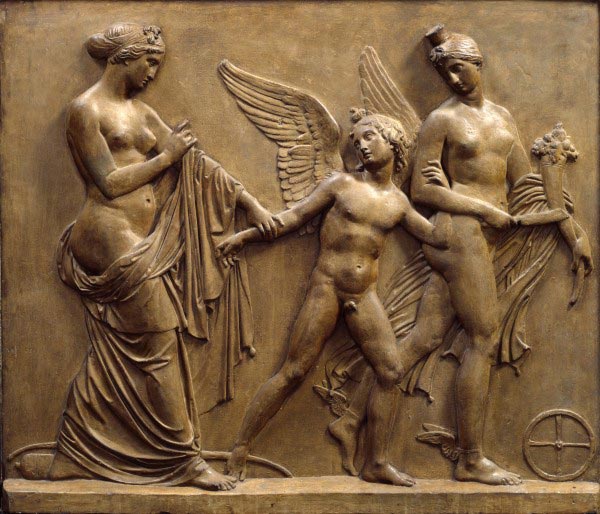
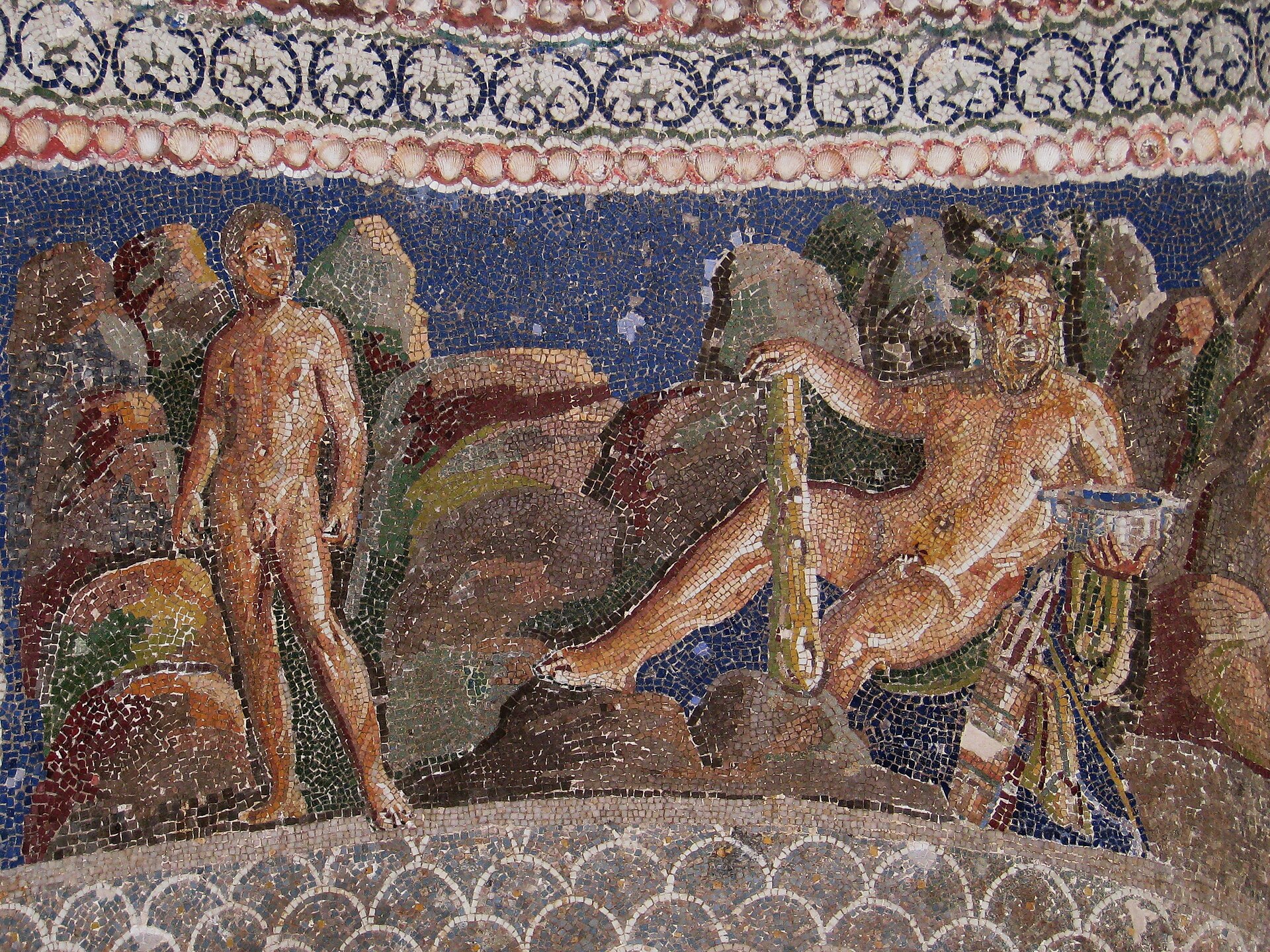
“Good heavens! Wasn’t Belestichê [26] a barbarian female bought in the market place, she to whom now the Alexandrians maintain shrines and temples dedicated through the king’s love to Aphroditê Belestiche? And that woman down there[27] who shares a temple and worship with Eros, whose gilded statue stands at Delphi with those of kings and queens, what dowry had she to subjugate her lovers?[28] “The men these worthless females exploited became their prey unwittingly through their own weakness and softness; yet other men, though poor and obscure, have married rich and noble women and have not been destroyed or lost one particle of dignity; they have enjoyed honour and exercised benevolent authority to the end of their life together. But the man who cramps and diminishes his wife (as a thin man does his ring for fear it may fall off) is like those who shear their mares and then lead them to a river or a pool: when the poor beast sees how she looks in the reflection, ugly and unsightly, they say that she abandons her haughty airs and allows asses to mount her. “To choose a woman for her wealth rather than for her character or birth would be ignoble and base; but if character and good breeding are added, it would be ridiculous to shun her. Antigonos,[29] to be sure, wrote to the commander of the garrison which had fortified Mounychia that it wasn’t enough to make the collar strong: the dog must also be made lean. This was in order to drain off the resources of the Athenians. The husband, however, of a rich or beautiful woman must not make her unsightly or poor; rather by his own self-possession and prudence, as well as by his refusal to be overawed by any of her advantages, he must hold his own without servility. The extra weight of his character must turn the scales; thus his wife is controlled and guided with as much profit as justice. “Moreover, the right age and proper time for marriage are suitably matched as long as both parties are able to procreate. I understand that the lady is in the prime of life, for” (he added with a smile at Peisias) “she is no older than any of her rivals; nor is her hair grey as is that of some of the gentlemen who try to give their own colour to Bakchon. If they are young enough to frequent his company, what is to hinder her looking after the young man better than any young wife in the world? It is true that young people find it difficult to fuse and blend well with each other. Only after a long time do they abandon their stiffness and self-assertion. At the beginning they have stormy weather and struggle with their partners—and still more so if Love is involved. Just as a high wind upsets a boat without a pilot, so Love makes stormy and chaotic a marriage of two people who cannot both command and will not either of them obey. “The nurse rules the infant, the teacher the boy, the gymnasiarch the youth, his admirer the young man who, when he comes of age, is ruled by law and his commanding general. No one is his own master, no one is unrestricted. Since this is so, what is there dreadful about a sensible older woman piloting the life of a young man? She will be useful because of her superior intelligence; she will be sweet and affectionate because she loves him. “To sum up,” my father said, “we are Boiotians and so should reverence Herakles and not be squeamish about a marriage of disproportionate ages. We know that he married his own wife, Megara, aged thirty-three, to Iolaos, who was then only sixteen.”[30] |
“Ἡ δὲ Βελεστίχη, πρὸς Διός, οὐ βάρβαρον ἐξ ἀγορᾶς γύναιον, ἧς ἱερὰ καὶ ναοὺς Ἀλεξανδρεῖς ἔχουσιν, ἐπιγράψαντος δι᾿ ἔρωτα τοῦ βασιλέως [f] ‘Ἀφροδίτης Βελεστίχης’; ἡ δὲ σύνναος μὲν ἐνταυθοῖ καὶ συνίερος τοῦ Ἔρωτος, ἐν δὲ Δελφοῖς κατάχρυσος ἑστῶσα μετὰ τῶν βασιλέων καὶ βασιλειῶν, ποίᾳ προικὶ τῶν ἐραστῶν ἐκράτησεν; “Ἀλλ᾿ ὥσπερ ἐκεῖνοι δι᾿ ἀσθένειαν ἑαυτῶν καὶ μαλακίαν ἔλαθον φαύλων γενόμενοι λεία γυναικῶν, οὕτω πάλιν ἄδοξοι καὶ πένητες ἕτεροι πλουσίαις [754a] γυναιξὶ καὶ λαμπραῖς συνελθόντες οὐ διεφθάρησαν οὐδ᾿ ὑφῆκάν τι τοῦ φρονήματος, ἀλλὰ τιμώμενοι καὶ κρατοῦντες μετ᾿ εὐνοίας συγκατεβίωσαν. ὁ δὲ συστέλλων τὴν γυναῖκα καὶ συνάγων εἰς μικρόν, ὥσπερ δακτύλιον ἰσχνὸς ὢν μὴ περιρρυῇ δεδιώς, ὅμοιός ἐστι τοῖς ἀποκείρουσι τὰς ἵππους εἶτα πρὸς ποταμὸν ἢ λίμνην ἄγουσι· καθορῶσαν γὰρ ἑκάστην τὴν εἰκόνα τῆς ὄψεως ἀκαλλῆ καὶ ἄμορφον, ἀφιέναι τὰ φρυάγματα λέγεται καὶ προσδέχεσθαι τὰς τῶν ὄνων ἐπιβάσεις. “Πλοῦτον δὲ γυναικὸς αἱρεῖσθαι μὲν πρὸ ἀρετῆς ἢ γένους ἀφιλότιμον καὶ ἀνελεύθερον, ἀρετῇ δὲ καὶ [b] γένει προσόντα φεύγειν ἀβέλτερον. ὁ μὲν γὰρ Ἀντίγονος ὠχυρωμένῳ τὴν Μουνιχίαν τῷ φρουροῦντι γράφων ἐκέλευε ποιεῖν μὴ μόνον τὸν κλοιὸν ἰσχυρὸν ἀλλὰ καὶ τὸν κύνα λεπτόν, ὅπως ὑφαιρῇ τὰς εὐπορίας τῶν Ἀθηναίων· ἀνδρὶ δὲ πλουσίας ἢ καλῆς οὐ προσήκει μηδὲ τὴν γυναῖκα ποιεῖν ἄμορφον ἢ πενιχράν, ἀλλ᾿ ἑαυτὸν ἐγκρατείᾳ καὶ φρονήσει καὶ τῷ μηθὲν ἐκπεπλῆχθαι τῶν περὶ ἐκείνην ἴσον παρέχειν καὶ ἀδούλωτον, ὥσπερ ἐπὶ ζυγοῦ ῥοπὴν τῷ ἤθει προστιθέντα καὶ βάρος, ὑφ᾿ οὗ κρατεῖται καὶ ἄγεται δικαίως ἅμα καὶ συμφερόντως. “Καὶ μὴν ἡλικία γε πρὸς γάμον καὶ ὥρα τὸ [c] τίκτειν ἔχουσα καὶ τὸ γεννᾶν εὐάρμοστός ἐστιν· ἀκμάζειν δὲ τὴν γυναῖκα πυνθάνομαι”· καὶ ἅμα τῷ Πεισίᾳ προσμειδιάσας, “οὐδενὸς γάρ,” ἔφη, “τῶν ἀντεραστῶν πρεσβυτέρα, οὐδ᾿ ἔχει πολιάς, ὥσπερ ἔνιοι τῶν Βάκχωνι προσαναχρωννυμένων. εἰ δ᾿ οὗτοι καθ᾿ ὥραν ὁμιλοῦσι, τί κωλύει κἀκείνην ἐπιμεληθῆναι τοῦ νεανίσκου βέλτιον ἡστινοσοῦν νέας; δύσμικτα γὰρ τὰ νέα καὶ δυσκέραστα καὶ μόλις ἐν χρόνῳ πολλῷ τὸ φρύαγμα καὶ τὴν ὕβριν ἀφίησιν, ἐν ἀρχῇ δὲ κυμαίνει καὶ ζυγομαχεῖ καὶ μᾶλλον ἂν Ἔρως ἐγγένηται καθάπερ πνεῦμα κυβερνήτου [d] μὴ παρόντος ἐτάραξε καὶ συνέχεε τὸν γάμον οὔτ᾿ ἄρχειν δυναμένων οὔτ᾿ ἄρχεσθαι βουλομένων. “Εἰ δ᾿ ἄρχει βρέφους μὲν ἡ τίτθη καὶ παιδὸς ὁ διδάσκαλος, ἐφήβου δὲ γυμνασίαρχος, ἐραστὴς δὲ μειρακίου, γενομένου δ᾿ ἐν ἡλικίᾳ νόμος καὶ στρατηγός, οὐδεὶς δ᾿ ἄναρκτος οὐδ᾿ αὐτοτελής, τί δεινὸν εἰ γυνὴ νοῦν ἔχουσα πρεσβυτέρα κυβερνήσει νέου βίον ἀνδρός, ὠφέλιμος μὲν οὖσα τῷ φρονεῖν μᾶλλον ἡδεῖα δὲ τῷ φιλεῖν καὶ προσηνής; “Τὸ δ᾿ ὅλον,” ἔφη, “καὶ τὸν Ἡρακλέα Βοιωτοὺς ὄντας ἔδει σέβεσθαι καὶ μὴ δυσχεραίνειν τῷ παρ᾿ ἡλικίαν τοῦ γάμου, γινώσκοντας ὅτι κἀκεῖνος [e] τὴν ἑαυτοῦ γυναῖκα Μεγάραν Ἰολάῳ συνῴκισεν ἑκκαιδεκαέτει τότ᾿ ὄντι τρία καὶ τριάκοντ᾿ ἔτη γεγενημένην.” |
[1] Helicon is a mountain in the Thespiai region of Plutarch’s homeland of Boiotia. [Website note]
[2] Thespiai, in Plutarch’s day, was the principal city of Boiotia, except perhaps for Tanagra (Strabo, ix. 2. 5, 25). Thebes, Chaironeia, and the rest were not even “respectable villages.” See also Frazer’s Pausanias, v, pp. 140 ff. But Cicero (Verr. ii. 4. 135) speaks of the great statue of Eros as Thespiai’s only attraction. [Translator’s note]
[3] Mnemosynê: “Memory.” [Translator’s note]
[4] One of Plutarch’s best friends. He appears often in the Symposiacs and is a speaker in De Sollertia Animalium. [Translator’s note]
[5] The Thespians were notable for their excitability and contentiousness: Dikaiarchos in Müller, Geogr. Graec. Min. i, p. 104; Aelian, Varia Hist. xi. 6. [Translator’s note]
[6] It will help the reader’s appraisal of the situation to point out at once what is not made clear until 753a, that marrying Bakchon to Ismenodora would be reversing Hesiod’s recommendation, explained more fully in the footnote to 753a, that at marriage a man should be about 30 and a woman 17. Bakchon being thus 17 is compatible with every other indication given of his age, namely the descriptions of him as as an ἔφηβος ephebos (in Athenian law, over 18 and under 20, but even there often used more loosely for any young male who had reached adolescence (14), but was not thought of as fully adult), a μειράκιον meirakion (an adolescent usually in the third seven years of his life, so over 14 and under 21) and a νεανίσκος neaniskos (the diminutive form for a young male of any age). [Website note]
[7] “Minor” has been replaced by “ephebe” as a more literal and accurate translation of ἔφηβος ephebos. [Website note]
[8] “Young man” has been replaced by “adolescent” as a translation of meirakion, usually meaning an adolescent in the third seven years of his life, so over 14 and under 21. [Website note]
[9] Possibly from Euripides’ Chrysippos: cf. Nauck, Trag. Graec. Frag. p. 632. The subject was Laios’ rape of the son of Pelops, to which the next phrase refers. [Translator’s note]
[10] The ridiculous anachronism “girls” has been replaced by “maidens” as a translation of παρθένοις. For the Greeks, there was no categorical distinction between younger and older females of fertile age; the important distinction to be drawn was whether or not they were married. [Website note]
[11] Aristippos (ca. 435-356 BC) was a hedonistic Greek philosopher and one of the lovers of the famously beautiful courtesan Lais. [Website note]
[12] The gymnasium at Cynosarges was the only one in Athens which residents of illegitimate birth or born of a foreign mother could frequent: Life of Themistokles, i (112 a). [Translator’s note]
[13] “Young men” has been replaced by “youths” as a translation of νέων, meaning young males of any age. [Website note]
[14] Not the “starveling scream” of base-born eagles. [Translator’s note]
[15] Frag. 135 Nauck, Trag. Graec. Frag. p. 44, from the Myrmidons; probably spoken by Achilles over the corpse of Patroklos, reproaching him for having allowed himself to be killed. Cf. also Mor. 61 a. [Translator’s note]
[16] Plato, Laws 839b. [Website note]
[17] That is, if he doesn’t change sides in a hurry, he will lose whatever manhood he has left. [Translator’s note]
[18] “Young man” has been replaced by “youth” as a translation of νεανίσκος, the diminutive form for a young male of any age. [Website note]
[19] The slave who accompanied a child to and from school; but in 754 f infra we see that Bakchon was not so accompanied. [Translator’s note]
[20] See Einarson’s explanation (Class. Phil. xlix, p. 278, n. 1): marrying Bakchon to Ismenodora would be reversing Hesiod’s 30 for the man and 17 for the woman. (Cf. 754 d-e infra where Megara is 33 and Iolaos 16.) [Translator’s note]
[21] There is probably a lacuna at this point. [Translator’s note].
[22] The name and nationality of Themistokles’ mother: Life of Themistocles, i. [Translator’s note]
[23] Brides and new slaves were showered with nuts when first brought home. [Translator’s note]
[24] Agathokleia was the mistress of Ptolemy IV (Life of Agis and Kleomenes, liv, 820 d); Oinanthê was her mother. The former had immense power (Polybios, xiv. 11. 5). [Translator’s note]
They are not, however, good examples of low-born women rising high. Agathokleia’s father was the grandson and namesake of Agathokles King of Sicily, whose daughter had taken refuge in Egypt after her father’s downfall. [Website note]
[25] An account of this queen of Assyria will be found in Diodoros, ii. 20. 3. Translator’s note]
[26] One of the mistresses of Ptolemy II. [Translator’s note]
[27] He points down to Thespiai. [Translator’s note]
[28] Phrynê of Thespiai shared Eros’ temple there and dedicated a golden statue of herself by her lover Praxiteles in the precinct of Apollo at Delphi (Mor. 336 c-b; 401 d; Pausanias, x. 15. 1). [Translator’s note]
[29] Antogonos “Gonatas”, King of the Macedonians 277-239 BC. [Website note]
[30] Given the importance of Herakles’s eromenos, Iolaos, in the Greek imagination as the symbol of the boy in a pederastic love affair (as Plutarch will make clear later, 761d), the information that Iolaos was sixteen is a rare and critical indication of the age of an already-established beloved. [Website note]
Comments powered by CComment