
CONFESSIONS OF AN ACTOR
BY LAURENCE OLIVIER
Laurence Kerr Olivier (22 May 1907 – 11 July 1989), first knighted and then the first actor in Great Britain to be created a Lord (in an age when this did not yet necessarily imply being simply a government lackey), was regarded by many as the preeminent actor of his generation. His memoir Confessions of an Actor was published by Weidenfeld and Nicolson in London in 1982. Presented here is the only passage of Greek love interest.
Chapter Two. Cradle to Choirboy
On what happened to him as a fourteen-year-old new boy and choir soloist at his public school, St. Edward’s in Oxford, in 1921.
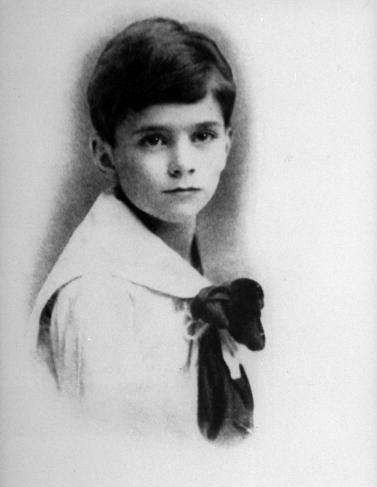
With hindsight, I suppose that the allowable feeling of superiority conferred by solo-singing, plus my giddily successful acting opportunities, had lent my exterior a hint of show-off; and the female roles had varnished it with an extra coat of girlishness. […] I very soon caught the attention, rapidly followed by the attentions, of a few of the older boys. The prefects themselves, in the dignity of their exalted positions, were above such things.
I did not in any way welcome such attentions; I knew well enough what they spelt. My first experience of that had been a somewhat frightening one. Calling at the All Saints church house one day before I joined the choir, I was stopped by a large boy, an old choirboy, who offered to show me the stage upstairs where the choir school plays were performed. I was dressed in a kilt, Kerr tartan (my second name, as was my father’s, is Kerr; no one has ever found the Scottish connection), with the velvet jacket and silver buttons, a customary Sunday outfit inherited from my brother. This boy flung me down on an upper landing, threw himself on top of me and made me repeat again and again, “No, no, let me go, I don’t want it.” This I did willingly enough, but it only increased his ardour. His “exercises” were getting more powerful when to my relief he thought he heard someone coming up the stone stairs. He pushed me down these and himself disappeared further up towards the top of the building. I rushed down, tearful and trembling, in desperate search of my mother, into whose arms I gratefully flung myself. On the way home she asked me the lad’s name, which she recognized; a year or two back he had come to a birthday party for me to which Mummy had invited all fourteen boys. She made me promise to tell her if anything of the kind should ever happen again.
The reactions I provoked two years later, at St Edward’s, were seemingly shared by the entire school, quite instantaneously.
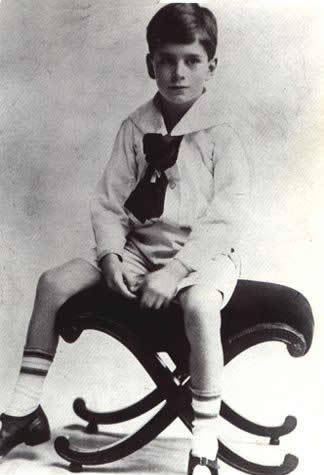
I was a flirt.
I was ostracized.
I had had more than the normal amount of chastisement at All Saints. I had been there about a year when a new master arrived. He was a shell-shocked, wounded hero home from the war - a type most dreaded by all schoolboys at the time. Their heroic gallantry was soon discovered to be wretchedly underemployed and found expression in the indulgence of sadistic tendencies. He had soon fastened his prime interest on me (I reportedly sang like an angel and was as pretty as was needed to attract the worst in certain males).
He arrived at the school armed with a specially fashioned strap. We boys thought: “Oh, he’s been thinking a lot about punishments then.” The object of his strapping exploits was of course me. With my trousers down I was made to bend over – “Bend more tight, more tight,” he always said; angled to his satisfaction, he laid it on to my bare flesh until my screams reached the vicarage across the courtyard. To the vicarage across the courtyard, my adored brother as head boy made his way. He saw the vicar and protested that his brother was being picked out for quite unjust and infinitely more frequent punishment than anybody else. “It’s not fair,” he shouted at the vicar’s raised eyebrows. The highest authority was now apprised that the kind of man spoken of as a “sadist” was on his staff. The wretched culprit disappeared with surprising suddenness; he had only quite recently joined the priesthood and just a few days before this occurrence had celebrated his first Mass. [pp. 18-20]
Editorial note
Olivier’s son Tarquin, in his biography, My Father Laurence Olivier (London: Headline, 1992) devotes one short paragraph to his father’s schooldays, so unsurprisingly adds nothing to the preceding.
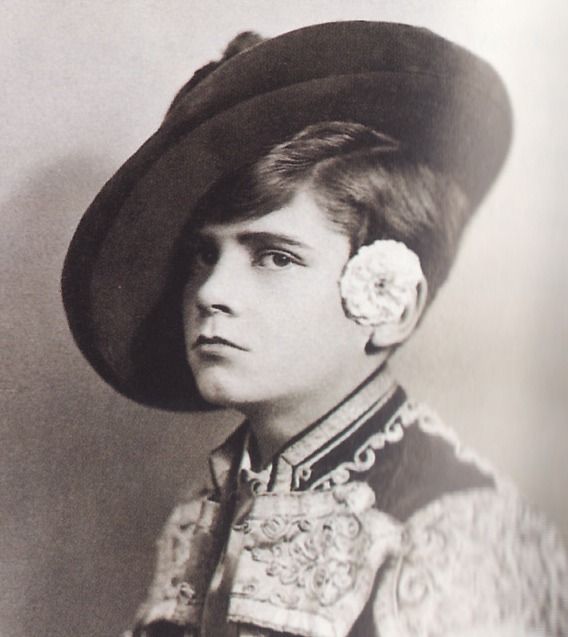
In contrast, Donald Spoto, in his Laurence Olivier: A Biography, published the same year by Fontana, summarised and added importantly and tantalisingly to Olivier’s own account thus:
“I was ostracised,” Olivier wrote later. “I was a flirt [who] sang like an angel and was as pretty as was needed to attract the worst in certain males,” by which he meant not only older bullies but also those repressed homosexual teachers who vented their frustrations by sadistic beatings of desired but forbidden boys. “In any case, I was generally disliked. My manner was florid, and I was girlish and a bit sissy.” These characteristics made him a ripe target for the sexual advances of older boys, with whom (as he later freely confided to friends) he blithely cavorted throughout his school years. Such adventures, blessedly free for Larry of any subsequent neurotic guilt, were typical of the English boarding school tradition, and are not unknown elsewhere.
This surely suggests that, in his memoir, Olivier had understandably felt bound to omit revelations of happy partaking in Greek love that could damage his image and offend a public by then deeply hostile to such love.
Terry Coleman, in his Olivier: The Authorised Biography (London: Bloomsbury, 2005), which appears to be the most highly-regarded of the many biographies of Olivier, gives scant attention to the sexual interest his subject had aroused as a boy:
The school [St. Edward’s] was not markedly homosexual. It was a matter of crushes and did not go farther than the accepted right of prefects and other seniors to have favourites whom they rewarded with small treats. [p. 19]
A little earlier in his memoir, Olivier wrote at some length (pp. 9-11) and with notable warmth and admiration (as a teacher, a priest and a sympathetic man) of “the Reverend Geoffrey Heald. This young and gifted priest”, the choirmaster at his preceding school, All Saints, Margaret Street, London, which he attended from 1916 to 1921, aged nine to fourteen. Towards the end of his time there, Heald and he played the leading parts in the school’s production of The Taming of the Shrew: “Geoffrey Heald was a stunning Petruchio and I was allowed to be his Kate. In the subsequent year the whole play was undertaken. Father Heald's direction was brilliant, and he injected into my consciousness a conviction that I was, in fact, being a woman.” [p. 12]
In 2007, one Michael Munn, a self-styled film historian, produced Lord Larry. The Secret Life of Laurence Olivier. A Personal and Intimate Portrait (London: Robson), in which the characteristic voice of our age makes itself heard loud indeed. Munn claimed in his youth to have become very close to the elderly Olivier, whom he says told him about his friendship with Heald and their acting together. “Larry was just thirteen but he was playing love scenes as a female with an adult male who was a priest and the closest friend Larry had,” remarks Munn, then adds “And that really bothered me.” If so, his prescience was stunning, considering stories of sex abuse by priests, all the rage in 2007, were barely heard of twenty-seven years earlier,[1] when Munn claims he got Olivier to confess to him that Heard had in fact abused him. No details are given, but Munn gives us the customary assurance that the damage done to Olivier was devastating and lifelong.
There are two main reasons for suspecting Munn’s narrative is fraudulent. First, he made a successful career out of writing biographies of several extremely famous and conveniently-deceased film stars allegedly based on interviews he recorded (but of which he always conveniently lost the tapes), all with startling revelations denied by the subjects’ genuine intimates. This was gently exposed in an article in The Observer in 2010. Secondly, Olivier's alleged revelation is dated to 1981, the very beginning of the mass hysteria over child sex abuse and his alleged account of it smacks much too strongly of the dogma that was only to be developed by the child sex abuse industry over the course of that decade. In other words, written in 2007, it sounds strongly like an account catering to popular ideas that hadn’t taken hold in 1981 but were bound to attract sales in 2007, and sales were very much what Munn had in mind, with his sensational “discovery” figuring prominently in the publisher’s blurb.
[1] If Munn had been challenged with this observation, he would doubtless have replied that he was exceptionally sensitive to the possibility because he himself had been abused by a priest as a boy, but then, given Munn’s reputation for outrageous invention, one must wonder if he didn’t make that up too to suit the rest of his narrative.
Comments powered by CComment