
THE AUTOBIOGRAPHY OF A SCHOOLBOY
A MEMOIR BY THOMAS TOMKINS, X
Presented here with his kind permission is Chapter Ten of the hitherto unpublished memoir of his youth of a retired English publisher written under the pen name Thomas Tomkins and finished in 2026.
[Return to the beginning of this memoir]
Chapter Ten
The greater part of the Summer holiday was spent much as usual, helping my mother about the house and, in particular, cooking breakfasts, a task at which I had become adept. (I am still a dab hand with a frying pan, and my grandchildren always enjoy my eggs-and-bacon breakfasts when they come to stay.) I continued my visits to the various Museums around London and even discovered some smaller specialist establishments such as the Geffrye Museum.
However, I had had another letter from Allan, giving me the address of his new house, and hoping that I would be able to spare him a few days of my holiday. Needless to say, I wrote back, accepting his invitation with alacrity and suggesting that I spend the penultimate week of the holiday with him.
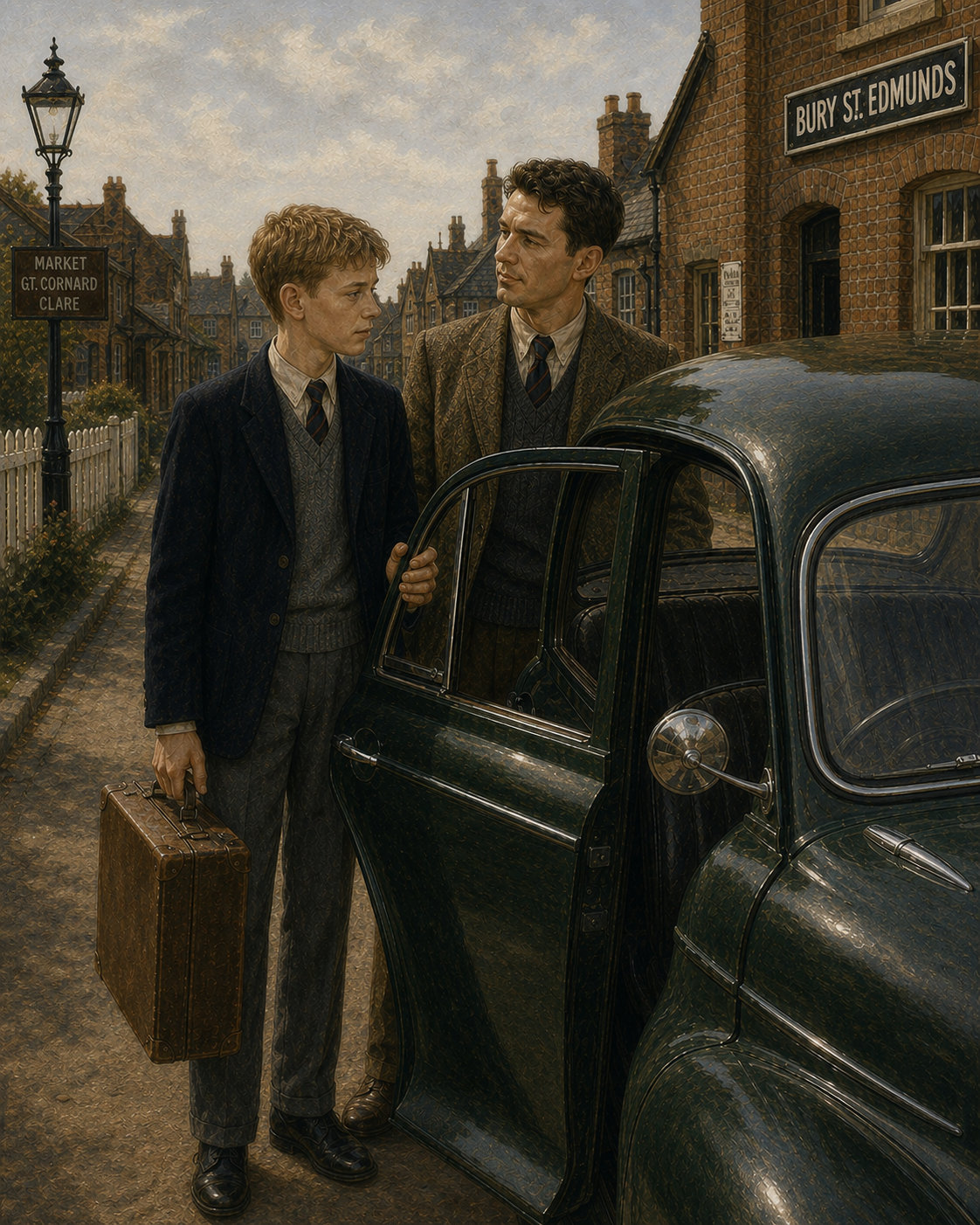
And so it was that, instead of taking the Penzance train from Paddington, I was once again on my way from Liverpool Street. Allan met me at the station in his Morris Minor and we made our way to his new house.
It was a charming cottage, with something of the same feel as the house in Penzance (and I recognized some of the furniture from there). There were two bedrooms, a sitting room and a kitchen large enough to contain a substantial table at which we ate. It delighted me to be able to cook for him, not only breakfasts but also evening meals, using the skills that I had learned at home, preparing meals for our “paying guests”.
Allan had also had a shower bath installed in the bathroom. This was to give us great pleasure. It started with my asking him to wash my back on my first morning... an hour or more later we were washing each other from head to foot. The bathroom floor was awash with water and suds, but mopping it was a chore to be undertaken cheerfully.
But the greatest joy of that week was to be able to share Allan’s bed. He had bought a new double bed with plenty of room for us both. I had continued to grow and we were amused to notice that I was now slightly taller than Allan, though still much slighter in build. We found many ways to explore one another’s bodies, and I was learning how to hold back and prolong our pleasure. The one sexual act we did not perform was buggery. I think by then I must have heard of it, but would have regarded it with distaste. Whether Allan would have liked to do it to me, or for me to do it to him, I do not know. In all of our sexual diversions, the question never arose.
The days were spent exploring the countryside, and visiting towns and cities. Although I was used to East Anglia, having spent the first part of my life there, I actually knew very little of the area beyond the town where we had lived. We visited Lowestoft, a seaport town with much of interest around the harbour; we visited Cambridge, a city which I later would come to know intimately. Bury St Edmunds, Norwich, the charming miniature Cathedral city of Ely, the quaint old-world village of Lavenham, each of them had its own atmosphere, its own secrets which we shared. We visited Churches, and I began to be able to distinguish different architectural styles and to “date” different churches. East Anglia, of course, is known for the size and beauty of its parish churches, dating back to the times when money, derived from the wool trade, was plentiful.
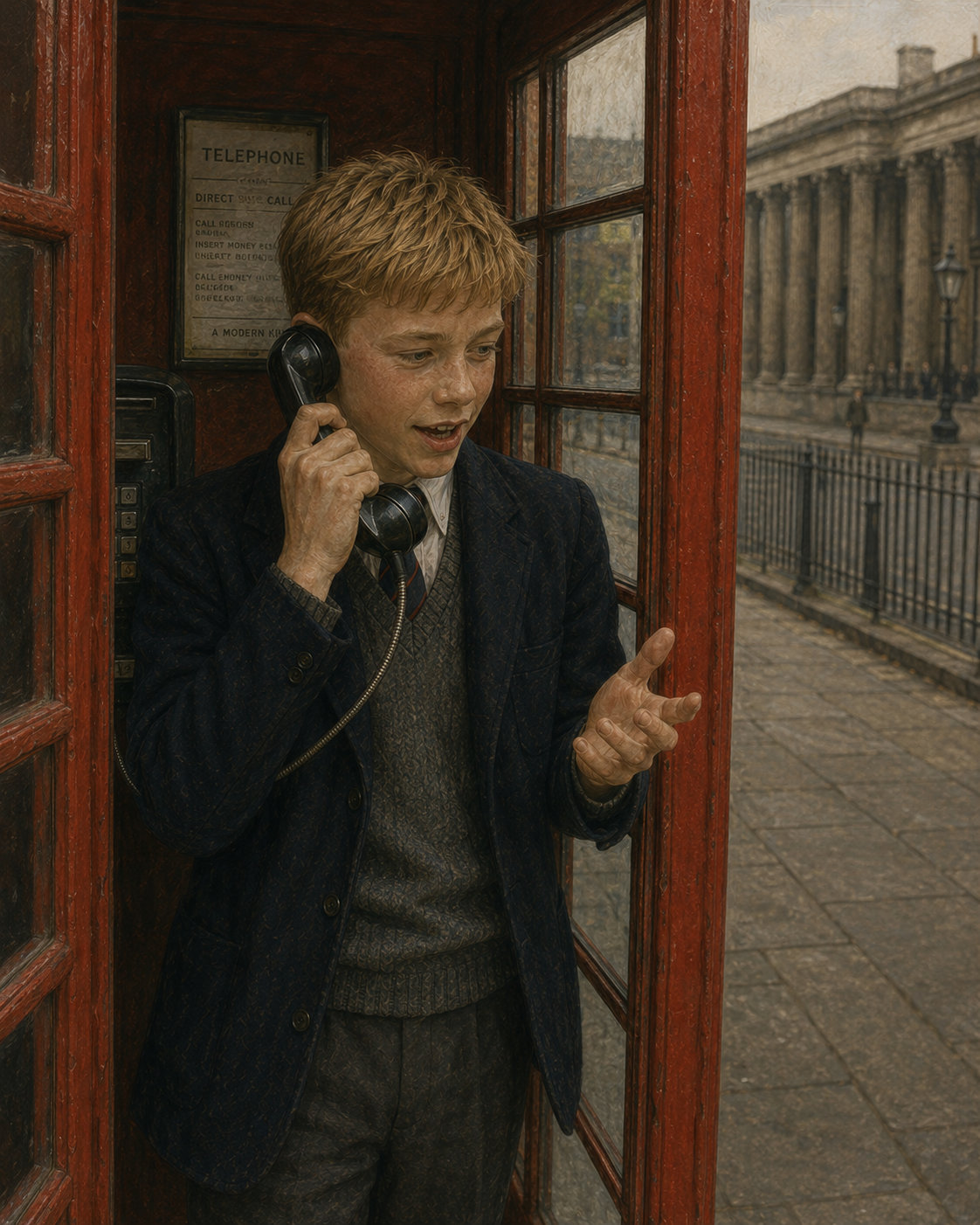
A week was not nearly long enough. I had to return to London, to help my mother with the household, to put up with my father’s sodden indolence, to cook breakfasts and to help with cleaning. I had two consolations. One was the British Museum which, again, provided the best refuge I had from the world; the other was my communication with Allan. We wrote to one another at least once a week, and I found a telephone kiosk in a quiet street near to the Museum from which I rang him from time to time. I have now to confess that I helped myself to small change from the petty cash box in the grimy little cubicle that did duty for an office. Whether the money was ever missed I do not know, but my mother was so disorganized that I doubt if any account was kept of the petty cash. Certainly, nothing was ever said about it.
And so I was back at Flamborough for my second year, in the Fourth Form. Most of my classmates were those I had had in the previous year, but there had been some movement between sets and in my form there were fewer of what I would later come to know as “hearties” and more boys with scholarly and aesthetic interests. Our Poetry Club flourished, and the Fourth Form Play, which I brewed up with one of the younger masters and half a dozen of my friends, was, I think, generally regarded as a success.
But I remember very little in detail about this time, other than my delightful weeks snatched with Allan. They were, I felt, the times when I was truly alive, and while I was with him school, home and all else faded into insignificance. And yet I was growing up gradually. Allan had filled a deep need in my life, for which I loved him and will continue to love him as long as I live. He taught me the meaning of love and I am as grateful to him now as I was fifty and more years ago.
But I was changing. On my visits to the London Museums, on train journeys, even occasionally at school when I encountered the sisters of Flamborough boys, I had started to notice girls, and they were beginning to enter my masturbatory fantasies. I knew, in theory at any rate, something of the mechanics of conventional sexual intercourse, and wondered when the time would come when I should be able to experience it.
But in the meantime the new term began, and there were other diversions. There was a boy named Tonks who was an insatiable pathic: his delight was to be buggered, and if a little roughly so much the better. I have known him achieve an erection and orgasm without touching his penis, just through being vigorously stimulated per tergo. At one time buggery was known as “Tonking” among Flamborough boys, though I think the term fell into desuetude not long after he left.
Tonks was not a particularly attractive boy; he was of medium height, rather squat and slightly knock-kneed, with a round, undistinguished face and notably large ears. He had certainly not been such a one as attracted the lustful attention of seniors, and he had no interest in Flopsies, even in his senior year. However, I was quite willing to expend some of my surplus energy on satisfying him, particularly as it resulted in my experiencing some very acceptable orgasms. We experimented with various lubricants. Vaseline worked well, but was rather greasy and also fairly expensive. Saliva, generously applied, was better than nothing. But Cold Cream proved to be the ideal, and Tonks must have used at least one large pot of the stuff each term. I have often suspected that he cadged it from the Matrons, on the pretext of some skin complaint or other, unless he smuggled it in at the beginning of each term. He never seemed to run short.
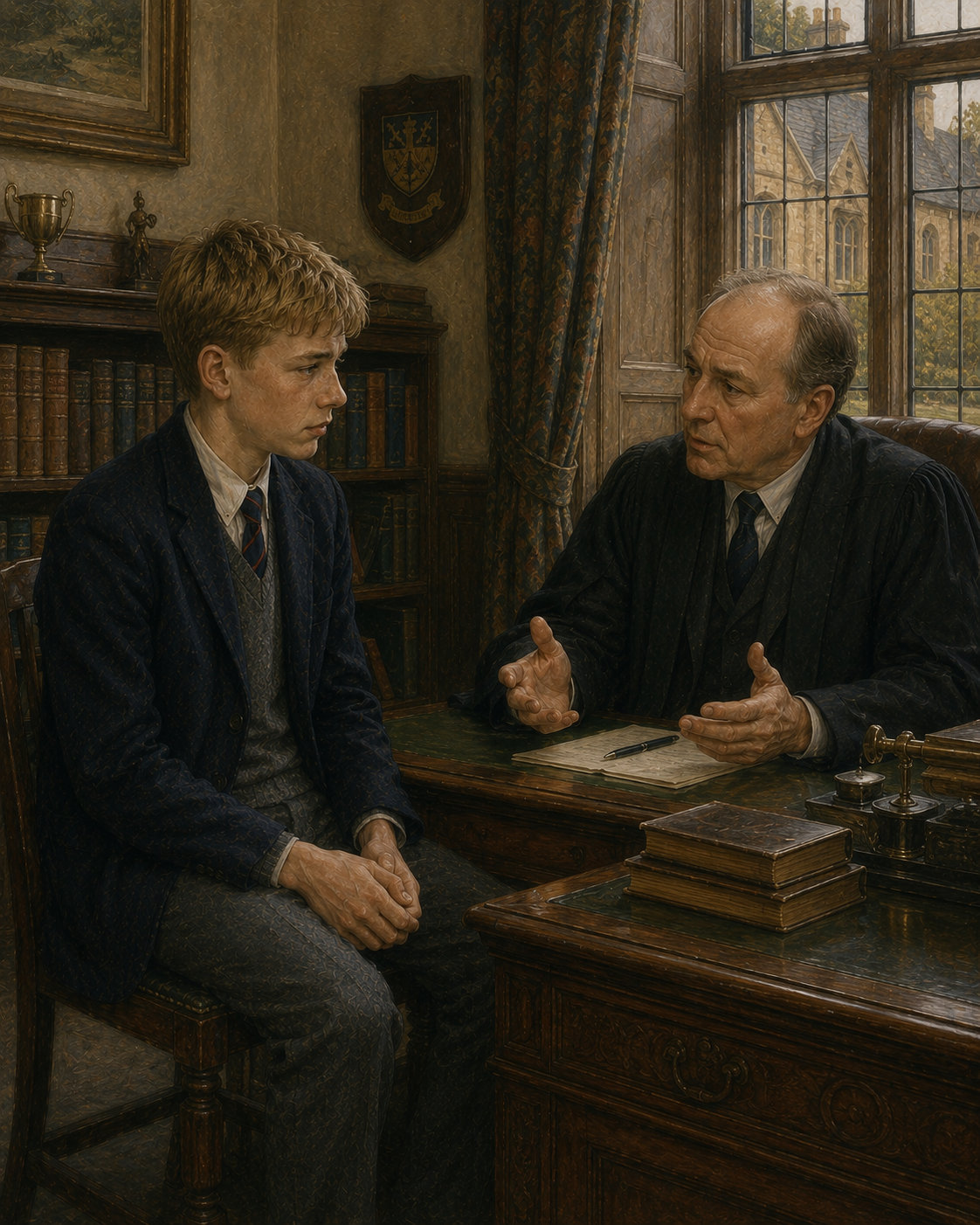
Towards the end of my time in the Fourth Form, I was summoned to the Headmaster’s Study. This was a serious matter at Flamborough; routine discipline was handled by Housemasters and to be called to attend the Presence was productive of considerable anxiety. I could only assume that either my antics with Tonks or my more delicate relationship with Garbin had come to official notice. I could not have been more wrong. I was told, with more grace than I would have expected from so exalted a personage, that my father had died suddenly and unexpectedly, and I was to go home forthwith.
Exactly how he had died I did not find out, but looking back I think it most probable that he had passed out in one of his drunken stupors and choked to death. I was not a little surprised to find how upset I was. We had had little real contact over the years and he had played but a small part in my upbringing. And yet the house seemed silent and empty without his brooding presence, or perhaps it was that the “paying guests” kept themselves quiet out of respect. It was some years later that I read Beverley Nichols’ autobiographical book Father Figure and realised that while my father had been ineffectual, at least he had not been vicious or violent as had John Nichols.
I spent only a couple of days in London, returning to school as I was preparing for the examinations whose results would determine my progress into the Fifth Form and thence my remaining career at Flamborough and, indeed, on into University. I was allowed three days off to attend my father’s funeral, which took place at Golders Green Crematorium, and even then I took books with me to keep up with essential work. Of course, I shared this news in a letter to Allan, and had, by return of post, a kind and sympathetic reply. I wished, not for the first time, that I had had the sort of relationship with my mother that he had had with his. But at least I had him to turn to.
Despite this interruption, I did well in my examinations, and was told that I should be promoted at the beginning of the next year into the Classical Fifth. This meant that I should continue with Latin, English and the Humanities, but I should start on Greek and would be expected to take in at least one modern language. This was thought to promote “breadth of curriculum”. I elected to learn German which I thought, rightly as it turned out, that I should find it much more useful than French.
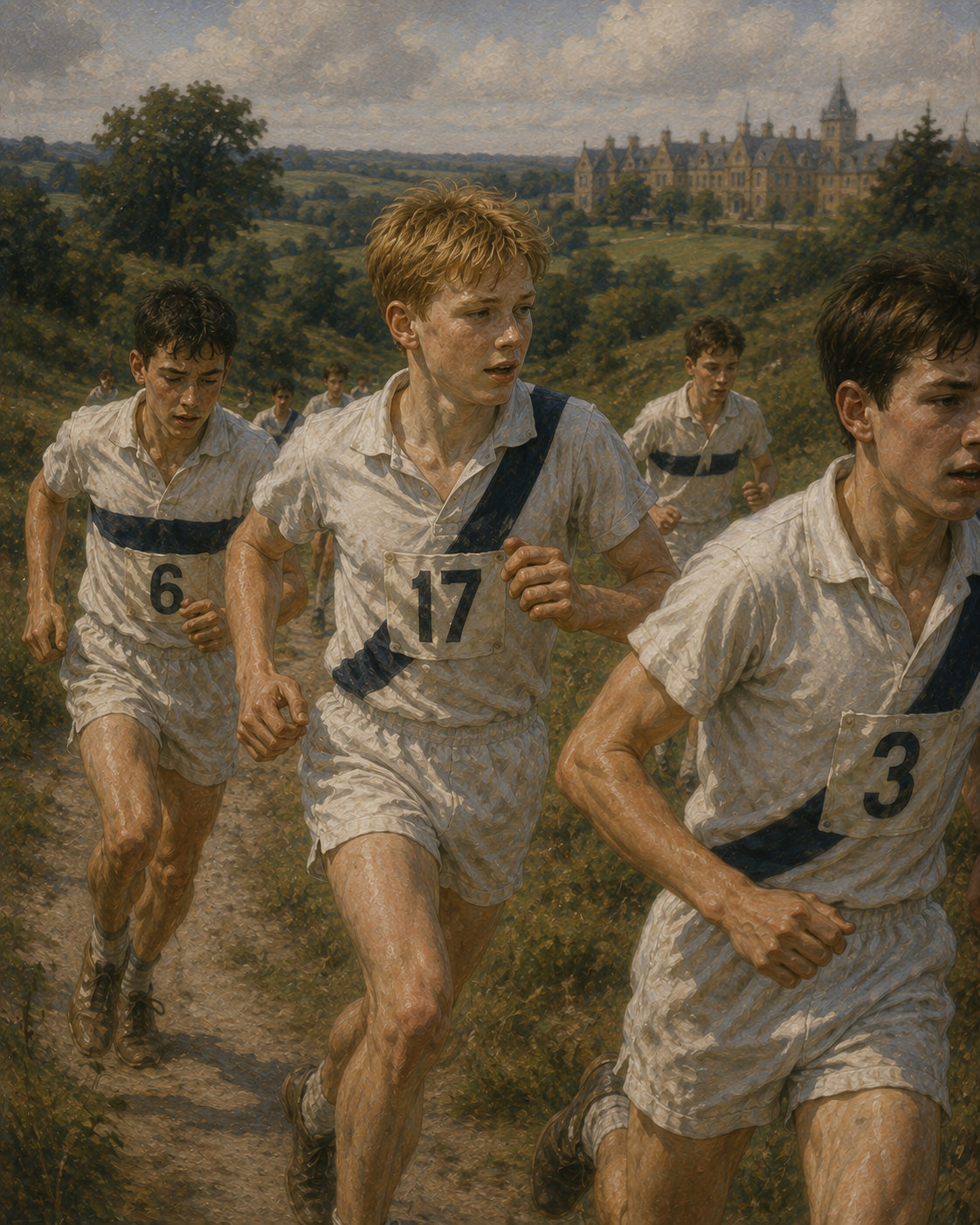
However, it did mean that I was well on track for a possible University Scholarship and that any academic ambitions I had would be taken seriously. It also meant that compulsory attendance at the dreaded Games would be reduced to two afternoons a week, and that I might choose cross-country running in place of football. Being long-legged and fairly fleet of foot this was no great imposition, and I made the interesting discovery that I could set myself running at a moderate pace, whereupon my legs would keep that pace going with no further attention and I could devote myself to thought. Many is the puzzle I solved on those long, solitary runs, and very useful they were for mentally going over Latin vocabulary and grammar and even planning English writing.
That summer, I spent two separate weeks with Allan. As before, I slept in his bed, feeling as I had when first I slept with him, warm, loved and secure. But I noticed that he was becoming sexually less responsive. I did not know what to make of this at first, but came to realise that it was due to my growing out of boyhood. He was sexually attracted to boys just before, or just entering, puberty, and I was by now in my mid teens, with a down of hair starting to appear on my legs and forearms and even the first smudgy promises of a moustache. Mid-way through the second week I spent with him I tackled him about it. It was easier to do so than I had thought it might be, as we had been very open with one another from the beginning, though keeping our relationship hidden from the disapproving world.
But he made me a promise then which he kept life-long. He said, “I will always love you. My home will always be your home and you will always be welcome in it. I may form other attachments, but you will be my first and greatest love until the day I die.” I have remembered that speech word for word ever since. I knew that he meant it, and that even if other boys shared his bed, I would still be loved and welcomed. He has never let me down. There were other boys. I met one once, and by sheer chance met him again over forty years later. He, too, remembered Allan with great affection, but had known even then that there was someone else who held the deepest place in his heart.
Comments powered by CComment