
THE AUTOBIOGRAPHY OF A SCHOOLBOY
A MEMOIR BY THOMAS TOMKINS, II
Presented here with his kind permission is Chapter Two of the hitherto unpublished memoir of his youth of a retired English publisher written under the pen name Thomas Tomkins and finished in 2026.
[Return to the beginning of this memoir]
Chapter Two
My father, Dr John Tomkins, was always a rather remote figure. He was, I think, naturally a kindly man, but in those days men, especially those of the professional classes, were not expected to have anything much to do with their children other than pay school fees and carry out an occasional inspection. He was tall and quite imposing in appearance, with a high forehead, piercing blue eyes and large, capable hands.
He had the spare, scrubbed look common to many doctors. I think he had originally shown much promise in his chosen profession and had passed his examinations with honours. He had been expected to make his way to a senior hospital post. However, he had little private money and the necessity of making a living forced him into general practice. Such money as he had had went in buying the practice; thereafter his earnings were our only source of income. He had married, I suspect, largely because it was expected that a young doctor should do so; an unmarried practitioner was not only a cause for suspicion but also a target for unmarried women who, if thwarted, could become viciously vindictive. Many a promising medical career was ruined by a false accusation of impropriety.
So my father married Eleanor Fane, the daughter of an impoverished Norfolk squire, largely because she was presentable, spoke well and was available. They met, I believe, when my father was carrying out ‘locum’ duties in the nearby town and cured my grandfather, by means of one of the new antibiotics derived from Penicillin, of some malady which had defeated other doctors. They married at the little parish church in the Norfolk village where she was brought up, whereafter she took up residence in the flat above my father’s practice, a move which she never ceased to resent.
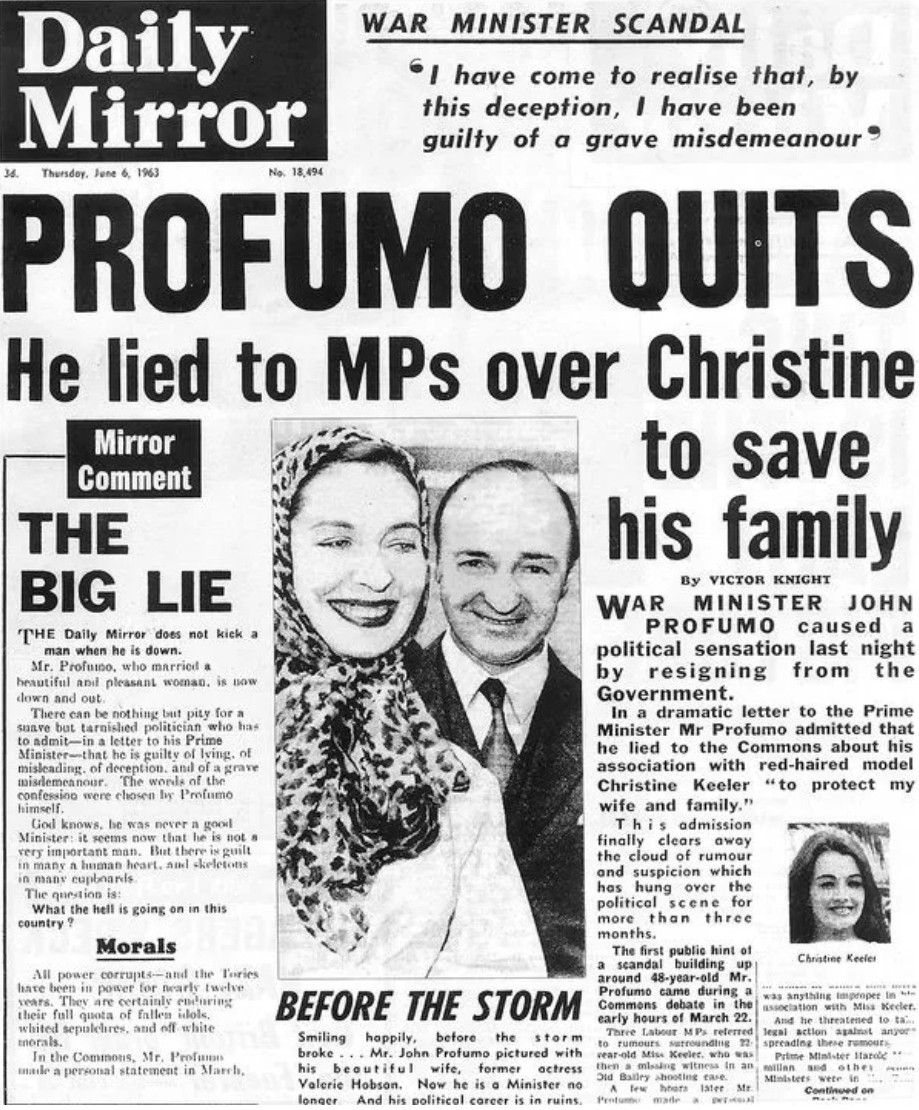
My father was a strongly moral man; he was certainly never an adulterer. He took the marriage vows seriously and I don’t believe ever had any sexual relations with any woman other than his wife. I have sometimes wondered whether he was a repressed homosexual. At the time of the “call girl” scandal he voiced great disgust at the behaviour of John Profumo, Stephen Ward and other people in public positions who were mixed up with the affair. From that point he ceased to vote Conservative and transferred his allegiance to the Liberals. What he would have done had he lived to hear about the homosexual scandal associated with the Liberal leader Jeremy Thorpe I do not know. I do remember his giving me a lecture on “pansies” and advising me to steer well clear of these strange beings. His attitude to homosexuality – and, indeed, masturbation - was not far removed from that of the medical writers of the late nineteenth and early twentieth centuries: cold baths and a plain diet were supposed to prevent these immoral practices. How this nonsense survived at until at least the nineteen-fifties I shall never understand.
My paternal grandfather had died in the War, and I never knew him. He had been a doctor in general practice, who served in the Army Medical Corps in Egypt, where he died from dysentery. My paternal grandmother, Granny T, as we called her, was a vague, rather dithery but essentially kindly woman. She occasionally came to stay at our house, the main result of which was that the house was properly cleaned beforehand and meals became better and more regular. Under her vague manner she was genuinely warm-hearted and would take me out and treat me to ice cream and other things normally forbidden.
My mother was one of four children: three girls and one boy. Their father, Robert Fane, was a harmless, conventional country squire with few interests beyond his land, his tenants and the occasional hunt. I must have met him some half-dozen times, but have no memory of him beyond his being a stout, red-faced man with a loud voice. Of his children, the boy, my Uncle Tom, was a capable farmer and a likeable man. He had married a local girl, I think the daughter of the Vicar of the parish, and they had two sons and a daughter of around my age. I was to meet them later on, though as my mother and Uncle Tom were often at odds, I didn’t see much of them when we were young children. When old Robert Fane died of a heart attack while out riding, Uncle Tom took over the estate and managed it well.
One of the girls, the younger one, was my mother’s closest confidante and they visited one another frequently, communicating by letter or telephone when visiting was not possible. The elder girl had married one of the village lads, and they had moved to the nearby town where they kept a seedsman’s shop. This was considered a most unsuitable occupation for the husband of the Squire’s daughter, and communication between them and the rest of the family ceased. This was doubly sad as the business flourished, and they became quite comfortably off. In later life I made contact with them and we became fairly close. They were a good-humoured, easy-going couple with three children, each of whom did well in their chosen line of work.
My father was, as I have said, basically a kindly man, but somewhere along the way his nature, always rather dry and a little withdrawn, gradually became increasingly soured. He very seldom lost his temper and I can remember only two or three occasions upon which he raised his voice in anger. I do not believe that he ever struck either me or my mother; I certainly have no memory of his beating me, though at that time it would not have been regarded as unusual. But he had a way of sucking in air through his teeth and raising his eyebrows that indicated dissatisfaction. As time went on, his level of dissatisfaction became greater and more frequent and he would hunch his shoulders and peer malevolently at whatever, or whoever, was the immediate cause of his displeasure.
As a student my father had drunk heavily. This was a not uncommon vice among medical students, who are traditionally undisciplined and rowdy. But most students, upon qualifying and entering upon medical practice, abandon the habit. My father did not. At every meal he would drink two or three glasses of wine or beer, and generally a glass or two of whisky or brandy after the meal. He clearly had a considerable tolerance of alcohol, and in my early years I do not remember his being demonstrably the worse for drink, but as the years went on the habit grew and became ever more difficult to break.
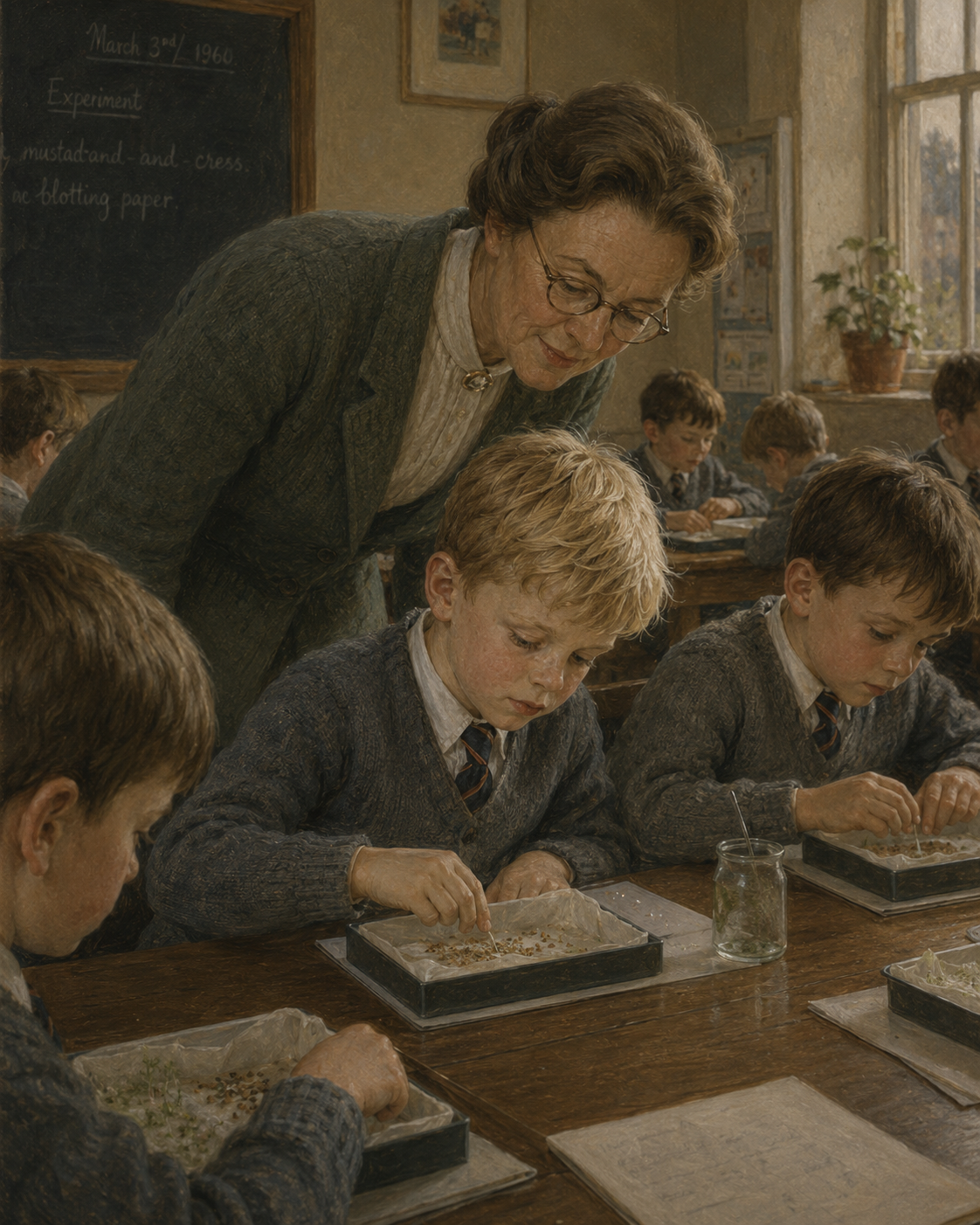
At the age of five I was sent to the local ‘day prep’ school. This was not a bad school; it taught the “Three R’s” with reasonable efficiency and encouraged correct deportment in its pupils. We grew mustard-and-cress on blotting paper, acquired the correct manner of holding a knife and fork and learned to draw flowers, speak nicely and write a fair round hand. My form mistress, Miss Hurst, was a treasure, and I loved her dearly. She was one of those people, tragically rare in educational establishments, who really understand a child’s mind and can encourage it in whatever talents or abilities it shows. I believe she understood the barrenness of my home life and awoke in me the knowledge that there were greater things in the world even than could be found in books. Bless her! She must have died many years ago, but I wish I had sought her out when I was a young man and thanked her for all that she did for me.
A curious feature of this school was the expression used for a visit to the lavatory: one had to raise one’s hand and ask to “be excused”. One then made one’s way to the small, spider-haunted closet under the stairs. On one occasion, though my hand was raised high in the air, it passed unnoticed and, since I was far too much in awe of authority to leave the room without permission, I wet myself copiously. Miss Hurst made little fuss – it was something that happened from time to time with small children – but my mother was furious, partly at the stain on my shorts but mainly because of the embarrassment it caused her.
At any rate, Miss Hurst, and our Headmaster, Mr Higgins, realised that they had a pupil who could do them credit, and suggested to my parents that I should go to a more academic school. Since my father’s income would not stretch to boarding school fees, a scholarship would be necessary. My parents had no objection to the idea, the more so as it took from my mother the burden of keeping me both quiet and presentable. Miss Hurst and Mr Higgins coached me diligently in English and Arithemetic, as well as General Knowledge (though in this, due to my reading, I was already well ahead of my years) and in due course I sat the entrance examination.
Two weeks later my parents had a letter from St Mark’s, a preparatory school some sixty miles from home, offering me a place with a Scholarship to start next September, when I should be nine. The Scholarship paid for the full amount of the school fees, though not “extras” such as music lessons. My parents had to provide the school uniform but otherwise there were very few expenses to which they were put.
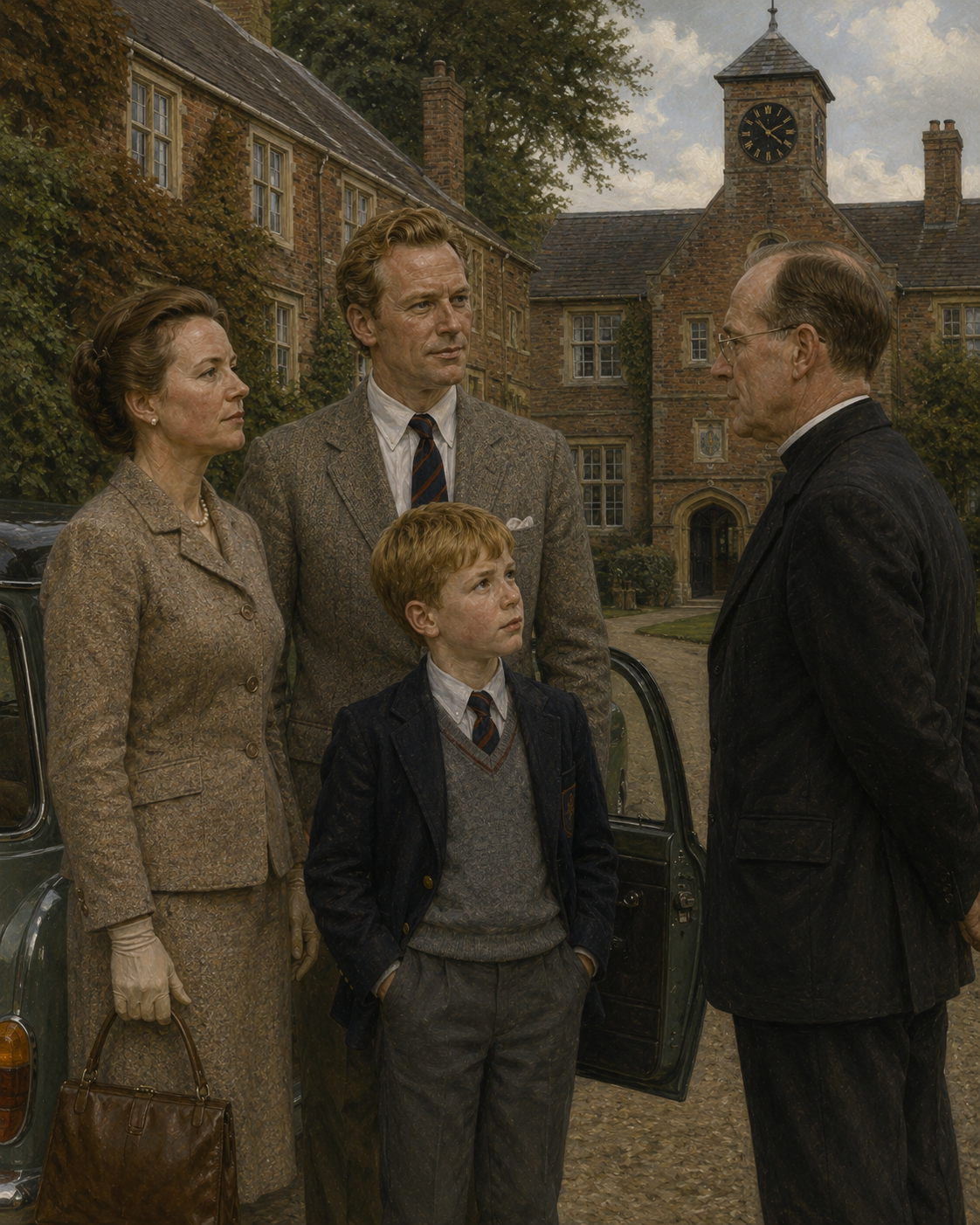
My father took the day off work (I think he must have paid a ‘locum’ to look after the practice, as he did on the few occasions upon which we took a holiday) and drove us to the school in the little Rover car which he used for his rounds. In retrospect, I think this must have looked very shabby against the background of mellow brick which the school presented to the world, but I didn’t notice. I was excited, nervous and apprehensive in more or less equal measure.
St Mark’s was on the whole a good school. The teaching was generally efficient and occasionally inspired. Its Church of England religious basis was pervasive but not intrusive. Its discipline was strict but in general reasonably fair. And its curriculum was broad and for the most part well taught.
We learned English and Mathematics, French, Latin, Divinity, History and Geography. Art and Music were included in the curriculum. Games, of course, were pursued to the point of obsession, and those boys who excelled in Rugby football or cricket became instant heroes, but at least there was not the bullying of those who did not excel in games which marred the lives of many boys in other schools.
I was not a particularly sociable boy – in this I have never changed, preferring my own company, or that of a few select friends, to a large party – but I got on well enough with most of my schoolmates. I do remember a few individuals. One was Miller, a great lout of a boy who delighted in bullying other boys. Another, named Nicholson, had the dual misfortune of being physically rather unco-ordinated and possessing large and protuberant front teeth. He was nicknamed “Goofy” and teased mercilessly whenever he dropped or broke something which, unfortunately for him, was a fairly frequent occurrence. Another unfortunate was a boy whose face I can recall but not his name. He was a nervous, rather under-sized boy who, if startled or frightened, would often wet himself. This did improve as he became older, but I can remember more than once passing his seat as we left the classroom for a break and seeing a puddle on the seat or the floor.
The Headmaster, The Reverend Henry Halford, known to us boys as “The Gaffer”, was a tall, dry, rather remote figure. He taught the upper forms Divinity and coached the Scholarship boys in Latin. He was an austere and rather humourless character, but a sound and reliable teacher who relied little upon the cane. When he did deliver a beating, which was usually for a breach of discipline rather than for idleness in class, it was a painful experience. It was a point of pride among the boys to display the bruises upon one’s backside afterwards. Occasionally, though not often, he drew blood, but the bruises could be awe-inspiring.
Mrs Halford was a pleasant, motherly soul who must have given great reassurance to many mothers that their boys would be kindly treated at St Mark’s. She did a little teaching in the junior forms, mostly, I think, when regular staff were off sick, and supervised the matrons. This was definitely very necessary. There were two matrons, and less matronly women it would be difficult to find. Miss Harris was small and ferrety, while Miss Miller was tall and full-breasted, but they shared the conviction that boys were their natural enemies. Medicine was dispensed, when necessary, with no concession to taste or comfort; cuts were treated with an antiseptic lotion applied on cotton wool, whose ferocious sting was not appeased by sticking-plaster applied with a firm hand. The occasional stomach upset was treated by means of twenty-four hours’ starvation, with only glucose in warm water to drink, a concoction whose insipid nastiness has to be tasted to be believed. Of other ailments there were none that I remember, other than an epidemic of measles which spread rapidly through the school, resulting in one Lent term ending a week early.
One curious feature of the medical care given to us was the weekly dose of aperient medicine then considered necessary. Given the lack of fruit and vegetables and the quantity of stodge of which our diet consisted, perhaps it was. At any rate, as far as I was concerned the school food was at least as good as I was accustomed to at home, and I discovered the delights of steamed pudding with custard. We were treated once a week to steamed ginger pudding, to which we referred as ‘ginger sog’ or jam roly-poly, known, with the slightly macabre humour characteristic of prep school boys, as ‘dead man’s leg’. Stews and the like dominated the menus, with liver and onions at least once a week, and, inevitably, boiled fish on Fridays. However, dull and stodgy as the food undoubtedly was, it was filling and nourishing for active boys.
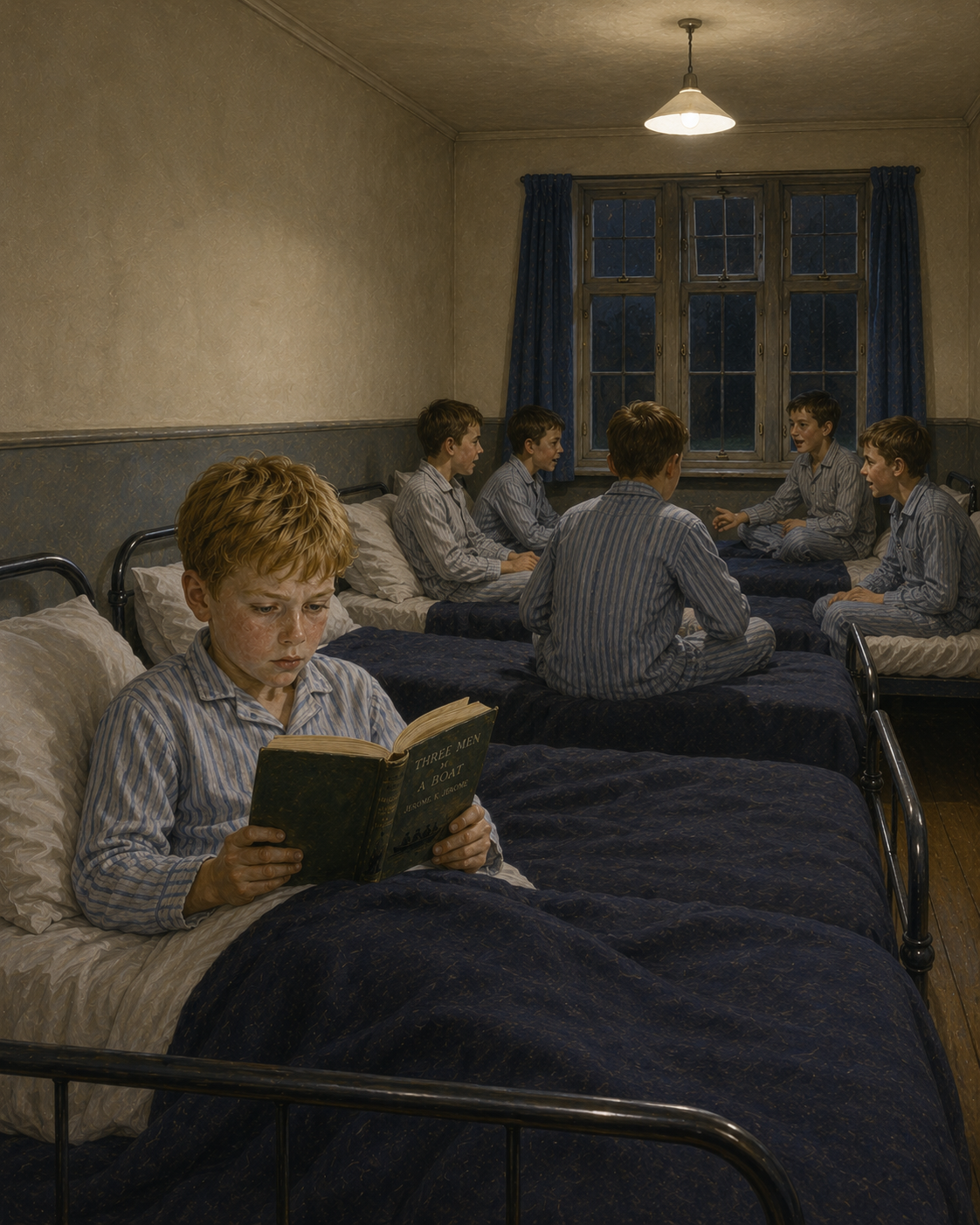
The school terms, rather than the more usual Christmas, Easter and Summer terms were named Michaelmas, Lent and Hilary. I know of no particular reason for this, other than that it was ‘a St Mark’s tradition’. We slept in dormitories of six to eight beds; these were of the usual institutional pattern with iron frames and hard flock mattresses. The windows of the dormitories had wooden blocks screwed into the frames so that they were permanently open by two inches or so, ensuring ventilation (and icy draughts in the winter) but not permitting any nocturnal exit. On the colder winter nights we would surreptitiously put our dressing gowns over the bed to give a slight layer of additional insulation. We would also put on our socks to keep our feet warm, but had to remember to remove them in the morning before the matrons caught sight of them.
It was understood that boys addressed one another by surname only; brothers were distinguished by the sobriquets Major and Minor or, if there were more than two, Primus, Secundus, Tertius and so forth. At one time there were four boys named Smith, none of whom was related to another; the same rule applied but in order of joining the school rather than of age. Thus, Smith Tertius was actually younger than Smith Quartus. Though Christian names were not permitted, other than between brothers, nicknames were in frequent use and often quite imaginative. A boy named Stephens was nicknamed Piggie – this was an abbreviation of the Latin pigmentum, referring to the Stephens brand of ink. Masterton, a boy with a rather bulldoggy face, was nicknamed Algy after the dog in the Rupert cartoon; another, a choleric character named Reece, was nicknamed Tanty (pronounced tan-tye) from his frequent temper tantrums on the games field. It is only fair to Reece to add that this was a habit out of which he gradually grew, and he became a popular and well-respected Prefect.
The communal life of the school was rich and varied. Outside of lesson and meal times, we were largely left to our own devices, and the opportunities for imaginative play were fully utilized. Although organized games played a considerable part in the life of the school, it was never as obsessional as it was in some schools, and those who were poor or reluctant players might be teased, but were not, as a rule, seriously bullied. Inevitably, there was some bullying of unpopular boys, but this was kept within bounds by the Prefects, senior boys of reliable character who were given a limited authority to maintain good order.
On the other hand, there were opportunities for activities as various as music, model-making, even a science club run twice weekly by one of the masters with an interest in that area. At that time, of course, the curriculum was still very much dominated by the Humanities.
But it was astonishing to me to discover that, at the times when no specific activity was prescribed for us, boys were able to run and play, yelling and whooping as boys will, with no stern adult to curb the noise. And there were games we played nightly in the labyrinth of ill-lit passageways under the main school building. One such was ‘Ghoppy Ghosts’ (the second word was pronounced to rhyme with Frosts) in which one set of lads would haunt the passageways, uttering spectral noises, while the others would attempt to capture them. It was all a lot of fun and we were disappointed when it was banned by the Gaffer.
British Bulldogs was played, of course, out of doors in fine weather. This game, a variety of Tag, could become quite rough, but I do not recollect any serious injury being inflicted. Some spectacular bruises were, however, acquired and became a matter for considerable pride.
Among the boys, only two sins were regarded as serious. One was ‘Twitting’, i.e. sneaking, informing masters of a breach of discipline. The other was Swank: boasting or showing off. Parents were strongly discouraged from allowing their sons to bring expensive toys to school; a sensible prohibition as it removed many of the opportunities for Swanking which might otherwise have arisen. Pocket money was doled out weekly on a sliding scale from fourpence[1] to ninepence according to age; the tuck shop opened three times a week and offered a variety of inexpensive sweets.
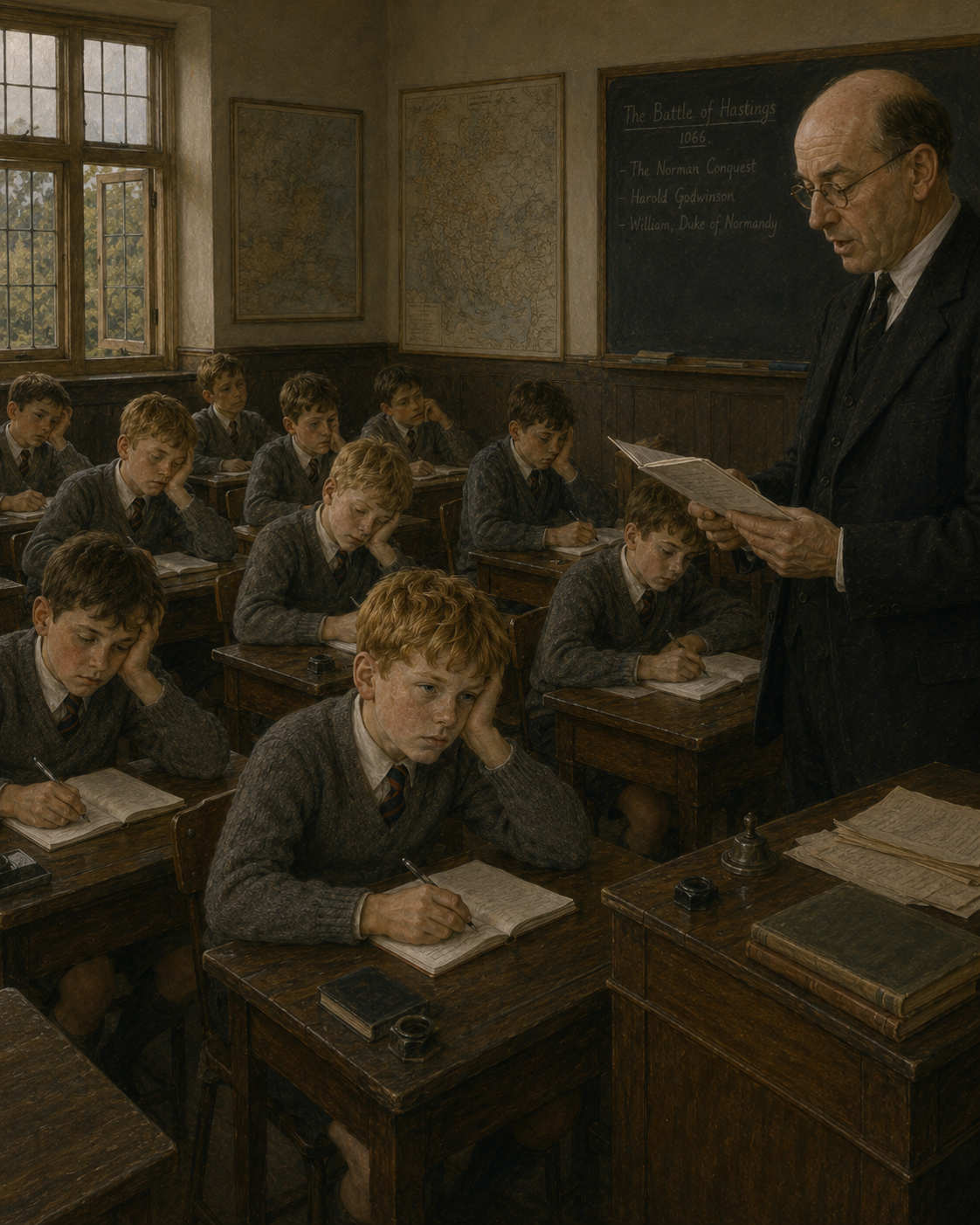
The teaching varied from the frankly dull to the truly inspiring. History was taught by Mr Harries, known as The Egg, from his domed bald head. He would sit at his desk and lecture – I strongly suspect that his sole source was his University notes – and we were intended to make notes as he went along, which we would fair copy during our Prep sessions.
A word about Prep may be in order here. The word is short for Preparation, and goes back to the time when at public schools almost nothing was taught other than Greek and Latin. The idea was that boys should prepare for the next day’s lessons by familiarizing themselves with the set texts. But by the mid-twentieth century it had come to mean much the same as Homework in day schools: tasks set by the masters to be done out of lesson time.
So History was deadly dull; I have since wondered many times how it was possible to make so absorbing a subject so completely devoid of all interest. Over the years I have studied many historical periods in some depth and found it quite fascinating. Geography was not much better; those with an artistic gift who could draw accurate maps were at an advantage, but the teaching itself was uninspiring. Divinity, on the other hand, was taught with some gusto. The curriculum was almost entirely Scriptural, with an occasional nod to Church history. But Mr Cubber could carry over the more gory passages of the Old Testament with theatrical relish.
Mathematics, to my surprise, I could cope with, though I never learned to really enjoy it. Once you have grasped that it is a logical subject, with each proposition following from the one before it, there is little real difficulty; the trick of it is to ensure that you have really understood each step before moving on to the next.
English, of course, I greatly relished. My endless reading had stood me in good stead, and I acquired a good writing style quite early. Mr Swithinbank taught well, showing his pupils how to construct an essay and encouraging imaginative and original writing. He was also in charge of the Library.
The School Library must have a paragraph to itself. A large room, lit by tall windows, lined with bookcases, and with a huge table of polished mahogany at its centre, it offered reading matter enough to satisfy even my voracious appetite. And Mr Swithinbank was a conscientious librarian, always encouraging boys to widen their literary interests. Here I discovered historical novels, detective stories, adventure stories and even humorous books such as Jerome K. Jerome’s Three Men in a Boat and the tales of W. W. Jacobs. No doubt they would be regarded nowadays as very dated. Another favourite was H. H. Munro, who, under the pseudonym ‘Saki’ wrote curious tales with a slightly sinister twist.
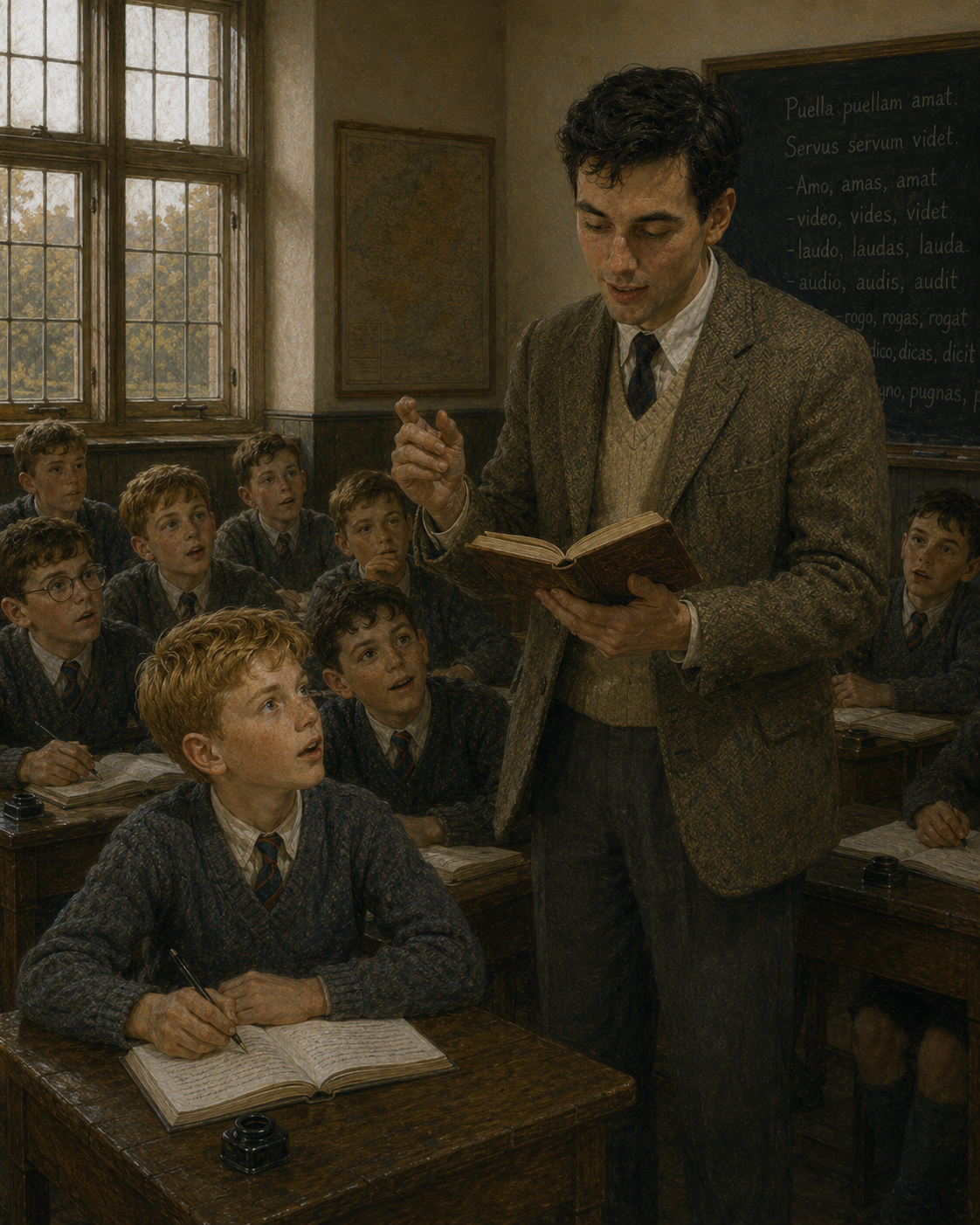
However, much to my surprise, it was Latin which claimed my attention more than any of the other subjects. We were fortunate in having a keen young man, in his first post after leaving University, to teach the subject. Allan Pascoe was a Cornishman, with his people’s love of language. He was of medium height, dark haired and brown eyed, with a manner that was both intense and reserved. He gave the impression of hidden fires within, that might break out at any moment. Although no games player, he kept himself in trim with swimming and long walks in the country; he knew every road and footpath within a wide range of St Mark’s and in his free time could be seen striding away from the school with stick in hand and knapsack on his back.
Mr Pascoe was also a musician of some skill. When Dr Hunter, who ran the music and the choir, took rehearsals, Mr Pascoe would seat himself at the piano and play the accompaniments. On Dr Hunter’s days off he would also play the organ for the daily Chapel service and occasionally deputised on Sundays at the local Parish Church.
But it was in his classes that I discovered the Latin tongue, the fountain from which half of the English language flowed. And in Allan Pascoe’s classes, it was no dead language; he brought the language and the people who spoke it to life with such vividness that we could all but see and hear them. Small wonder, then, that I soaked up Latin as a sponge does water. I was fortunate in that I had a good brain and a retentive memory, and though many aspects of my early life had been disagreeable, I had at least established the habit (one I have never lost) of reading widely and with concentration. And I think being away from home and from my mother’s baleful influence probably rendered me contented and ready to make an effort to learn. Indeed, now that I look back on it, reading and learning were my ways of distancing myself, even at the age of only nine or ten, from the unhappy past and finding a new identity. Certainly, I justified my scholarship, remaining consistently at or near the top of the form list in most subjects.
My school reports should have delighted my parents; they certainly did Granny T. But they never gave me anything beyond faint praise; it was Granny T. who took me out to lunch in the holiday following the term in which I came top of the form. I think they resented the fact that I was clearly happier at school than at home.
[1] This is, of course, in 'old' money: a shilling, or twelve old pence, is equivalent to 5p in 'new' money.
Comments powered by CComment