
THE MOVING PICTURE BOY ARCHIVE
LA GUERRE DES GOSSES

Title: La guerre des gosses
English translation of title: The War of the Kids
Year of Release: 1936
Director and screenwriter: Jacques Daroy
Genre: Drama
Country of Production: France
Length: 1 hour 25 minutes
Language: French
Availability: The restored film was released on DVD and Blu-ray by Gaumont in 2025 (both formats are currently available from the French Amazon) and an English subtitle file (synced with the film on the blu-ray) is available from opensubtitles.org, courtesy of 'diogenes'.
Principal boy actors: Below: top row, l-r: Serge Grave as Lebrac, Jacques Tavoli as Aztec, Marcel Mouloudji as La Crique, Gabriel Farguette as Tigibus; bottom row, from left: Jacques Kami as Bacaillé, Serg and Michel Gaud as the Tintin brothers. The next two boys in the row have important roles, but the Editor has been unable to identify the actors: second from right, the boy playing Grangibus, and far right, the boy playing Camus.

Synopsis
From the official dossier de presse (see below), translation by the Editor:
Longeverne and Velrans are two small villages divided by an age-old feud. Aline Sorbier, a young schoolteacher, arrives to take up her post in Velrans. A mistake leads her to Longeverne, where she meets Simon, the local schoolteacher, and the mayor, Jean Delcourt. The three of them decide to work together to establish a peace between the children of the two villages, who engage in epic battles every evening.

Just then, Lebrac—the general of the Longeverne boys—breaks a temporary truce; his warriors take a prisoner and decide to cut off all his buttons and remove his belt and shoelaces. This practice quickly becomes the rule, and during a subsequent battle, Lebrac himself is captured by the Velrans boys and suffers the same fate—earning him a noisy thrashing from his father.
Meanwhile, Jean Delcourt and Simon, both smitten with Aline, vie to see who can be most zealous in ending the hostilities. Unfortunately, misled by the children's cunning, Jean and Aline—each defending their own young townsfolk—end up quarrelling. They love each other but come close to hating one another, all while the fighting continues with new tactics devised by the young warriors.
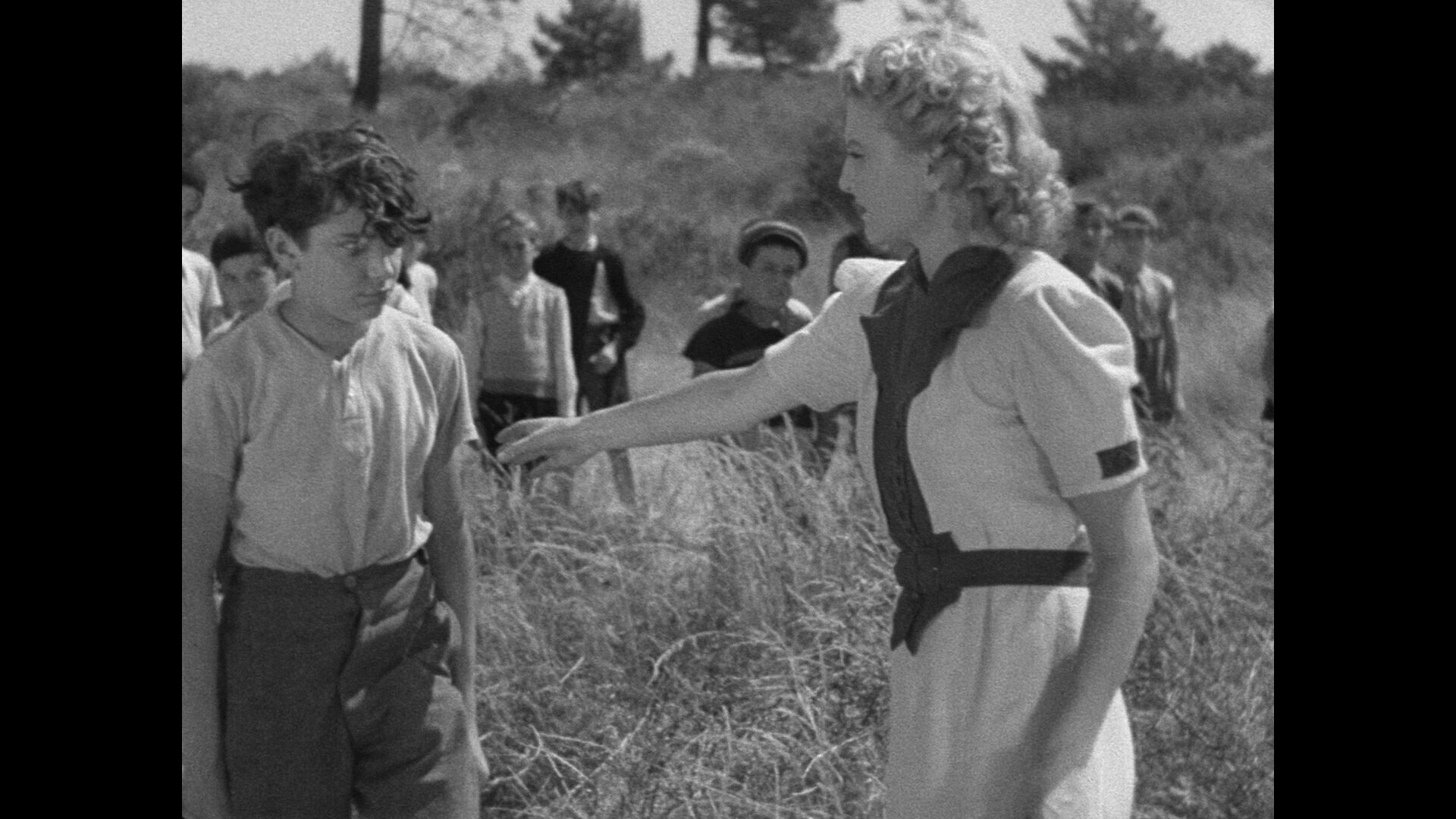
Finally, despite a betrayal from within their own ranks, the Longeverne boys capture the leader of the Velrans group. Not content with merely taking his buttons, they also confiscate the poor boy's shorts. This theft causes an uproar in both villages. Aline complains to Jean, who promises to return the shorts and establish a lasting peace between the children the following Thursday.
True to his word, Jean recovers the garment and solemnly returns it to Aline during a ceremony that brings both groups together on their usual battlefield. Jean and Aline force the children to embrace, but the result is disastrous. A boy from Velrans seizes the chance to pinch his neighbour, and the battle resumes furiously. Everything goes awry...
Jean is dismayed when a stone suddenly strikes him on the forehead, causing a slight, bleeding graze and leaving him dazed. This time, faced with a man in pain, the kids stop fighting of their own accord. The culprit steps forward. Jean embraces him. All the children finally understand and sincerely make peace.
To celebrate this resolution, Jean and Aline organize a banquet in the Longeverne town square, bringing together the notables from both villages before the eyes of the reconciled children. After coffee and the customary speeches, Jean quietly steps aside with Aline. While they congratulate themselves on the success of their efforts, an unfortunate remark exchanged between Lebrac’s father and a man from Velrans reignites the ancestral hatred among all the guests. In an instant, tables are overturned, and a full-scale brawl breaks out among the adults.
Off to the side, the children are bewildered, and one of them sadly remarks: "To think that when we grow up, we might be just as stupid as them..."
Source material
Based on the 1912 novel La Guerre des Boutons, roman de ma douzième année (The War of the Buttons, a novel of my twelfth year), by Louis Pergaud. An English translation was published in 1968 by Walker and Company, under the title The War of the Buttons: A ribald novel about boys written for adults. The original novel has enjoyed five different screen adaptations since its publication, of which La Guerre des Gosses was the first.
Production Notes
The Gaumont blu-ray includes as a bonus feature an introduction to the film by Sébastien Le Pajolec, who is maître de conférences (associate professor/lecturer) in contemporary history and communication at Université Paris 1 Panthéon‑Sorbonne, and has also written multiple articles on film and cinema history. From this introduction we learn a number of facts about the production of La Guerre des gosses.
Nearly 800 children were auditioned in Paris for 15 main roles (mainly on the Longeverne side). The remaining children were recruited from the villages where the film was shot.
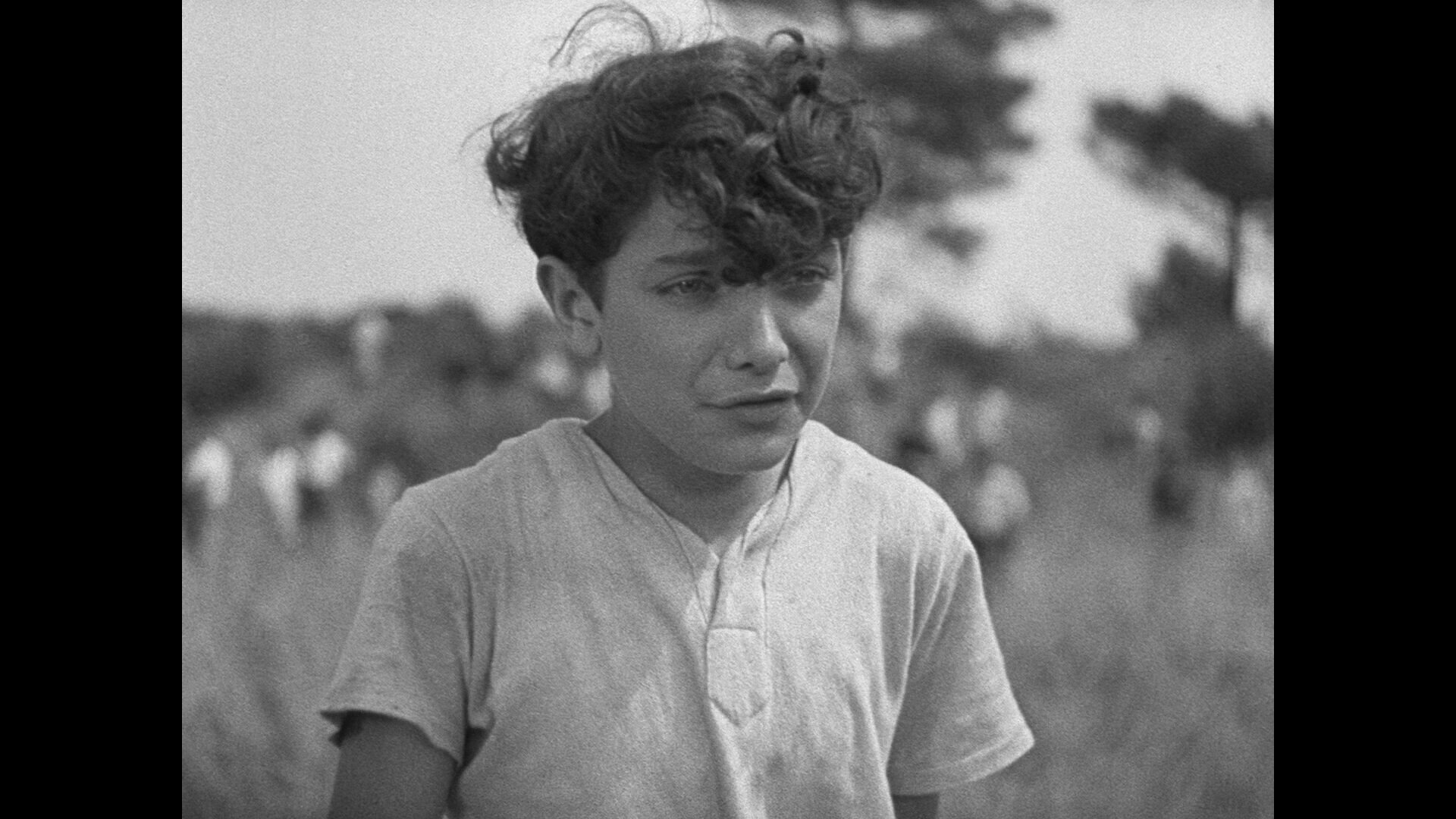
The cast recruited in Paris included Marcel Mouloudji, who would go on to become a famous singer, in the role of La Crique. He was 13 years old (and would be 14 in mid-September) at the time of the shoot, and is actually one of the boys to be seen in full frontal nudity during one scene.
Filming lasted 40 days and the film was finished before the end of August 1936.
The reason the title of the source novel was not used was simply because after 26 years since the publication of the novel, it was felt that the novel would no longer be so well known, and that La guerre des boutons would be a somewhat obscure title for potential cinema goers. What, after all, is a "war of buttons"? At the beginning of September it was decided that the title of the film would be Nous, les Gosses (We, the Kids), but by the end of the same month this was changed to La Guerre des Gosses.
The film was first shown on October 27th, in Paris, at the Gaumont Madeleine cinema. It was both a public and a critical success, and was shown in the United States under the title Generals Without Buttons.
Viewing Notes
At 28:48, the song the victorious Longeverne boys sing is Chant du départ, the terribly patriotic French revolutionary song that became the official anthem of the First French Empire. The other song the boys sing (which is also heard over the opening credits and at the end of the film) was composed by Wal-Berg (presumably especially for the film) with lyrics by Camille François. The scene in the movie in which the Longeverne boys sing this rather catchy little number (led by Marcel Mouloudji as La Crique) can be viewed on Youtube here. (The red arrow indicates Charles Aznavour, who was an extra in this film, and who, like Mouloudji, went on to become a famous French singer. This scene in fact constitutes the oldest images of Aznavour singing.)
At 44:47, Aztec shouts Rends-toi! (Surrender!) to Camus in his tree, to which Camus replies: Me rendre? Ha! La garde, elle meurt, et puis, la garde... Et puis merde! (Surrender? Ha! The Guard dies, and then, the Guard... and then merde!). What is happening here is that Camus, who clearly knows his patriotic history, is trying to recall a famous heroic quote: La Garde meurt, la Garde ne se rend pas! ("The Guard dies, the Guard does not surrender!"). This quote exists in a number of forms, and was said by a member of Napoleon's Imperial Guard (the precise attribution is disputed). However, Camus can't recall the quote properly, so ends with et puis merde, which is an expression in French somewhat like 'dammit' in English.
At 01:07:09, the fat kid who had earlier declined to undress for fear of showing his birthmark to the Velrans, is taunted by Camus for not wanting to drink red wine, with Camus saying that the only reason the boy doesn't want red wine is that he's afraid that it will bring out another birthmark. There's a pun here which is untranslatable, because in French a birthmark is a tache de vin, literally a wine stain.
At 01:08:13, the little boy's dance is somewhat reminiscent of the dancing of Josephine Baker, whose louche style would have been familiar to French cinemagoers, and who had performed in major French films in the years immediately preceding the release of La Guerre des gosses.
Further information
Below is the front cover of the dossier de presse issued by production company Forrester-Parant Productions to accompany the film's release. Click on the image to view the full document (PDF opens in a new tab, from Editor's personal cinema collection).

Below: Forrester-Parant Productions also released a four-page booklet of upcoming attractions for 1936-1937. The centre pages of the booklet were an advertisement for La guerre des gosses. (Click on image for full-size scan, from Editor's personal cinema collection.)

Screenshots

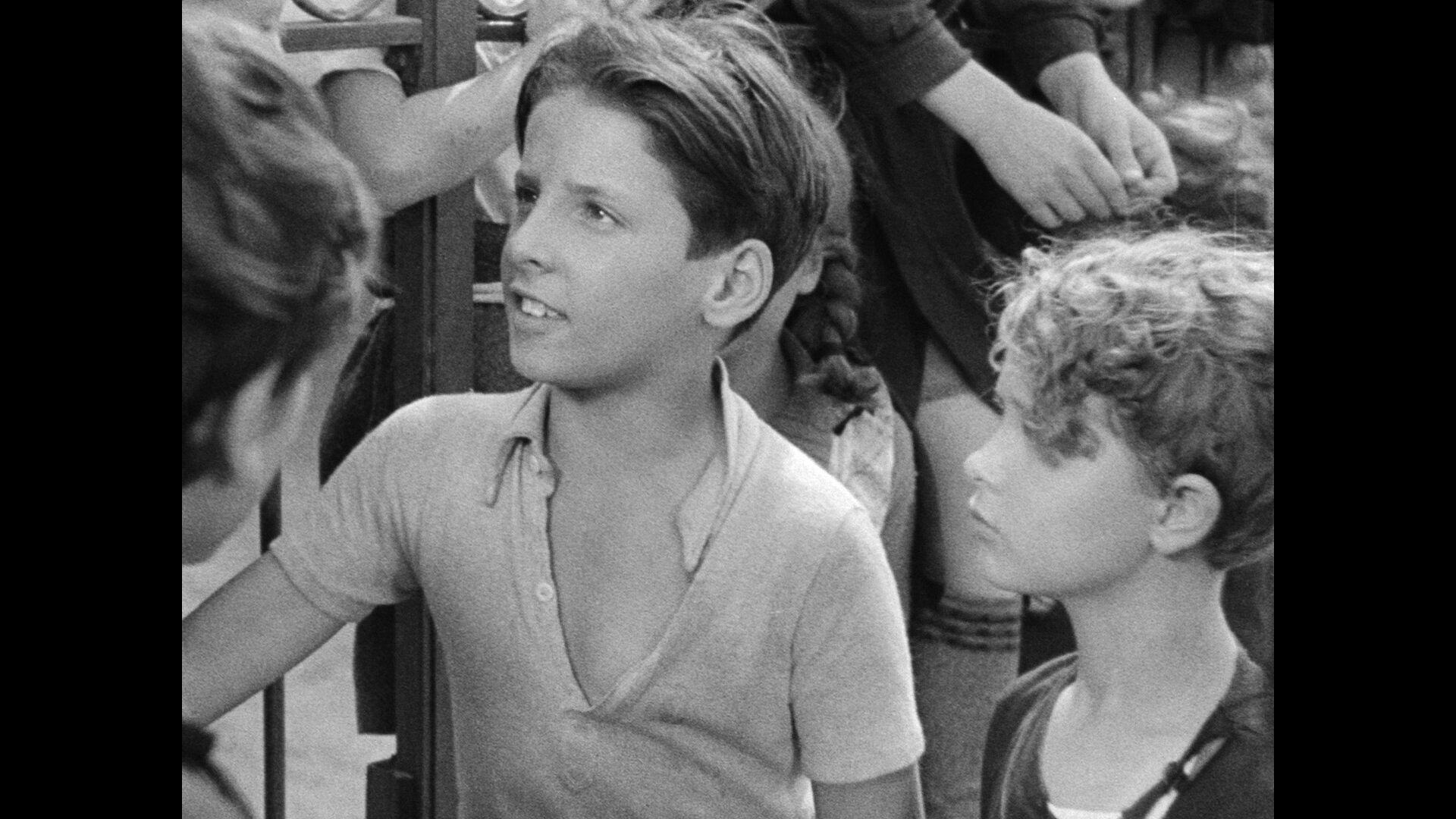


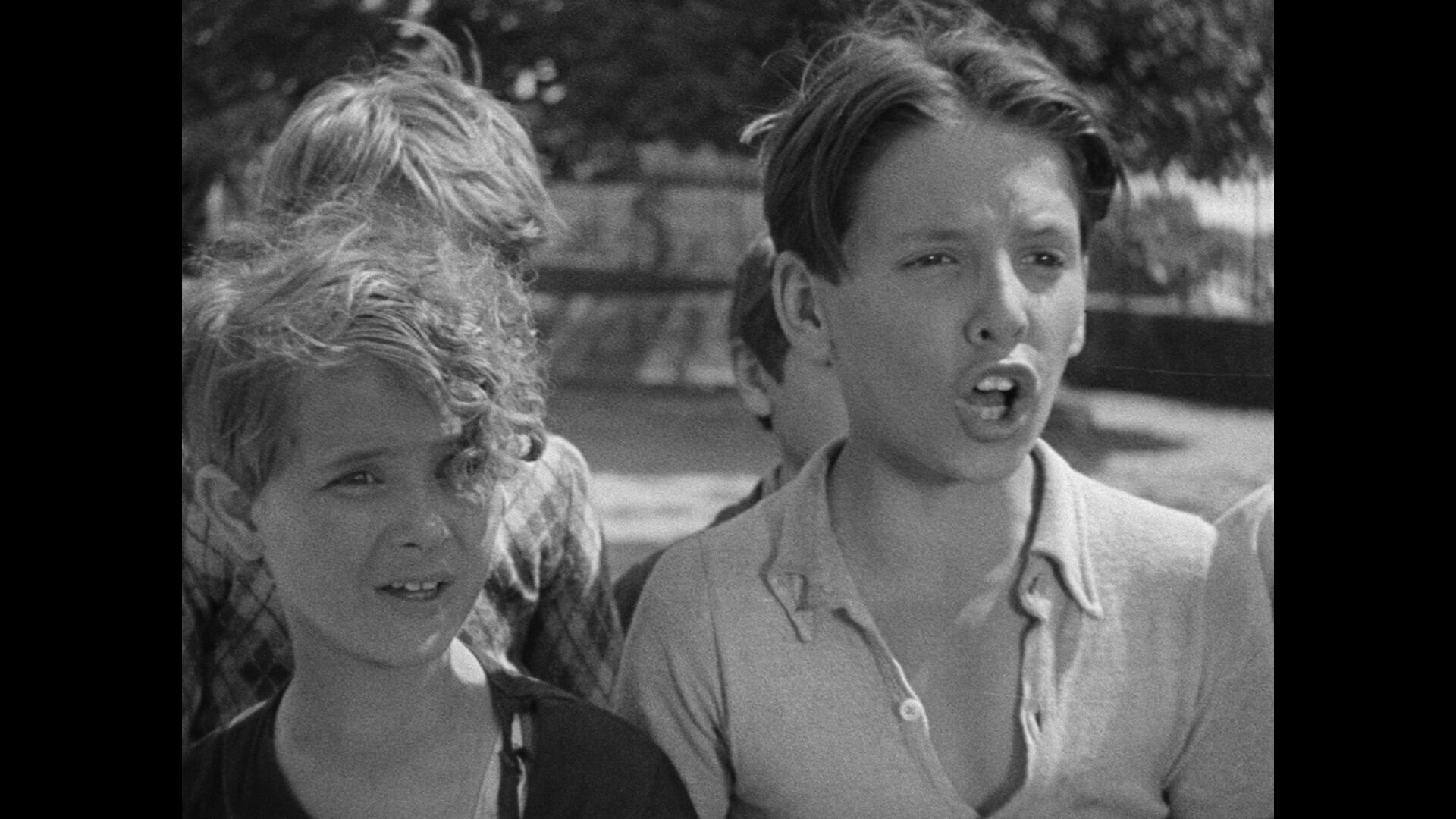


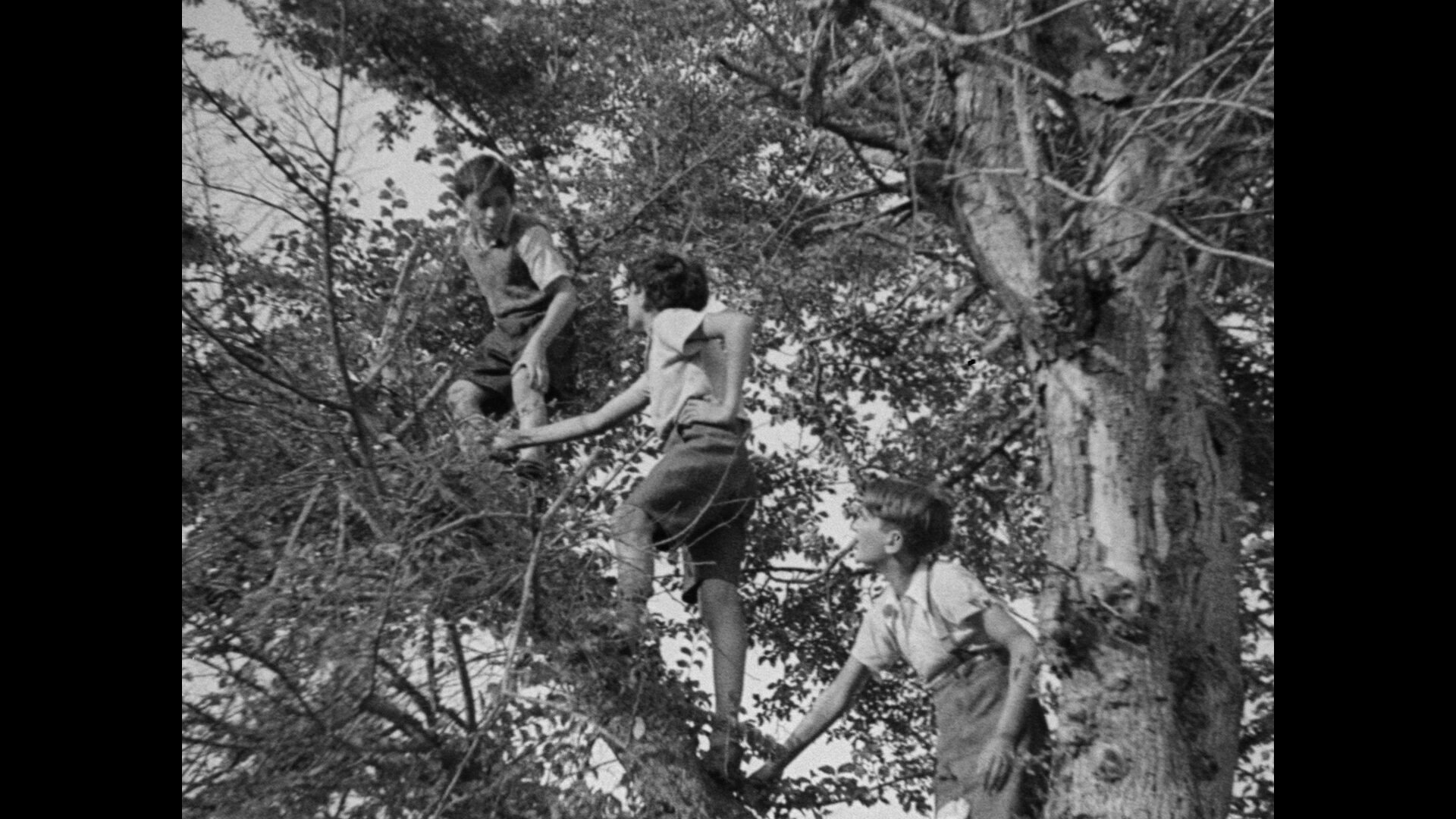


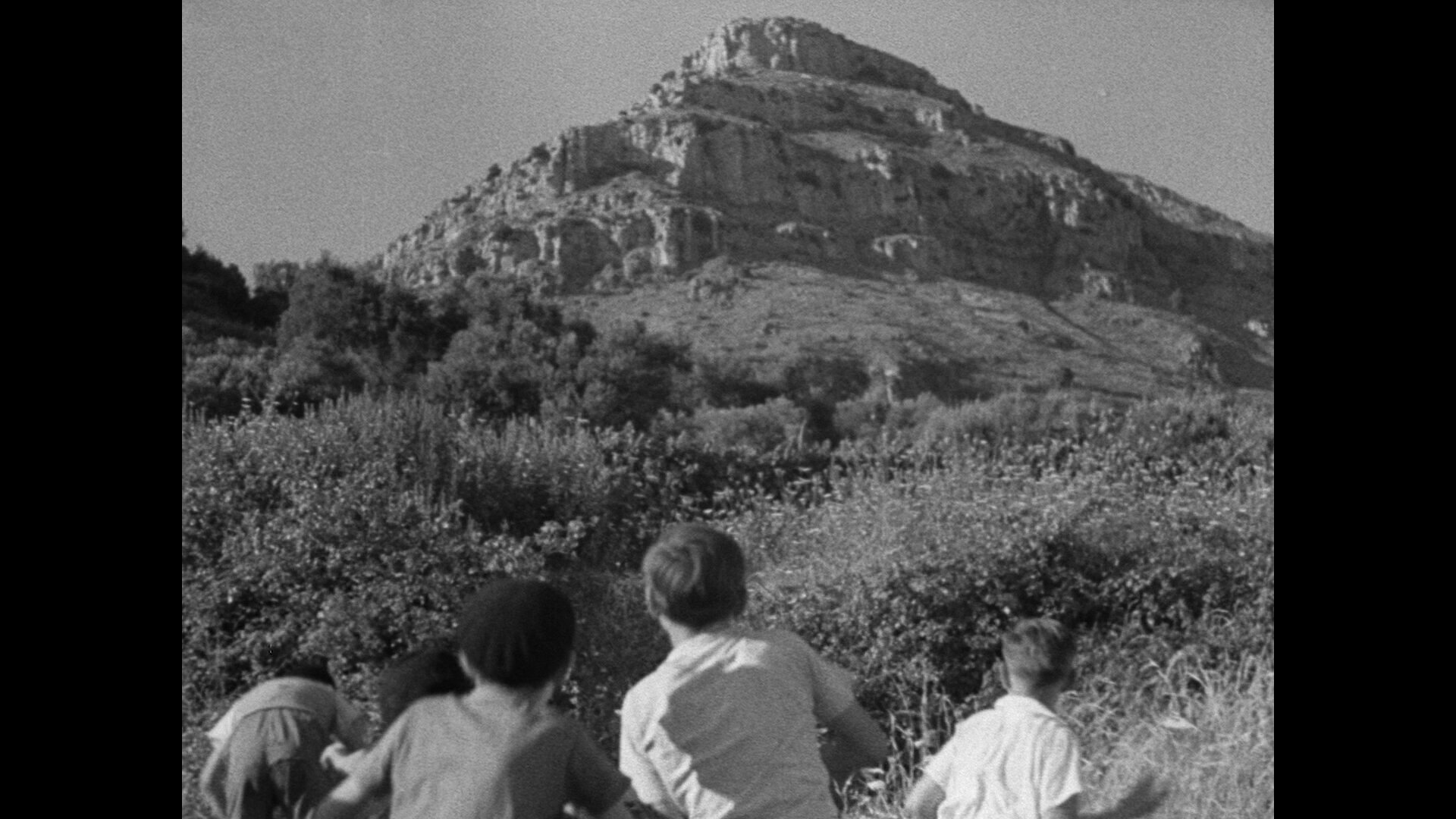


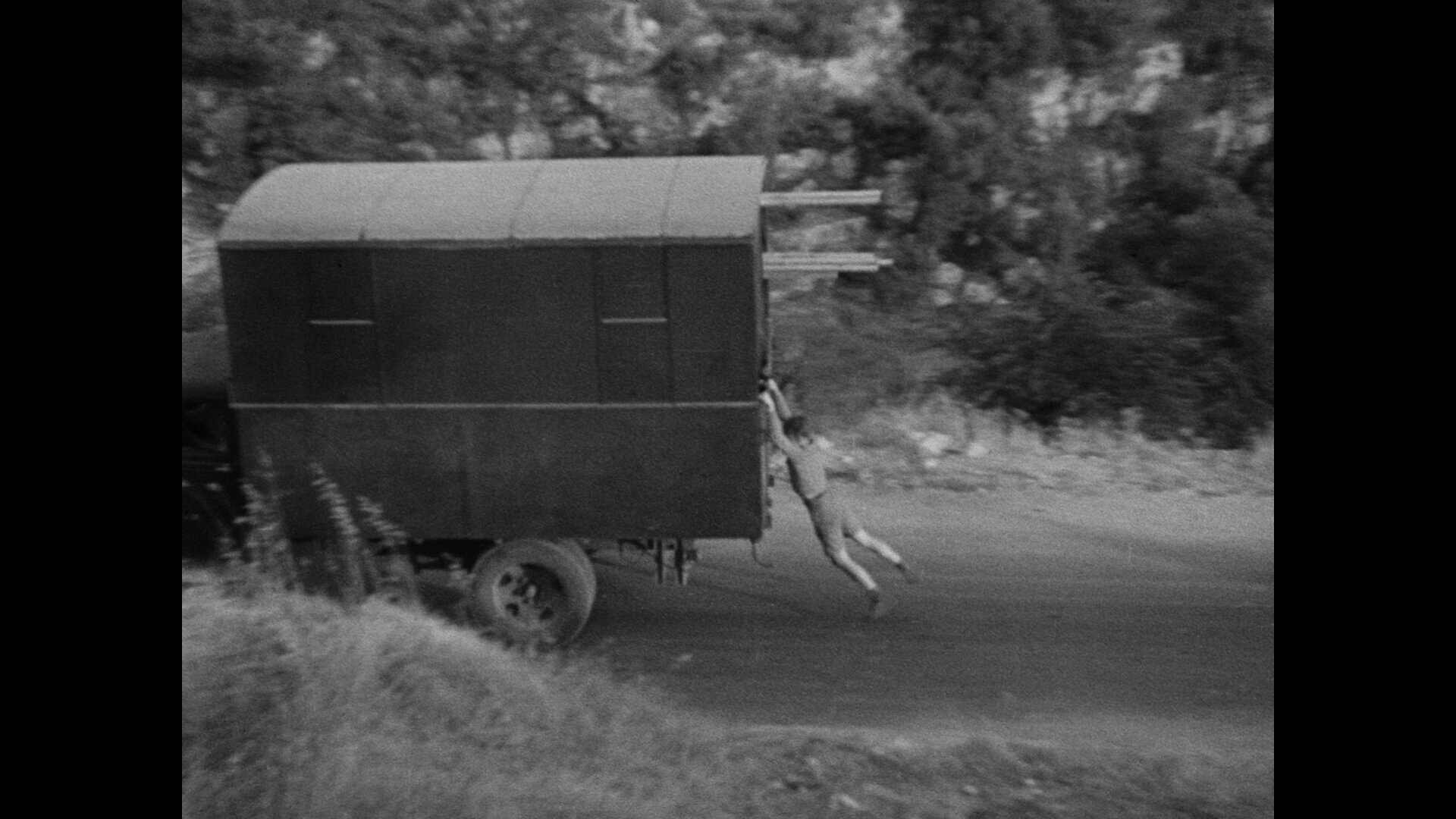
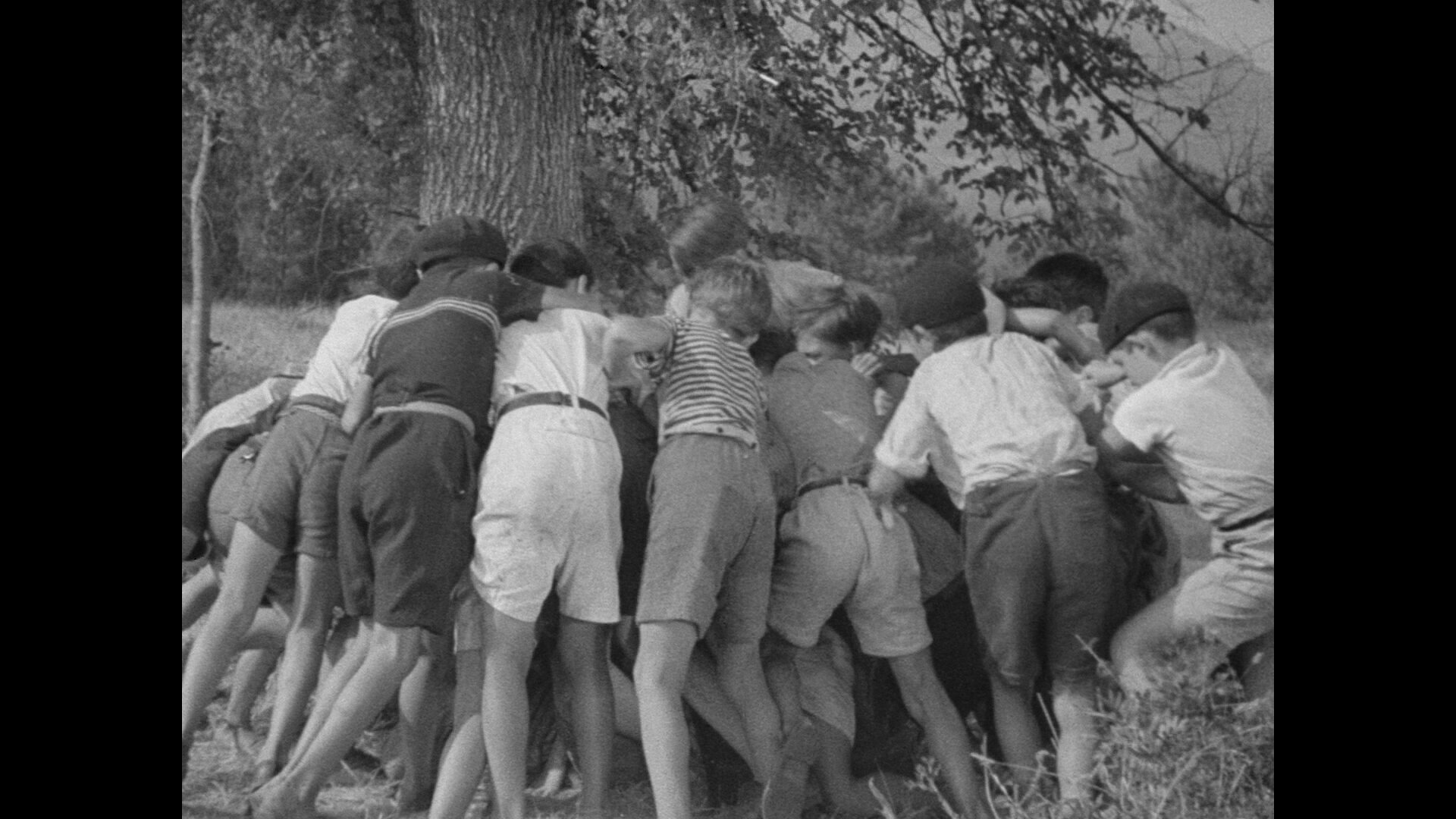


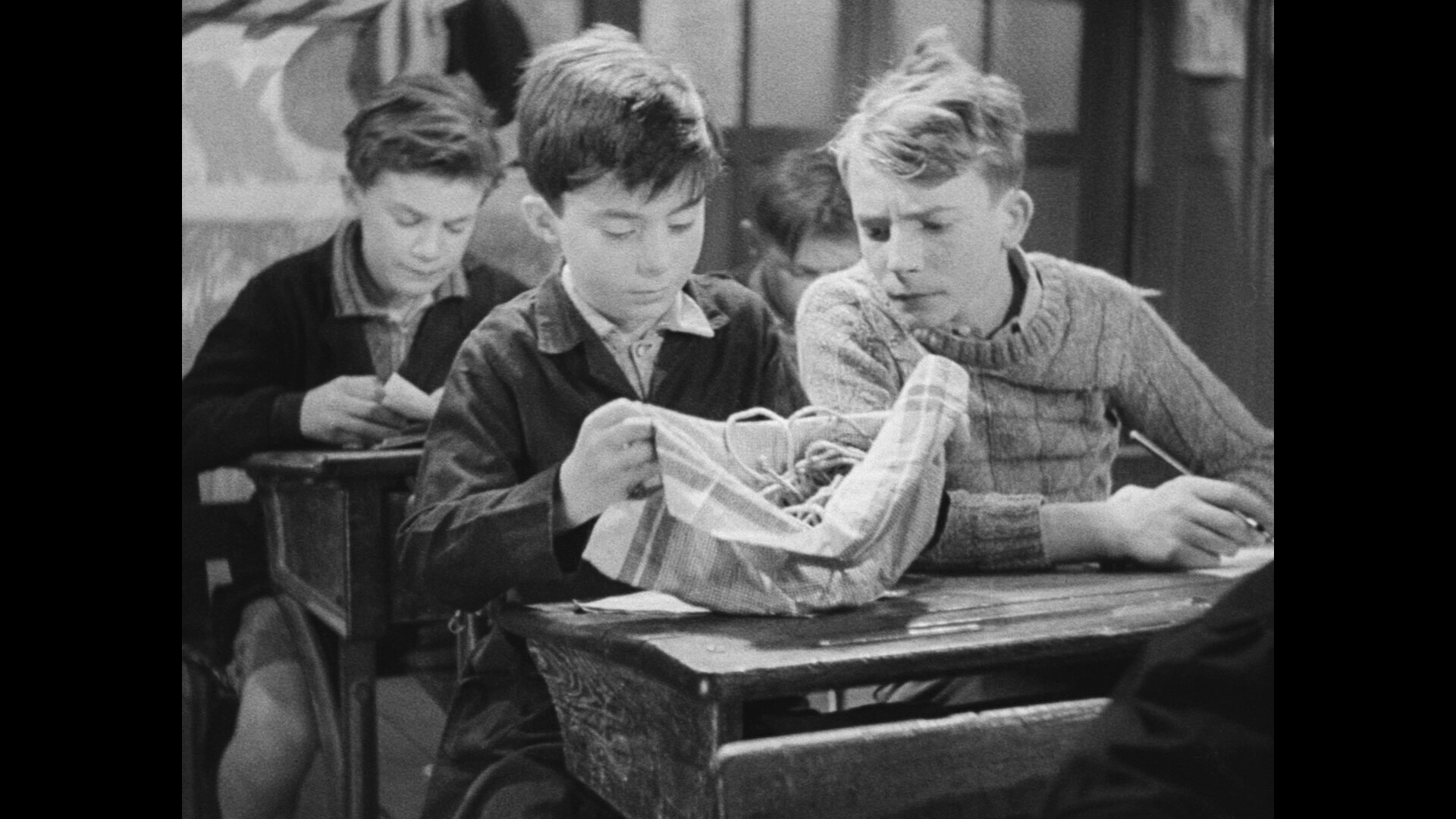
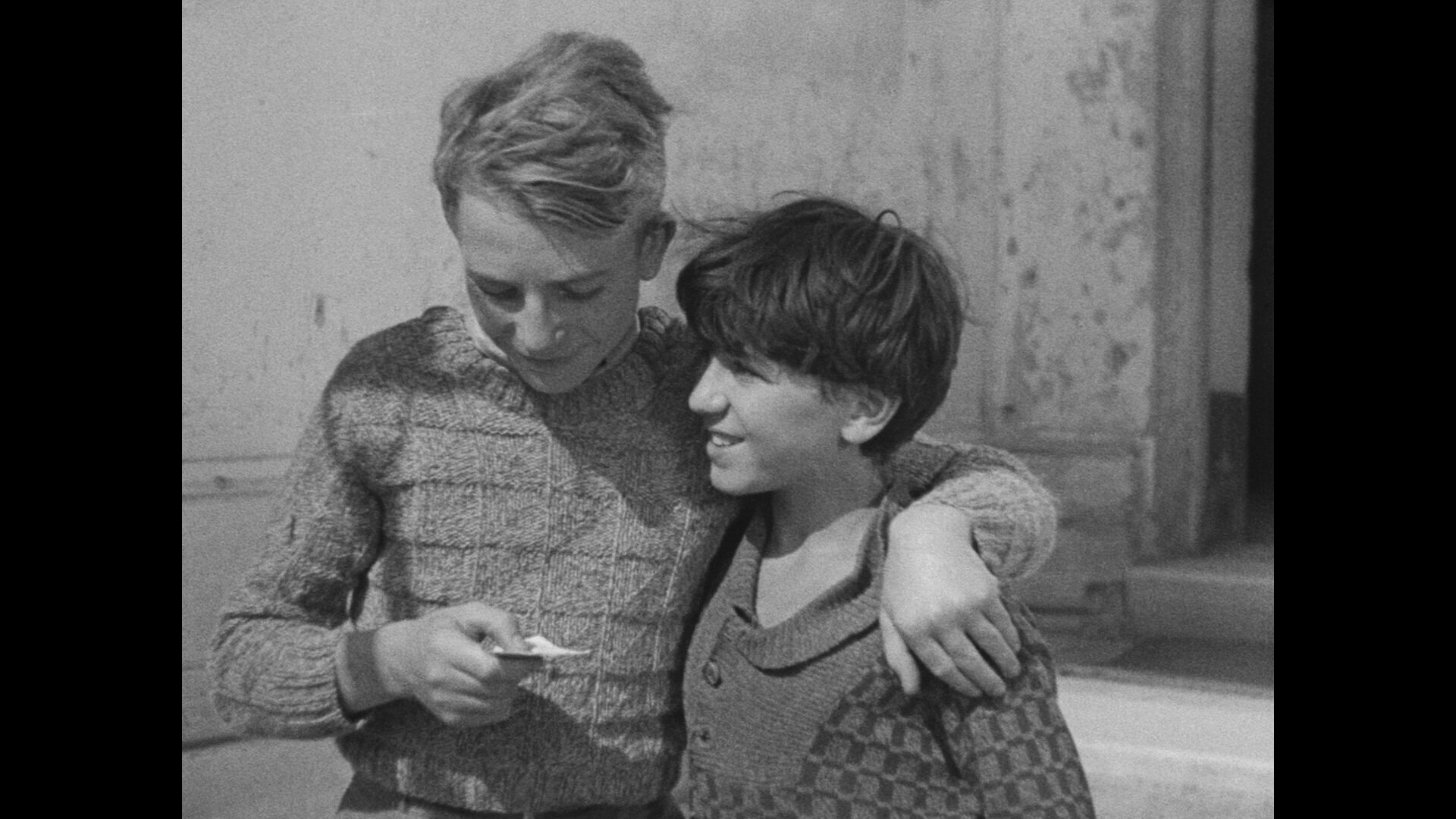




________

Comments powered by CComment