
THE MOVING PICTURE BOY ARCHIVE
PIXOTE: A LEI DO MAIS FRACO
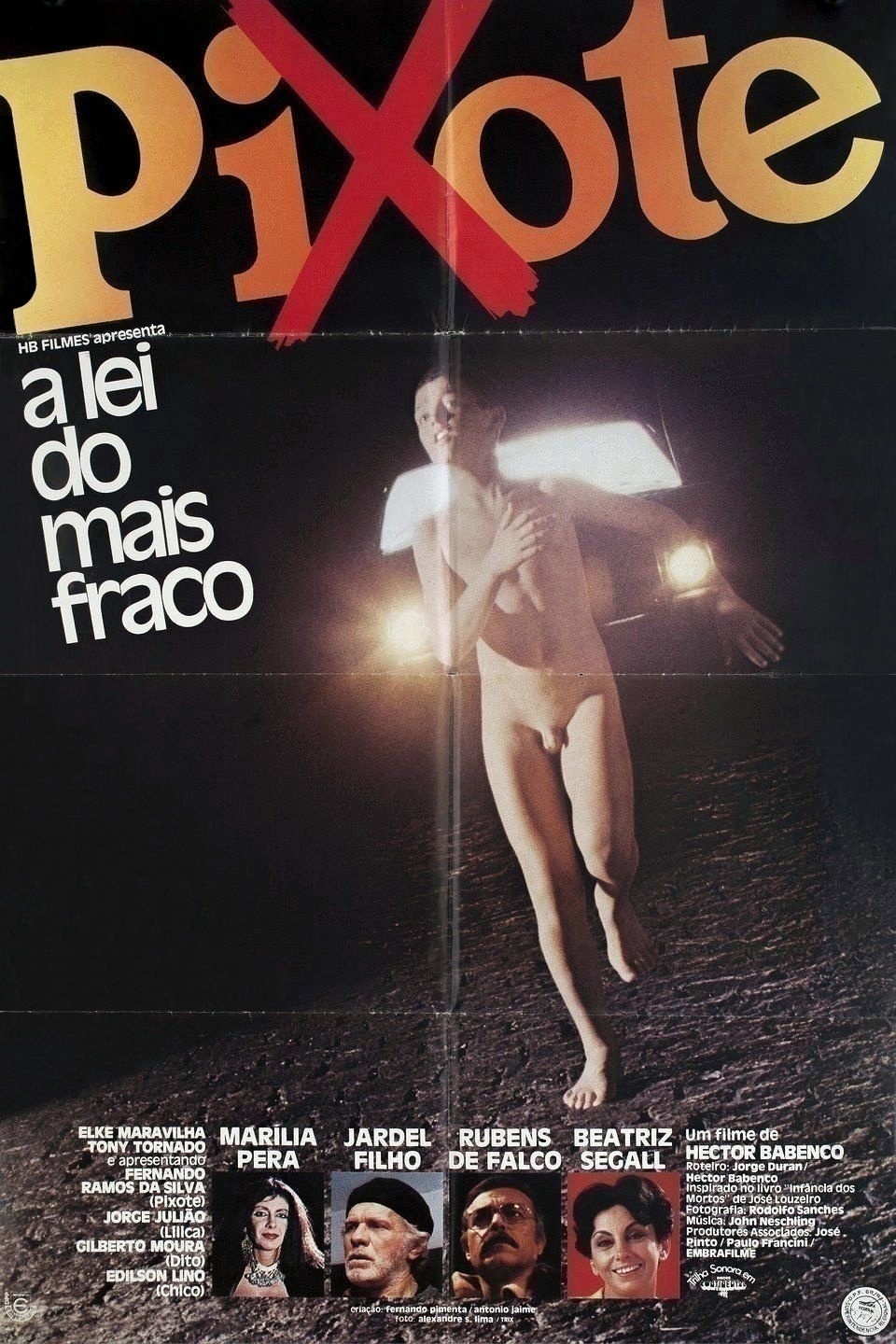
Title: Pixote: A Lei do Mais Fraco
Literal English translation of title: Pixote: The Law of the Weakest
Title in Anglophone world: Pixote ['Pixote' is usually pronounced pish-otch, with the stress on the second syllable.]
Year of Release: 1981 (IMDb maintains that the film had a 'limited screening' in Brazil in 1980 prior to its screening at the New Directors/New Films Festival in May 1981, but the Editor has been unable to find any corroborating evidence for this.)
Director: Héctor Babenco
Country of Production: Brazil
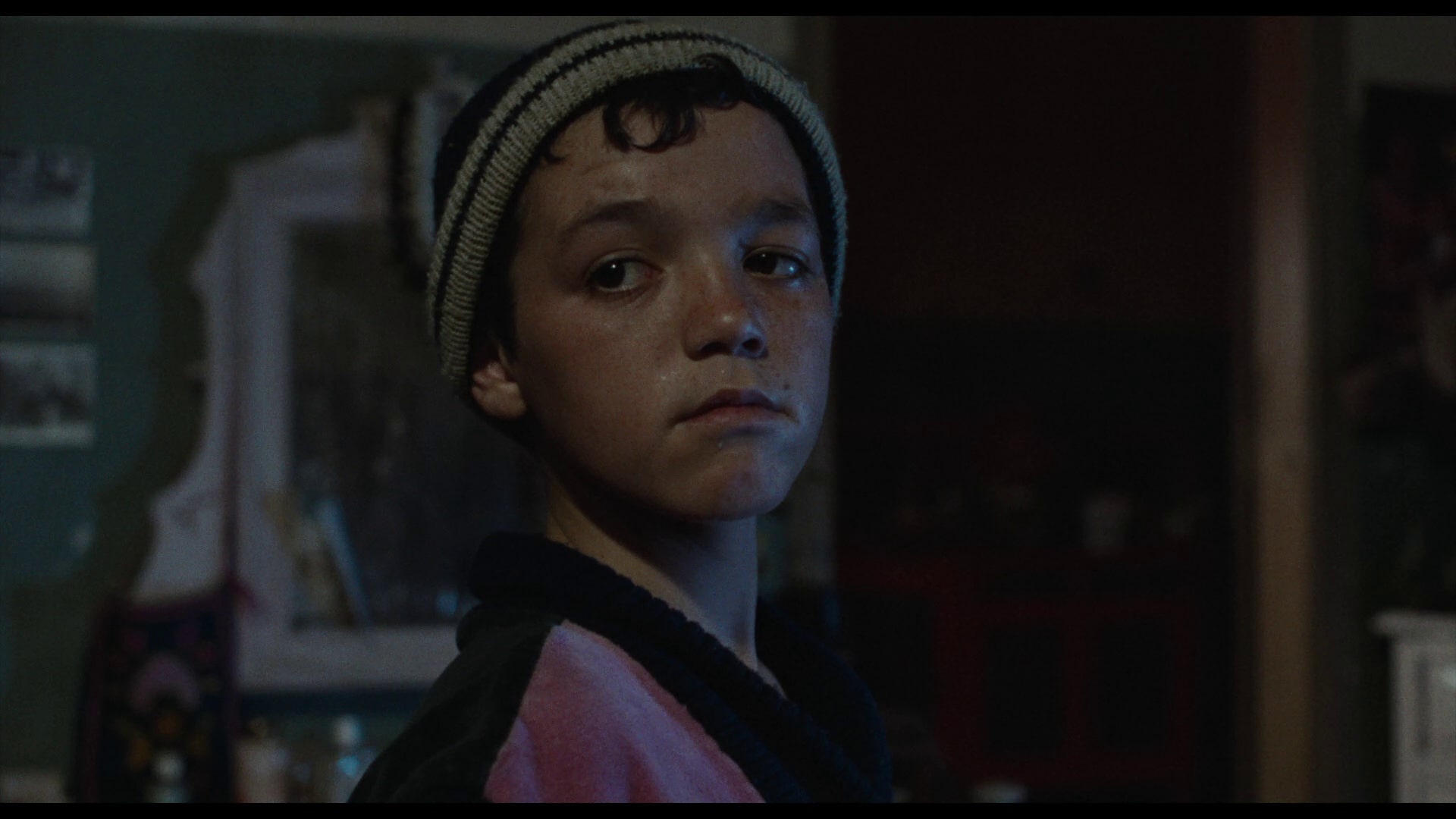
Principal Boy Actors: The eponymous protagonist is played by Fernando Ramos da Silva. Zenildo Oliveira Santos plays Fumaça, who makes friends with Pixote in the reformatory. Pixote's three companions after he escapes the reformatory are Chico (Edilson Lino), Dito (Gilberto Moura), and Lilica (Jorge Julião). All the youthful actors in this film were drawn from poorer backgrounds, belonging to the same social class the film portrays.
Genre: Drama
Length: 2 hours, 6 minutes
Availability: The film has been restored and released on blu-ray as part of Martin Scorsese's World Cinema Project No. 3. The restored film (exactly the same as on the Martin Scorsese set) is also available separately on a Spanish blu-ray release (under the title Pixote: La Ley del Más Débil), with optional English subtitles (but no extras). Earlier releases on DVD cropped the sides of the picture, to fit a then-standard 4:3 television screen. The restored blu-ray release shows the full picture.
Synopsis
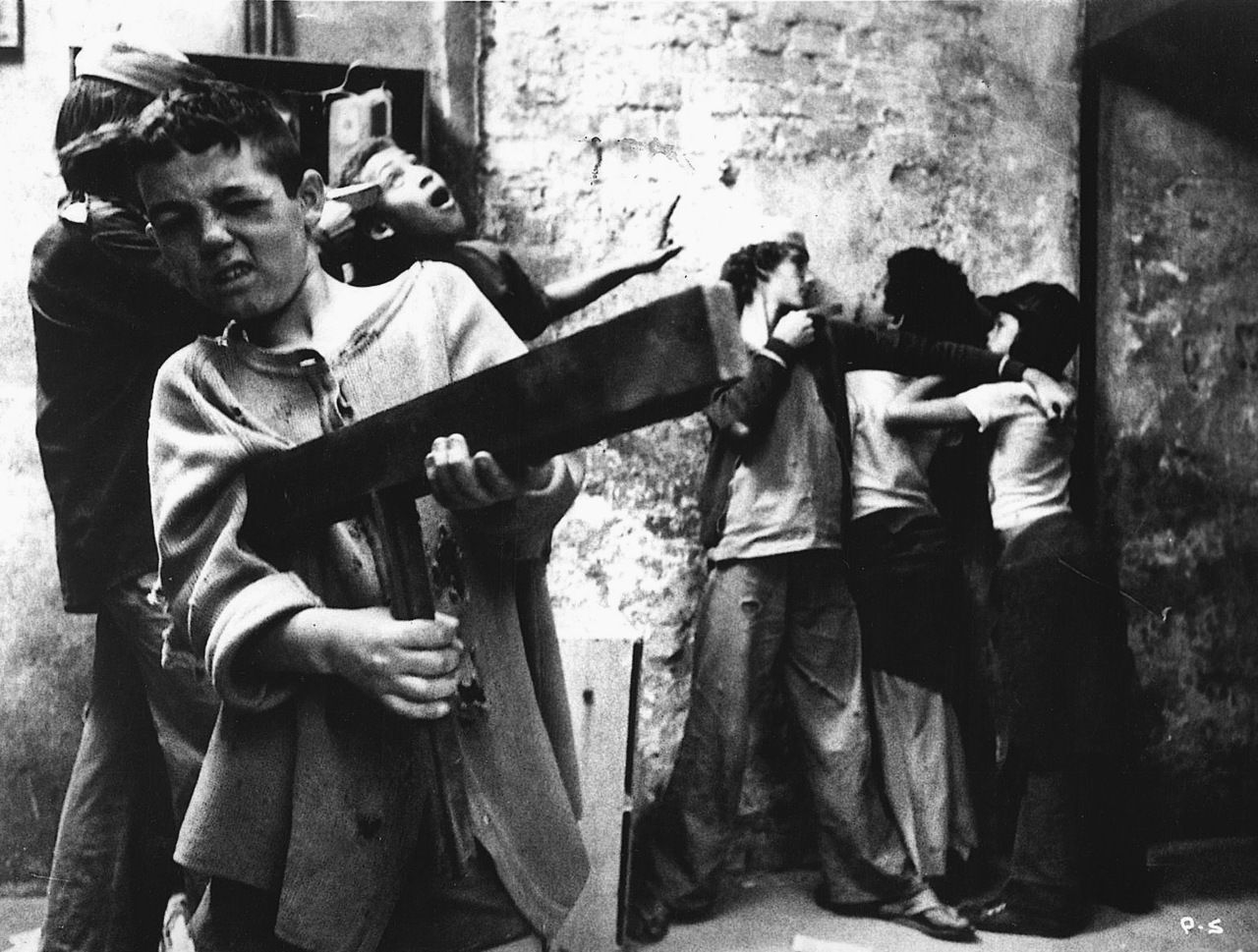
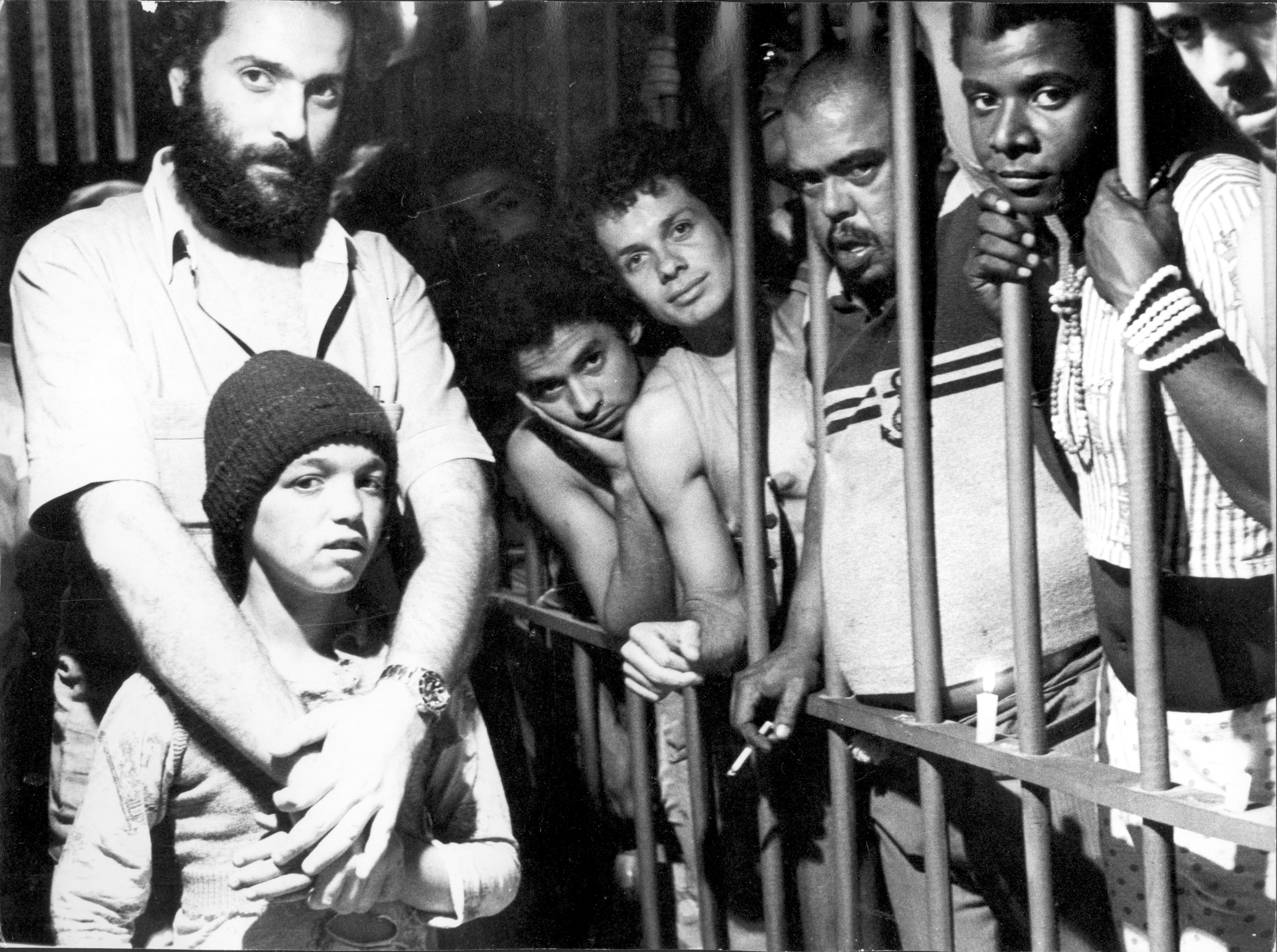
10 year old Pixote (da Silva) is one of many boys rounded up by the police after a hold-up leads to the death of a judge. The boys are sent to a FEBEM (Foundation for the Well-Being of Minors, a state reformatory), in which our protagonist witnesses a brutal rape of one of the inmates by the other boys, staff that are indifferent to the boys' welfare but are very concerned with their public image, and a series of murders on the part of those assigned to protect the boys.
After escaping the detention centre with Lilica (a homosexual transvestite prostitute), his friend Dita, and another youth called Chico, Pixote and his friends live on the streets of São Paulo making money through petty thieving. In order to make a lucrative drug sale, the boys go to Rio de Janeiro, but are swindled by their client. From then on, Pixote's friends, one by one, are either killed or abandon him.
All through the film, Pixote is portrayed as amoral rather than immoral, someone who has simply had to learn to fight for survival in the urban jungle.
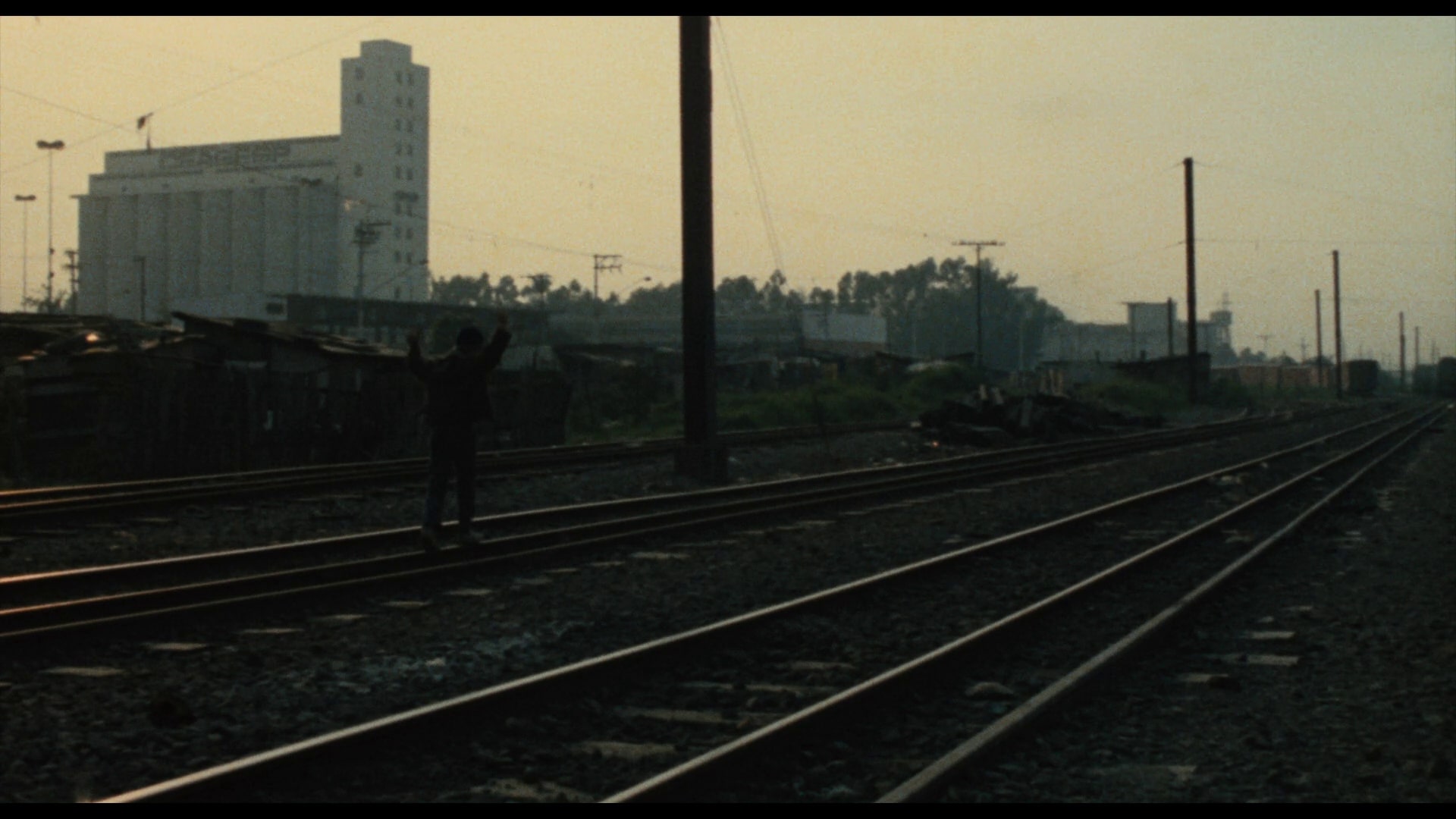
The final scene shows Pixote, now completely alone, walking across railway tracks and trying to balance on the rails, as he faces a precarious, and probably bleak, future.
For the U.S. release of Pixote, Babenco created a short prologue in which, standing in front of the camera, he explains the economic, social and legal background to his story. Behind him is the poor district of Diadema in which da Silva at the time was still living with his family.
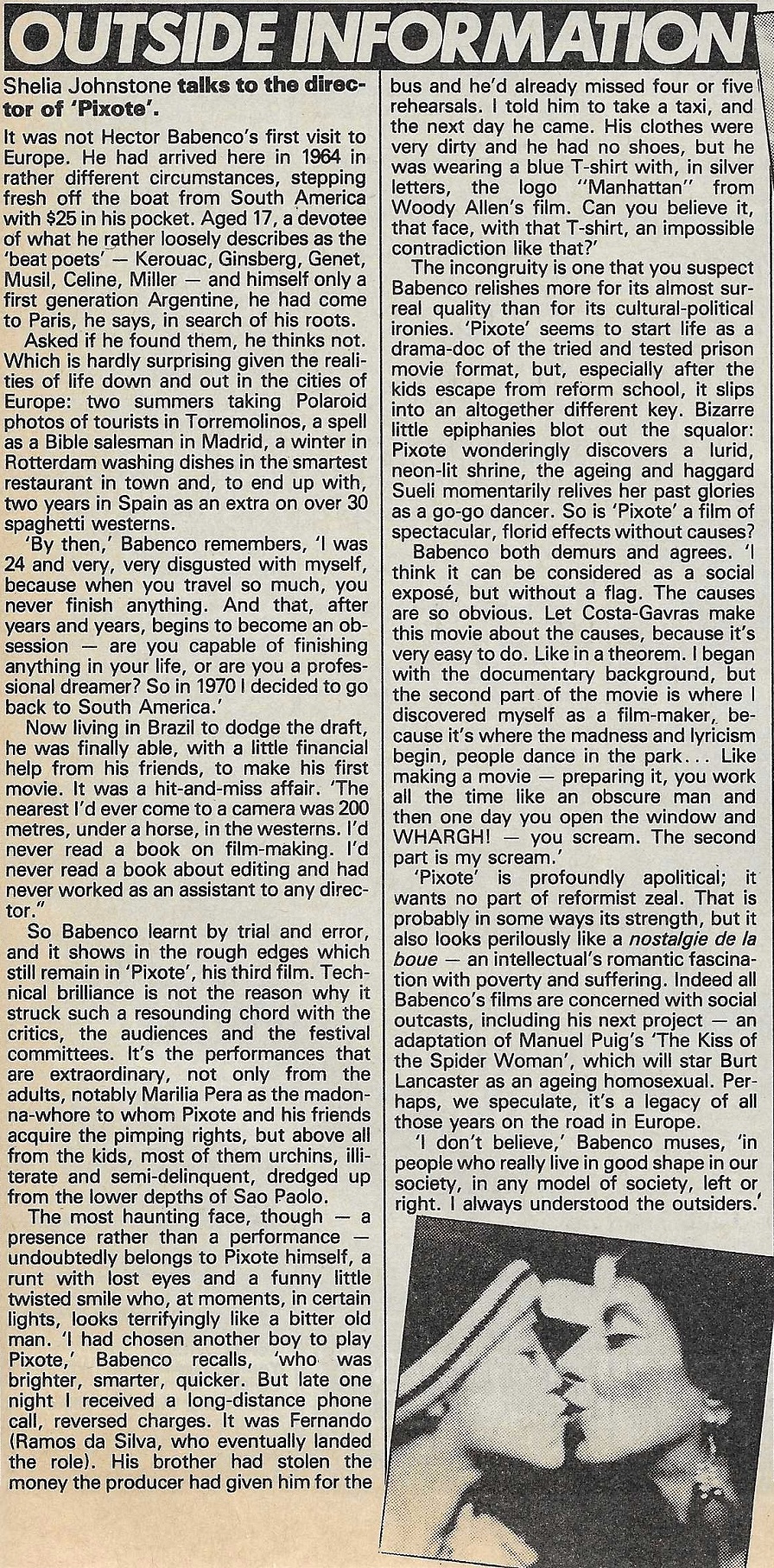
Below: An interview with Héctor Babenco in the 8-14 April 1983 issue of London's Time Out magazine (from Editor's personal collection). This issue of Time Out also includes an interview with da Silva, which is reproduced on the Archive page for the actor.
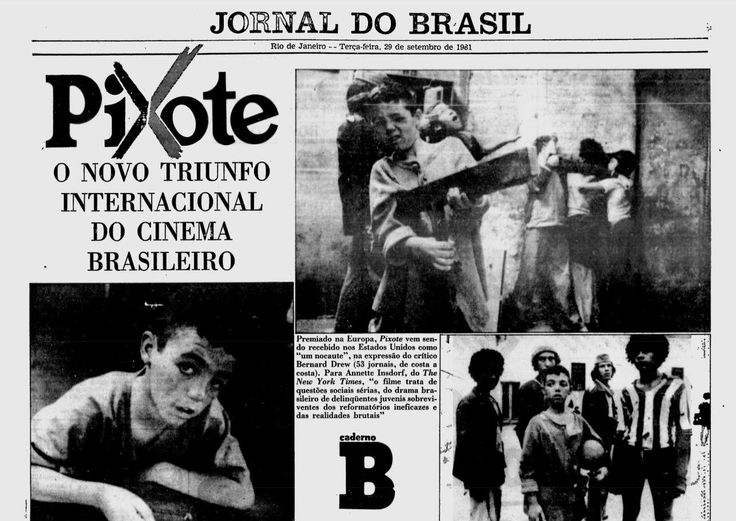
Below is a brief notice for the film in the Jornal do Brasil, a few days after the film's official release in Brazil. Translated into English, it reads: 'Pixote, the new international triumph of Brazilian cinema. Award-winning film in Europe, Pixote has been received in the United States as "a knockout", in the words of critic Bernard Drew (53 newspapers, from coast to coast). For Annette Insdorf, from The New York Times, "the film deals with social issues, the Brazilian drama of juvenile delinquents surviving ineffective reformatories and brutal realities"'
Source material
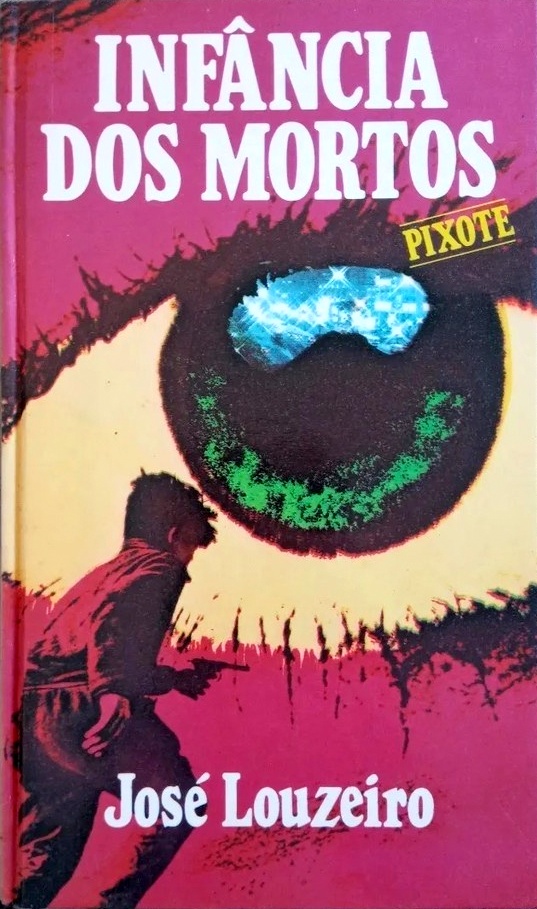
Babenco's inspiration for his film came from José Louzeiro's 1977 novel Infância dos Mortos ('Childhood of the Dead'), which belonged to the socially conscious literary genre known in Brazil as "romance-reportagem" ("reportage novel"). However, there are significant differences between the book and the film. In both, a group of boys who have abandoned their families live on the streets. The four boys in the novel are Dito, Fumaça, Manguito and Pixote, but the novel centres more on Dito, the eldest boy and leader of the group, whereas Babenco chose to construct a story around the smallest and youngest of the group, Pixote.
After the success of the film, editions of Infância dos Mortos would tend to include the word 'Pixote' somewhere on the cover, as in the edition below left, and the film tie-in edition below right. Some subsequent editions of the novel abandoned the original title altogether in favour of the film title.

The novel was translated into English in 1995 and published as an e-book by Boson Books under the title Childhood of the Dead. It can also be read as a PDF by clicking here (PDF opens in a new tab).
Further information
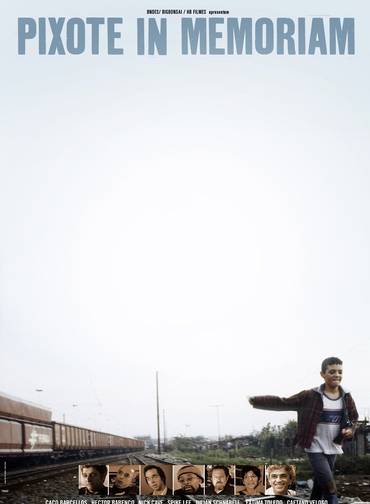
A 2007 documentary film, Pixote In Memorium, includes interviews with Babenco, acting coach Maria Fatima Toledo, and many of the cast of the movie, and is available to view on Youtube, here (use autotranslate to translate Portuguese subtitles to English).
Fernando was small for his age, illiterate, and was very shy, and we learn from this documentary that acting coach Fatima Toledo had reservations about his being cast in the lead role on account of his apparent reticence; but Babenco, quite smitten with his 'anjo mau' (bad angel), was sure that Fernando was the right choice for the lead.
We also learn that the actors had been rehearsing for three months when, on the very eve of the actual shoot, Fernando injured his leg whilst playing ball, and had to have a plaster cast fitted. This is why in some of the earlier scenes of the movie, in the reformatory, his character has a leg cast, such as in the scene in which he sniffs glue.
Production and Publicity stills
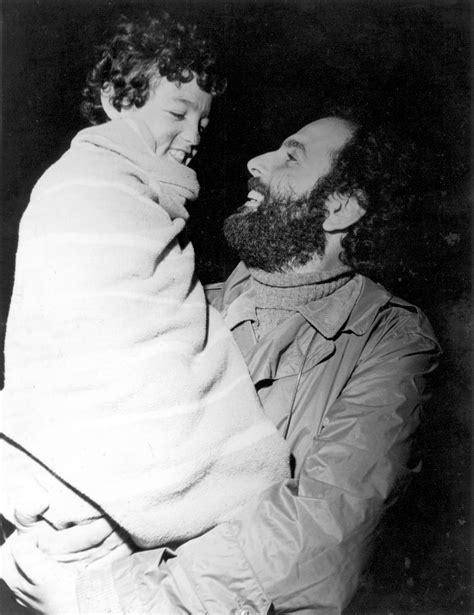
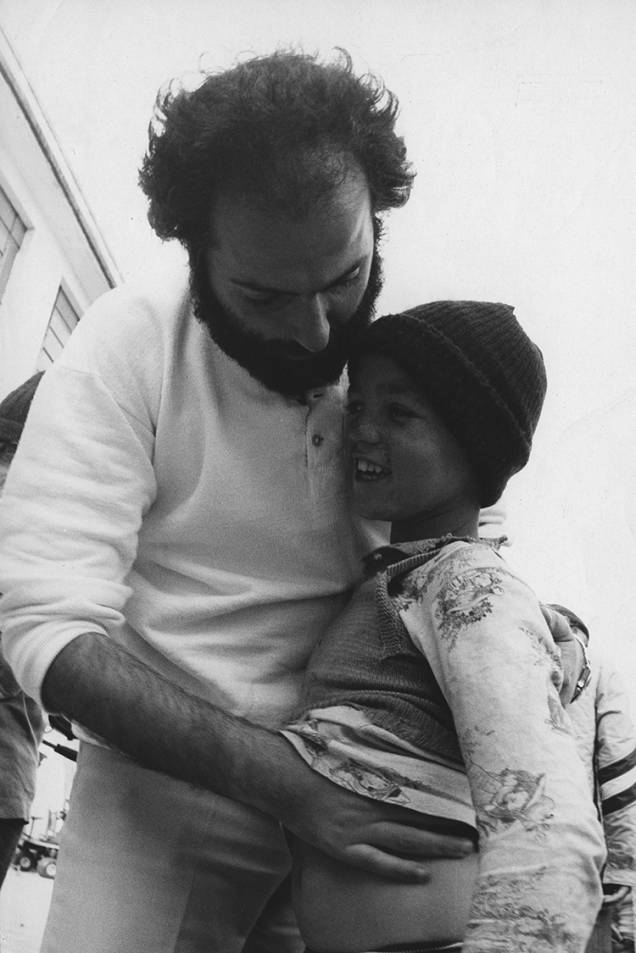
Director Héctor Babenco with his young protégé
Screenshots







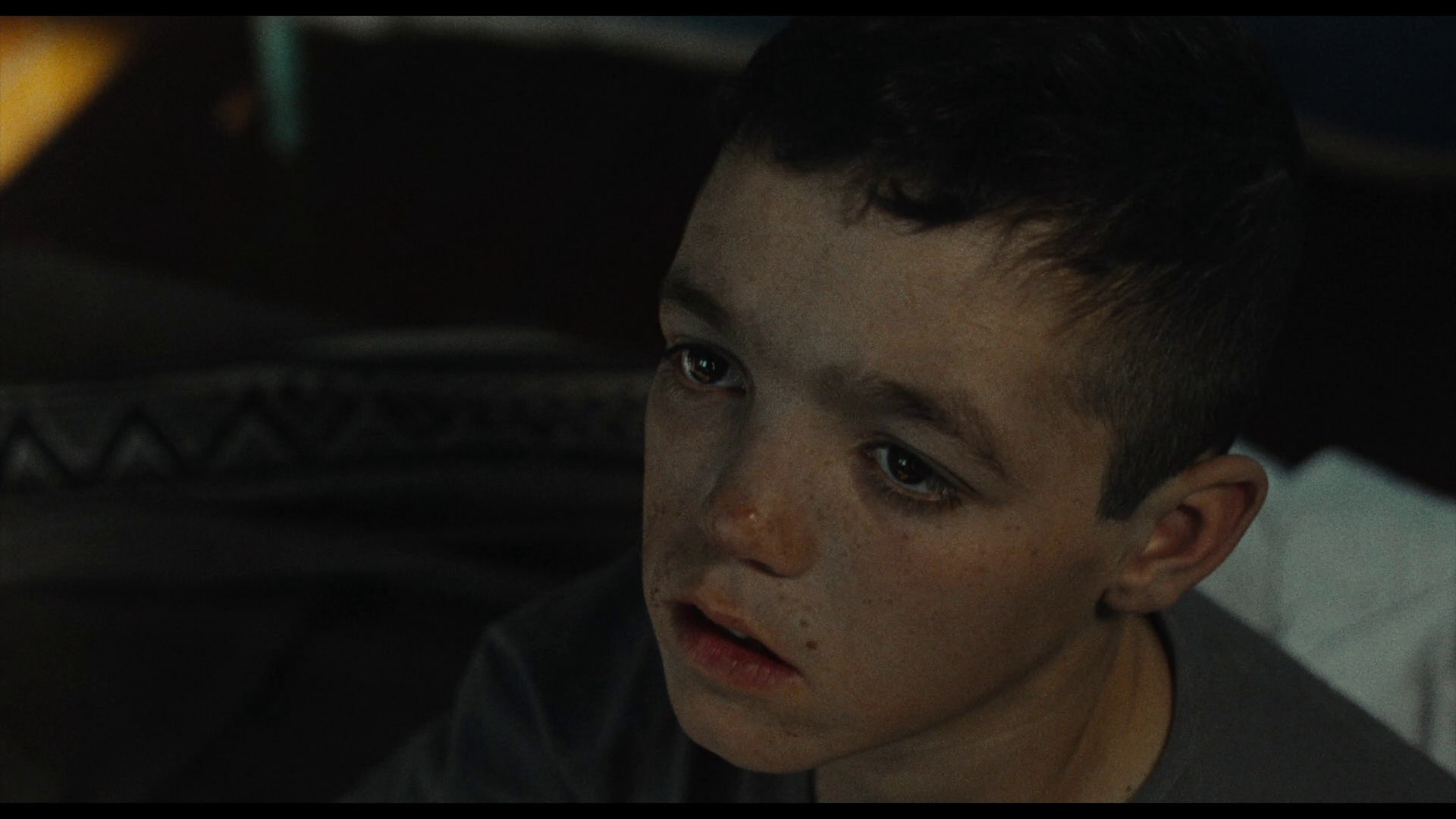

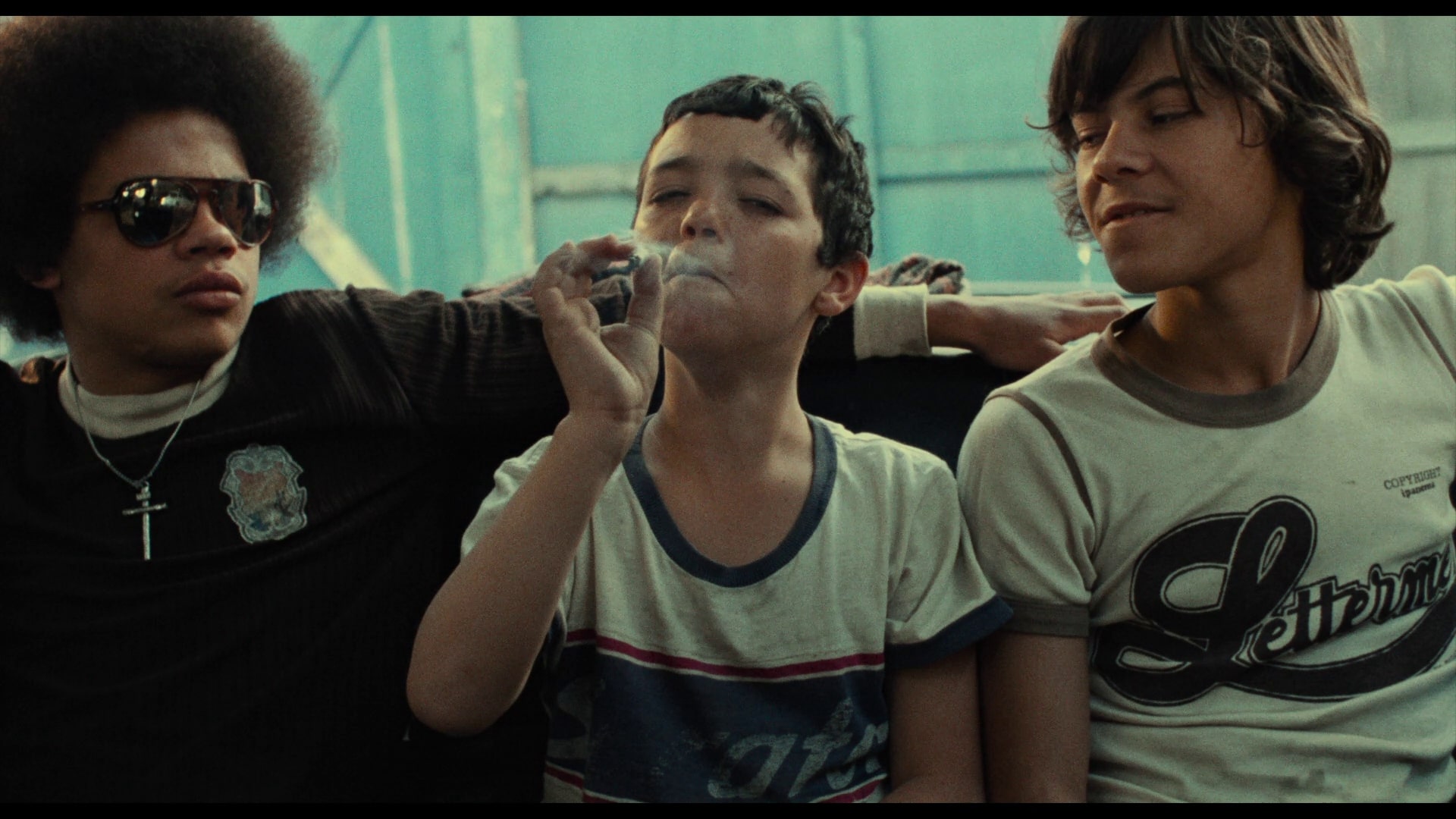


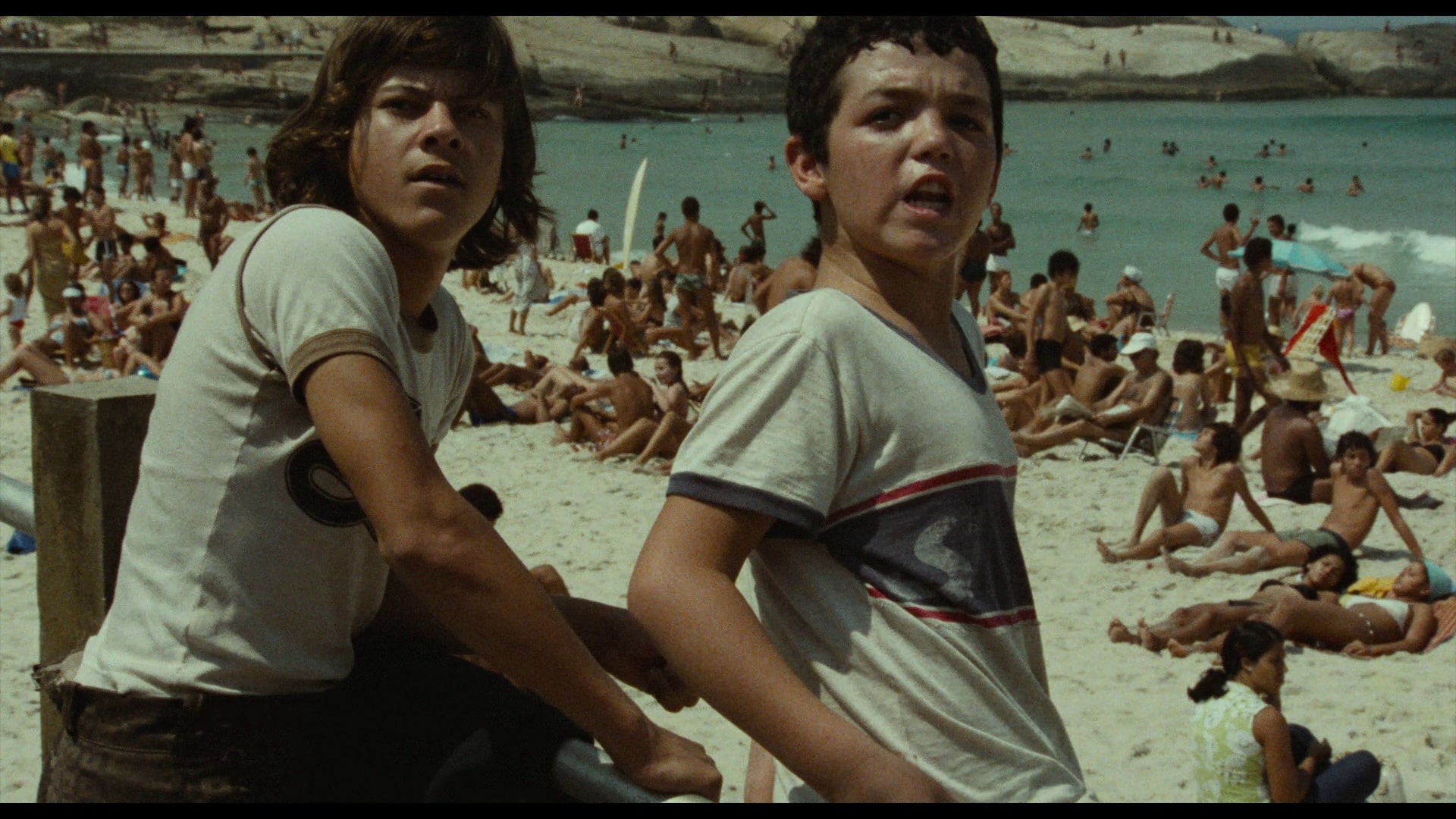


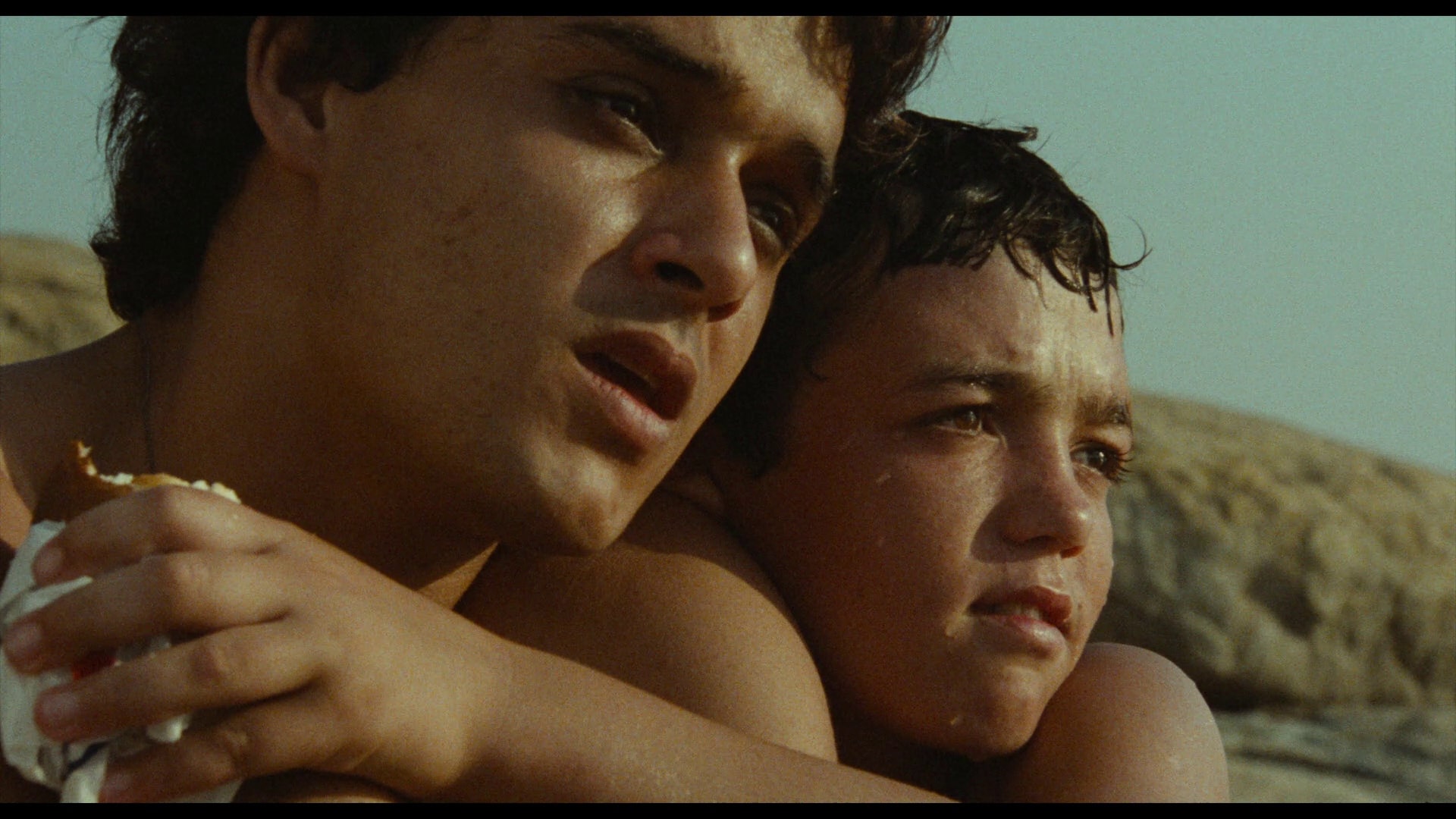
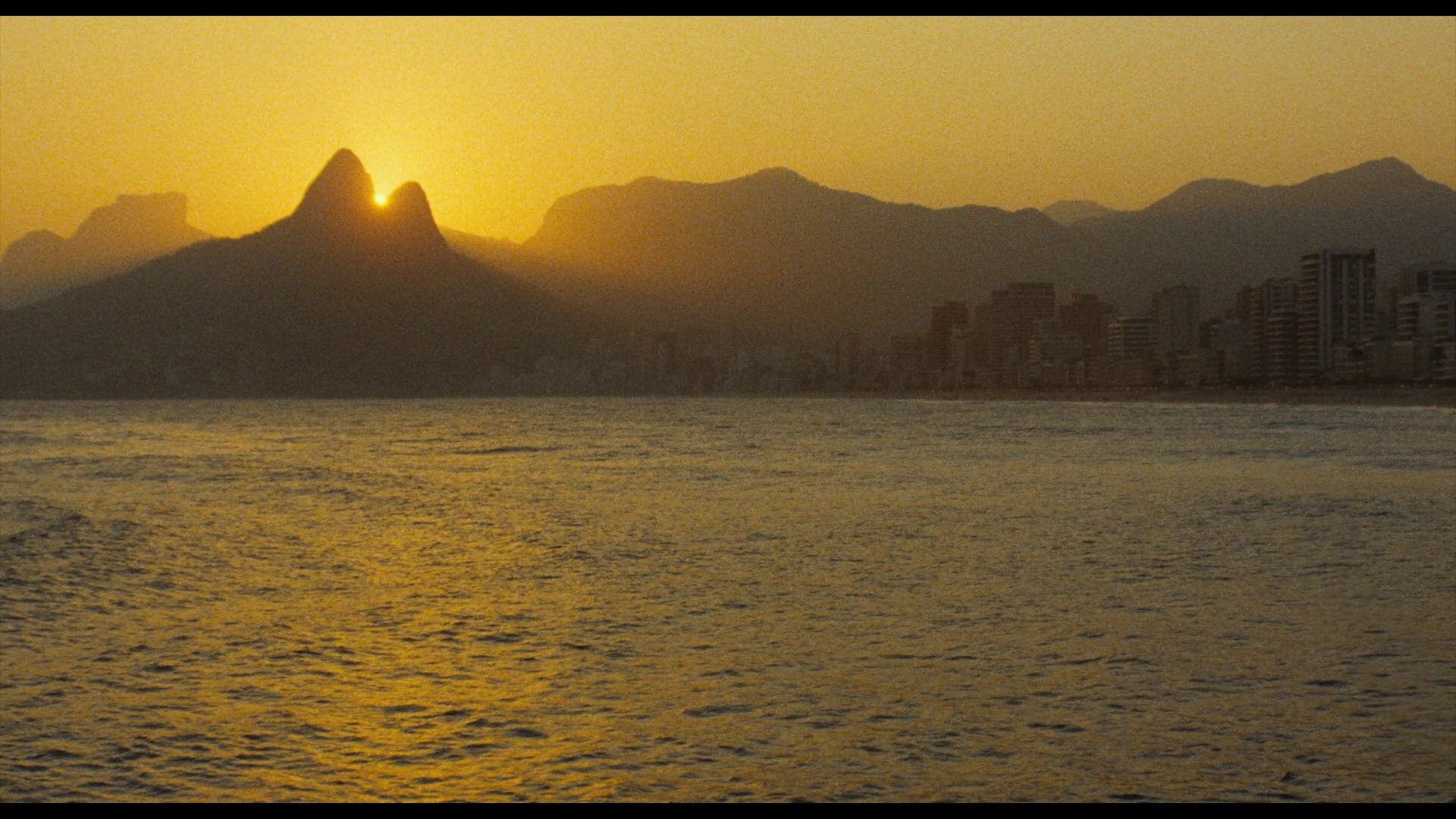
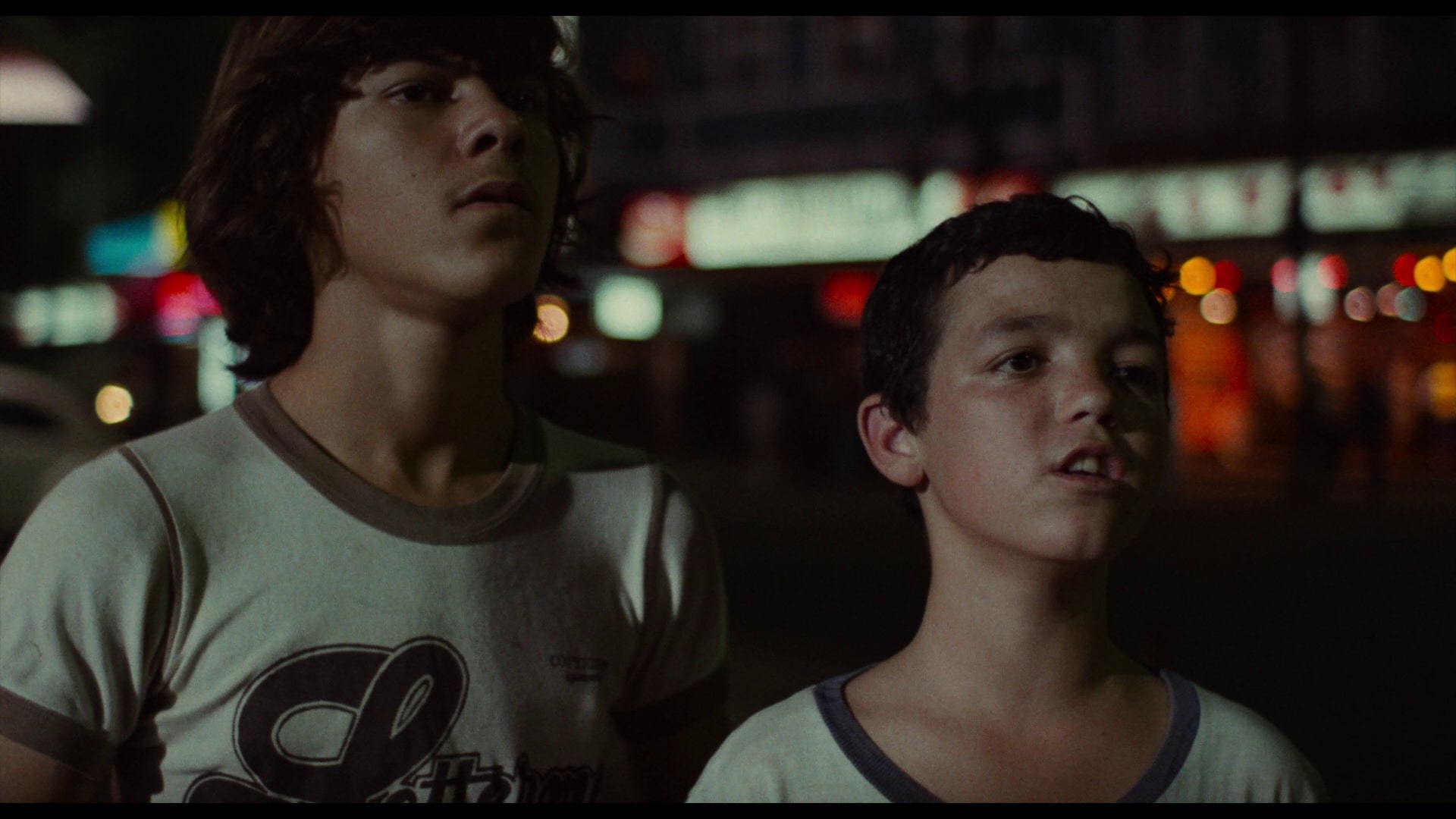


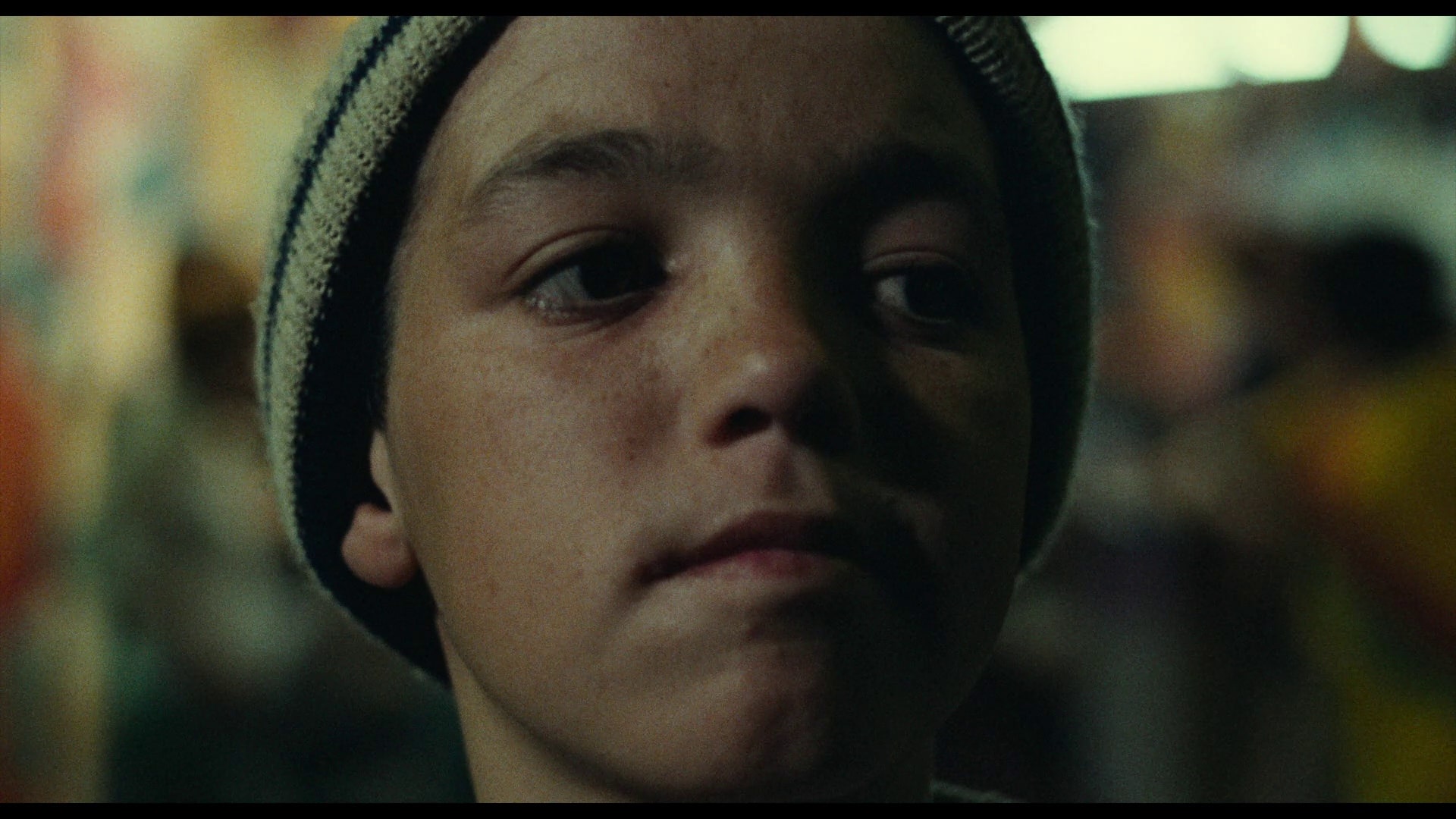


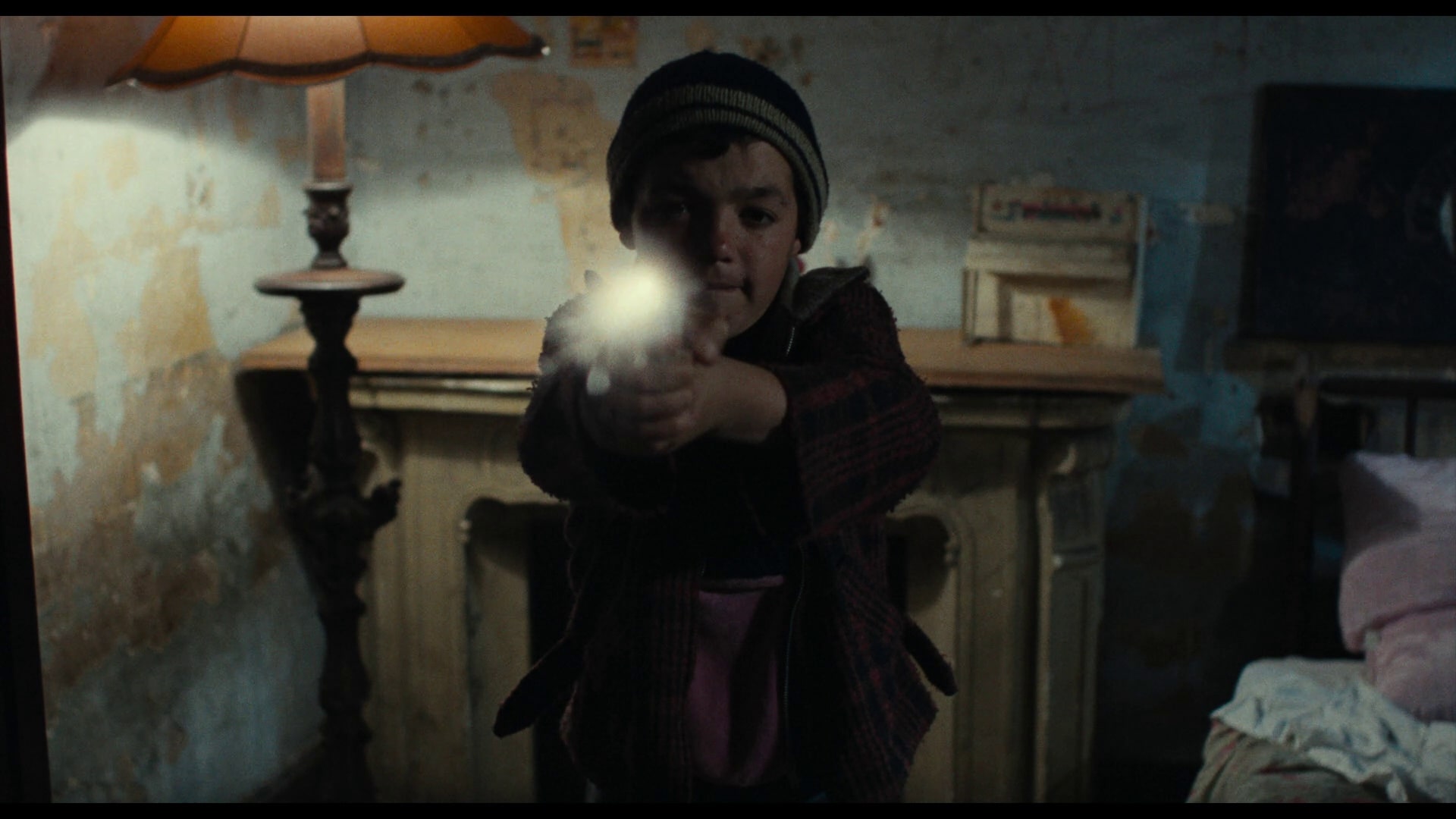

Comments powered by CComment